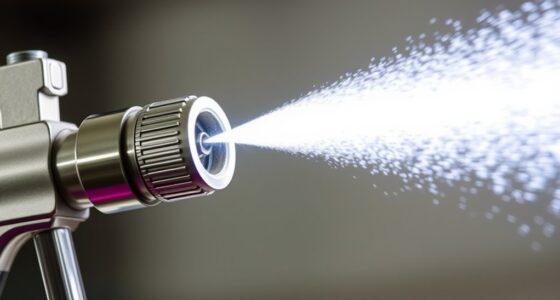

Airless paint sprayers atomize paint by forcing it through a tiny nozzle using high pressure, often up to 3,000 PSI. This extra force breaks the liquid into fine droplets, creating a smooth, even spray without relying on compressed air. Adjusting pressure and nozzle size helps control the spray pattern and finish quality. If you’re curious about how to optimize this process or learn more about the components involved, continue exploring further.
Key Takeaways
- Airless paint sprayers use high pressure to force paint through a tiny nozzle, creating a fine mist without compressed air.
- The pump pressurizes the paint up to 3,000 PSI, generating atomization as paint exits the nozzle.
- Nozzle size and pressure settings control the spray pattern, fineness, and coverage quality.
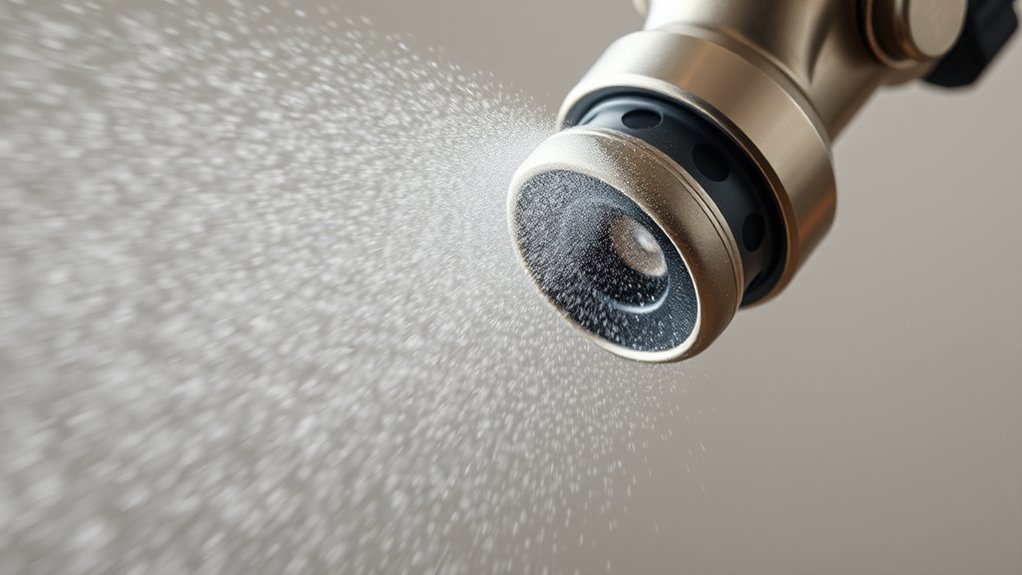
- Atomization occurs when high-pressure paint breaks into tiny droplets as it leaves the nozzle.
- This process produces an even coating with minimal overspray and eliminates the need for compressed air.

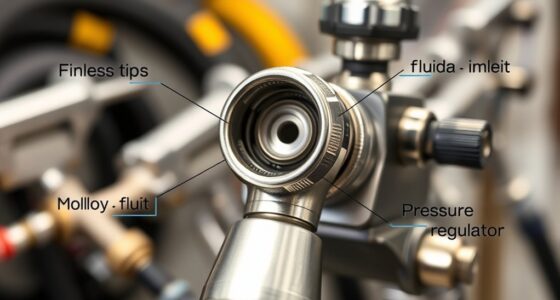
Have you ever wondered how professionals achieve smooth, even paint finishes without splatters or overspray? The secret lies in the power of airless paint sprayers. Unlike traditional methods that rely on compressed air to atomize paint, airless sprayers use high pressure to force paint through a tiny nozzle, creating a fine mist that coats surfaces evenly. This process allows for faster application and a more uniform finish, especially over large areas or textured surfaces. When you operate an airless sprayer, you’re fundamentally using pressure to break the paint into tiny droplets, which then spread out seamlessly onto your surface. The absence of compressed air means there’s less overspray and fewer paint particles floating around, making it more efficient and cleaner to work with. The key component that makes this possible is the pump. It pressurizes the paint to a high degree—sometimes up to 3,000 PSI—and pushes it through a hose towards the nozzle. As the paint exits the nozzle, the pressure forces it into tiny droplets, creating a consistent spray pattern. You can adjust the pressure based on the type of surface or finish you’re aiming for, giving you control over the spray’s density and atomization. The nozzle itself plays a vital role; different sizes and types determine how fine or coarse the spray will be. Larger nozzles are ideal for thick paints or textures, while smaller nozzles work best for fine finishes on smooth surfaces. One advantage of airless technology is its ability to cover large areas quickly. Because it atomizes paint so efficiently, you can complete projects faster than with brushes or rollers. This efficiency doesn’t come at the expense of quality—far from it. The fine spray produces a smooth, professional-looking coat with minimal drips or uneven spots. Plus, since you’re not relying on compressed air, the setup is often simpler, and maintenance tends to be easier. You’ll find that cleaning an airless sprayer is straightforward, especially if you clean it immediately after use, preventing paint from drying inside the nozzle or pump. Additionally, understanding the atomization process helps users select the right equipment and techniques for their specific projects. In principle, airless sprayers revolutionize how you apply paint by atomizing without compressed air, offering you speed, control, and a flawless finish. Whether you’re tackling a large exterior wall or refinishing furniture, understanding how these machines work helps you leverage their full potential and achieve professional results every time.
Frequently Asked Questions
How Does Airless Technology Compare to Traditional Spray Painting?
Airless technology offers faster, more efficient painting compared to traditional spray methods. You can cover large areas quickly with less overspray, reducing waste and cleanup. It provides a smoother, more even finish, especially on textured surfaces. While traditional sprayers use compressed air, airless systems rely on high pressure to atomize paint, giving you better control and consistency. Overall, airless tools help you work faster, cleaner, and with less effort.
Can Airless Paint Sprayers Be Used for Outdoor Projects?
Yes, you can definitely use airless paint sprayers for outdoor projects. They’re ideal because they handle thick paints and large surfaces efficiently, providing a smooth, even finish. Plus, they’re portable and easy to set up, making them perfect for fences, decks, or exterior walls. Just make certain you protect surrounding areas from overspray and choose the right tip size for your project’s material and surface.
What Types of Paint Are Compatible With Airless Machines?
You can use a variety of paints with airless machines, but not all are created equal. Thick latex and elastomeric paints work well because they atomize easily, giving you a smooth finish. Oil-based paints are compatible, but you might need to thin them slightly. Always check the manufacturer’s recommendations to avoid clogging or damaging your equipment. Think of it as a recipe—use the right ingredients for the best results.
How Do I Maintain and Clean an Airless Paint Sprayer?
To keep your airless paint sprayer in top shape, you should clean it after each use. Turn off and unplug the machine, then drain any remaining paint. Use the appropriate cleaning solution, like water or solvent, to flush out the system, including the spray tip and hose. Remove and clean or replace filters regularly. Proper maintenance guarantees smooth operation and extends the life of your sprayer.
Are Airless Sprayers Suitable for Small or Detailed Work?
Yes, airless sprayers are suitable for small or detailed work, but they might not be the best choice. These machines excel at covering large surfaces quickly, but their spray pattern can be less precise for intricate details. If you need fine control, consider a smaller, handheld sprayer or brush. For broader, faster coverage, an airless sprayer works well, just be mindful of overspray and masking nearby areas.
Conclusion
Now that you understand how airless sprayers atomize paint without air, think of them as artists wielding a powerful brush—delivering smooth, even coats with precision. I once watched a painter finish a mural in half the time it usually takes, thanks to this technology. Just like a master’s brushstroke, an airless sprayer transforms your painting experience—faster, cleaner, and effortlessly professional. Embrace it, and watch your projects go from good to stunning.