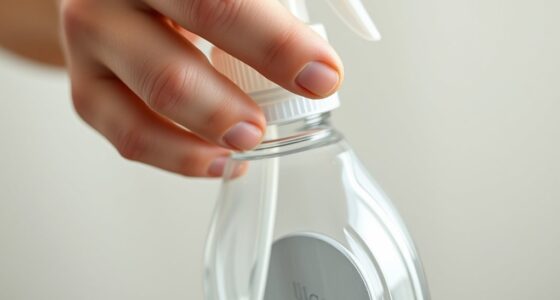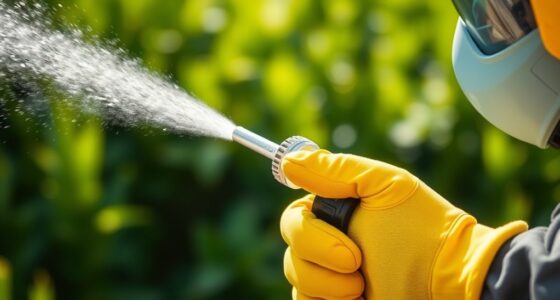
When spraying in hot weather, you need to adjust your technique to prevent issues like rapid evaporation, uneven coverage, and spray drift. Reduce pressure, apply thinner coats, and work in shaded or cooler times of day to enhance safety and finish quality. Keep an eye on surface temperatures and dry times, and take precautions against heat-related hazards. If you want to learn more tips for achieving a flawless, safe spray job in hot conditions, keep exploring these strategies.
Key Takeaways
- Reduce spray pressure and use wider tips to prevent overspray and ensure even coverage in high temperatures.
- Spray during cooler, humid times like early mornings or late afternoons to minimize rapid evaporation and surface issues.
- Apply thinner coats and increase drying time between layers to avoid blistering, bubbling, or uneven finish.
- Adjust spray distance and pattern to control drift and improve safety for the operator and surroundings.
- Monitor surface temperature regularly and take precautions to prevent rapid drying, drips, or finish inconsistencies.
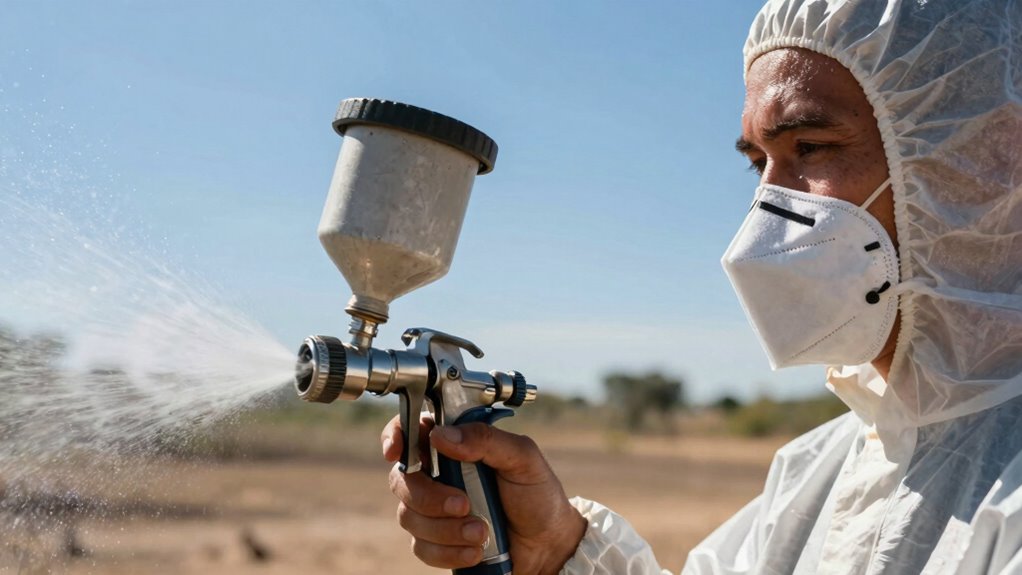
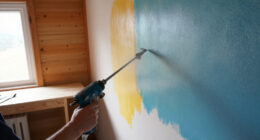
Have you ever wondered how hot weather affects your spraying routine? When temperatures rise, the effects on your application become more pronounced, impacting both safety and the quality of your finish. Temperature effects can cause your spray to behave differently, so understanding how to adapt your application techniques is *crucial* to achieving *optimal* results. High temperatures often lead to faster evaporation of the spray solution, which can cause uneven coverage and may require adjustments to your technique. For instance, you might need to reduce the spray pressure or change your spray pattern to prevent overspray or drips. Additionally, heat can cause the spray to dry too quickly on the surface, potentially leading to roller marks, uneven gloss, or a hazy finish.
Because of these temperature effects, you should be mindful of when and how you spray. Early mornings or late afternoons tend to be cooler and more humid, making them better times for spraying in hot weather. If you must spray during peak heat, consider applying thinner coats and allowing more drying time between layers. This approach helps prevent issues like blistering or bubbling caused by rapid evaporation. Using the right application techniques also involves choosing suitable equipment. For example, opting for lower pressure settings can reduce overspray and improve control, while employing wider spray tips can help create more even coverage at higher temperatures.
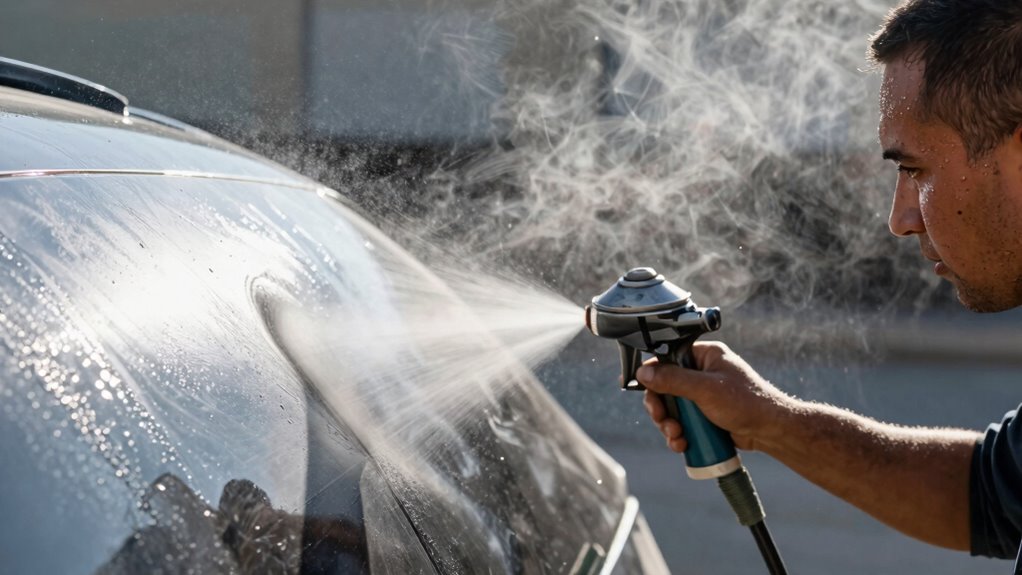
It’s essential to stay aware of the environment as you work—if the surface heats up quickly due to direct sunlight, you might need to pause and wait for the surface to cool down before continuing. Covering surfaces or working in shaded areas can help maintain more consistent temperatures and improve your application results. Also, remember that hot weather can cause the spray to drift more easily, so adjusting your spraying distance and using proper mask techniques is *vital* for safety.

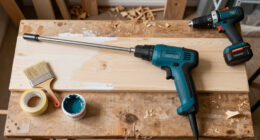
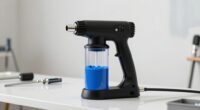
1000W High Power Paint Sprayer – Corded HVLP Paint Gun with 4 Sizes Copper Nozzles, Easy to Clean & Control Power Painter for House Painting, DIY Crafting, Tables & Chairs Yellow
- High Power Motor: 1000W for smooth, fast painting
- Multiple Spray Patterns: Vertical, horizontal, circular options
- Copper Nozzles: 4 sizes, durable and clog-resistant
As an affiliate, we earn on qualifying purchases.
As an affiliate, we earn on qualifying purchases.
Frequently Asked Questions
How Does High Humidity Affect Spraying in Hot Weather?
High humidity impacts spraying in hot weather by causing the spray pattern to become uneven and less consistent. When humidity is high, the moisture in the air slows evaporation, leading to drips, runs, or a hazy finish. You’ll notice it’s harder to achieve a smooth, even coat, so you might need to adjust your spraying technique or reduce the pressure. Staying aware of humidity levels helps you maintain control and achieve a better finish.
What Personal Protective Equipment Is Recommended During Hot Weather Spraying?
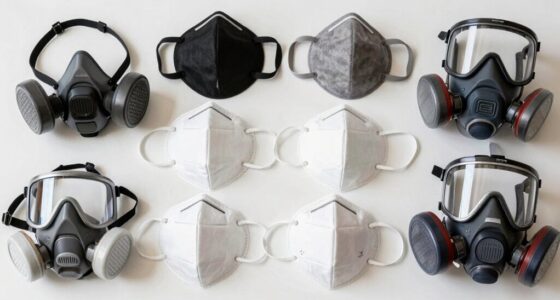
You should wear heat-resistant gear like long sleeves, gloves, and a wide-brimmed hat to protect against heat and chemicals. Use proper respirators and goggles to prevent inhalation and eye contact. Stay hydrated by following hydration strategies, drinking plenty of water before and during spraying. Take frequent breaks in shaded areas to cool down. Prioritizing this personal protective equipment helps keep you safe and comfortable during hot weather spraying.
Can Hot Weather Cause Paint Fumes to Become More Toxic?
Did you know that hot weather can increase paint vapor toxicity by up to 25%? When you spray in high temperatures, fumes become thicker and more concentrated, heightening the fumes health risk. Hot conditions cause paint fumes to linger longer and intensify, making it more dangerous to breathe in. Always guarantee proper ventilation and wear respiratory protection to minimize exposure and protect your health.
How Should Equipment Be Maintained to Prevent Overheating?
You should regularly check your equipment calibration to guarantee proper spray patterns and avoid overworking the motor. Keep your nozzles clean and well-maintained, as clogged or damaged nozzles can cause overheating. Additionally, inspect hoses and fittings for leaks or wear. Allow your equipment to cool down periodically during prolonged use, and store it in a cool, dry place when not in use to prevent overheating and maintain ideal performance.
Are There Specific Drying Times for Paints in Extreme Heat?
Like a master chef adjusting a recipe, you’ll find that in extreme heat, paint drying times are shorter, depending on paint thickness and spray gun adjustments. Thinner coats dry faster, so monitor the drying process closely. Keep an eye on how the paint responds to heat, and tweak your spray gun settings to guarantee even application. This way, you prevent runs or tackiness, ensuring a smooth, professional finish despite the heat.
Conclusion
When you spray in hot weather, you’re not just risking a little uneven finish—you’re inviting chaos! Temperatures skyrocket, and suddenly, your project becomes a race against disaster. Keep the heat in check, follow safety rules, and stay vigilant. Otherwise, you might end up with a finish so bad it’s almost unbelievable, like a masterpiece written in chaos. Stay cool, stay safe, and don’t let the heat turn your work into a wild, unpredictable adventure!