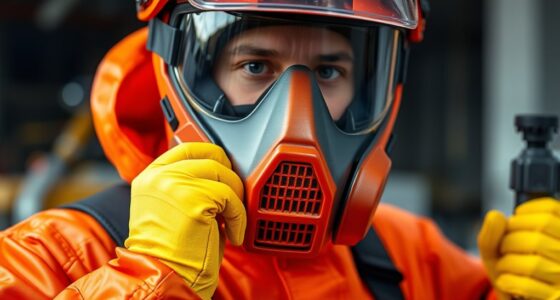
To prevent inhaling harmful fumes during indoor spraying, you need proper ventilation. Open windows and doors, and use exhaust fans or oscillating fans to rapidly clear out airborne particles. Create cross-ventilation for the best airflow. Make certain you keep air flowing continuously, and monitor air quality to make sure fumes are gone. If you want to learn more about keeping your space safe and fumes at bay, keep going.
Key Takeaways
- Use exhaust fans and open windows to rapidly remove toxic fumes during indoor spraying.
- Create cross-ventilation by positioning fans or openings on opposite sides of the room.
- Employ oscillating fans to circulate fresh air and prevent fume buildup.
- Regularly monitor indoor air quality to ensure fumes are effectively cleared.
- Avoid spraying in poorly ventilated areas to reduce inhalation risks and health hazards.
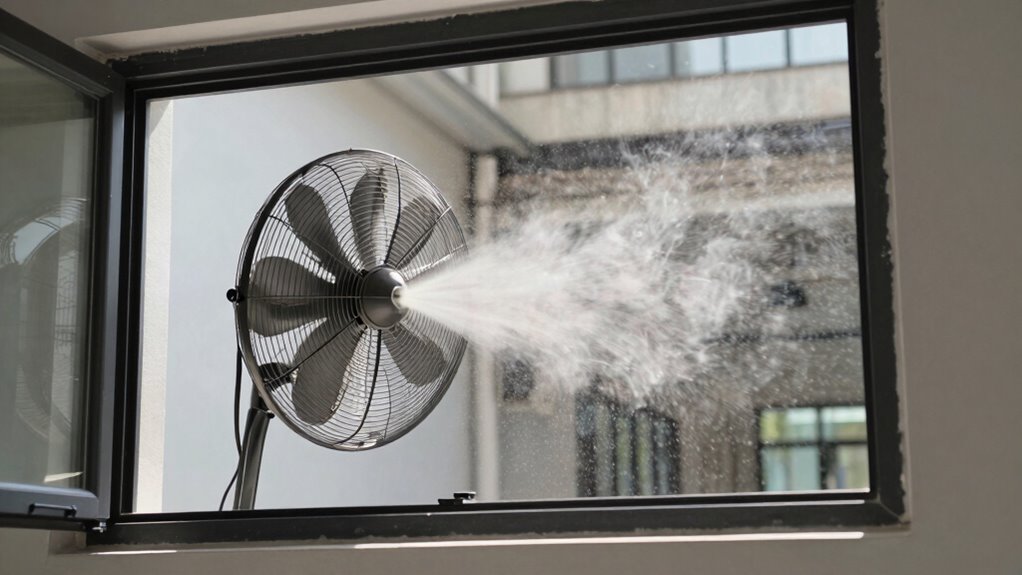
Have you ever wondered why proper ventilation is essential when spraying indoors? When you’re working with paints, pesticides, or cleaning chemicals, good airflow isn’t just about comfort—it’s a safety necessity. Optimizing airflow ensures that airborne particles and fumes don’t linger in the air, reducing your exposure to potentially harmful substances. Without proper airflow, these chemicals can accumulate, increasing the risk of inhaling toxic fumes, which can lead to headaches, dizziness, or more severe health issues over time. Ventilation helps carry away these airborne contaminants, creating a safer environment for you and others nearby. Airflow management is a crucial aspect of maintaining a healthy indoor space during spraying activities.
Proper ventilation is vital indoors to reduce chemical fumes and protect your health during spraying projects.
Besides safety, airflow optimization plays a crucial role in odor control. Many indoor sprays emit strong, unpleasant smells that can quickly fill a room and make the space uncomfortable. Proper ventilation rapidly disperses these odors, preventing them from becoming overwhelming. This not only improves your comfort but also helps you maintain a clearer sense of the workspace. When you manage airflow effectively, you prevent odors from settling into fabrics, walls, or furniture, which can be difficult to eliminate later. Good ventilation acts as a natural air purifier, replacing stale, contaminated air with fresh air from outside, keeping your indoor environment more pleasant and less toxic. Effective air quality management is essential for a healthy indoor environment. Additionally, managing airflow properly can prevent the buildup of indoor pollutants, which can otherwise compromise your health over time.
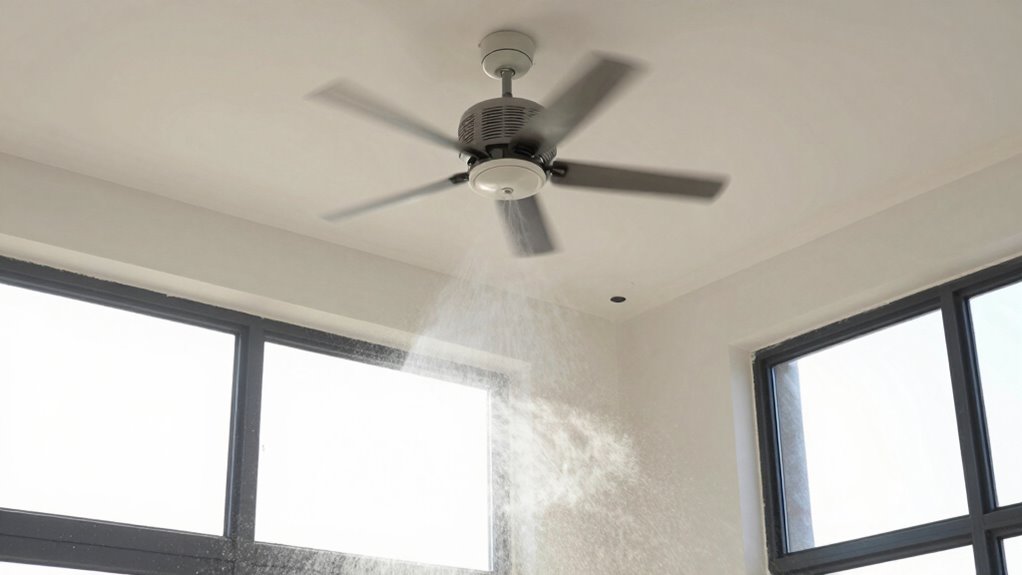
To optimize airflow, you should consider using fans and exhaust systems strategically. Placing exhaust fans near spray areas pulls contaminated air out efficiently, while oscillating fans can help circulate fresh air into the space. Opening windows and doors is a simple yet effective way to boost airflow, especially if you’re working in a small or enclosed room. Make sure to create a cross-ventilation pattern: position fans or open windows on opposite sides of the room to encourage a steady flow of air across the space. This approach ensures fumes and odors don’t stagnate but are instead quickly swept out, maintaining a safer environment. Proper ventilation techniques can significantly improve your safety during indoor spraying. Remember, monitoring air quality during and after spraying is vital to ensure fumes are effectively cleared out and the environment remains safe.

VEVOR Air Mover Blower Fan 12 in, 3198CFM 585W, Portable Ventilator, Orange
- Powerful Airflow: 3198 CFM with 585W motor
- Flexible Ducting: 16.4ft PVC duct included
- Durable Construction: Steel frame with corrosion-resistant coating
As an affiliate, we earn on qualifying purchases.
As an affiliate, we earn on qualifying purchases.
Frequently Asked Questions
How Long Should I Ventilate After Spraying?
You should ventilate for at least 30 minutes to an hour after spraying to guarantee proper ventilation safety. This allows the chemical dispersion to dissipate, reducing your exposure to potentially harmful fumes. Keep windows and doors open, and use fans if possible, to speed up the process. Always follow the manufacturer’s instructions for specific drying and airing times, and avoid re-entering until you’re confident the air is safe.
Can Ventilation Remove All Airborne Chemicals?
You might think ventilation removes all airborne chemicals, but it’s not entirely effective—studies show it can eliminate only about 90% of chemical dispersion. Ventilation effectiveness depends on factors like airflow rate and space size. While it considerably reduces chemical concentrations, lingering fumes may remain. To stay safe, ventilate thoroughly after spraying, and consider using air purifiers for added protection, ensuring you minimize inhalation risks.
What Equipment Improves Indoor Air Quality During Spraying?
To improve indoor air quality during spraying, you should use air purifier recommendations that include HEPA filters, which trap airborne particles effectively. Combine this with proper ventilation techniques, like opening windows and using exhaust fans, to maximize airflow. Portable air purifiers and exhaust systems work together to reduce airborne chemicals quickly, helping you breathe easier and minimize exposure during spraying.
Is Outdoor Ventilation Sufficient for All Types of Sprays?
Outdoor ventilation isn’t always sufficient for all types of sprays, especially when chemical dispersion is intense or hazardous. While fresh air can help dilute airborne chemicals, some sprays release fumes that linger or spread unpredictably. You need to guarantee proper airflow, use exhaust fans, or additional ventilation measures. Relying solely on outdoor ventilation could leave you exposed to harmful fumes, so consider the spray’s chemical properties and ventilation effectiveness.
How Often Should I Replace Air Filters After Spraying?
After spraying indoors, you should replace your air filters immediately, especially if you notice a lingering chemical smell or reduced airflow. Regular air filter maintenance is essential to keep indoor air quality monitoring effective. Typically, replace filters every 1 to 3 months, but more frequent changes might be necessary after spraying. Think of it as clearing a foggy window—fresh filters restore clarity and protect your breathing space.
Conclusion
Remember, proper ventilation can cut your risk of inhaling harmful fumes by up to 80%. Don’t underestimate the power of fresh air—keep windows open and fans running whenever you’re spraying indoors. It’s a simple step that makes a huge difference in protecting your health. So next time you reach for that spray, think about the air you breathe. Staying ventilated isn’t just recommended; it’s essential for your safety.