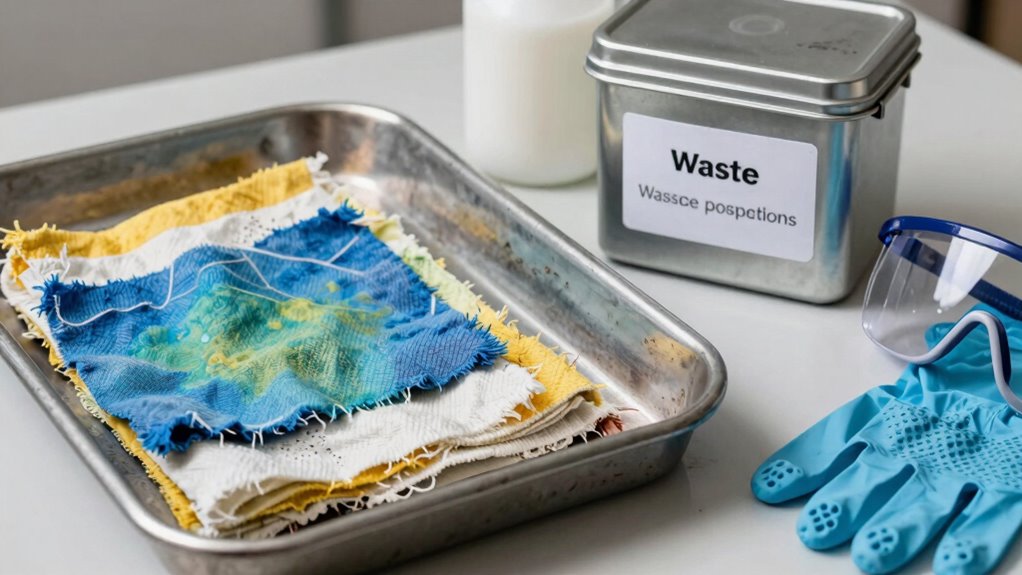

To work safely around solvent-soaked rags and waste, always dispose of them in approved, fireproof containers immediately after use, and never throw them in regular trash. Store these containers away from heat or sparks and regularly check them to prevent buildup. Make certain proper ventilation in your workspace by opening windows or using exhaust fans to keep fumes dispersed. Following these steps minimizes fire hazards and helps protect your health—keep going to discover more essential safety tips.
Key Takeaways
- Store solvent-soaked rags immediately in approved, fireproof containers and keep them away from heat or sparks.
- Dispose of solvent waste in sealed, labeled containers and do not throw them in regular trash.
- Work in well-ventilated areas with exhaust systems to dissipate fumes and reduce fire risk.
- Regularly inspect storage areas for security, proper labeling, and compliance with safety protocols.
- Educate personnel on proper handling, storage, and disposal procedures to prevent spontaneous combustion.
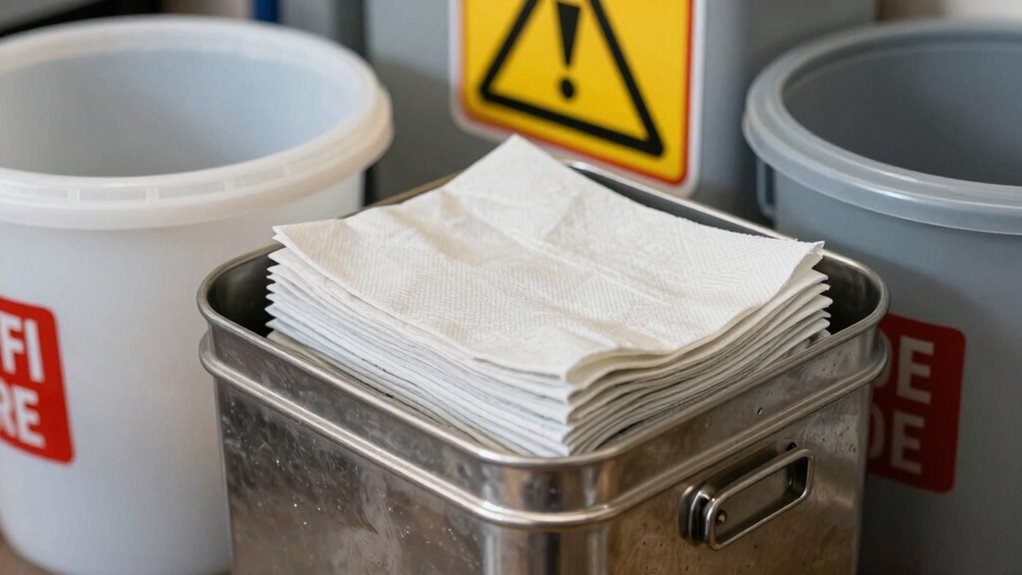
Working safely around solvent-soaked rags and waste is essential to prevent fires and health hazards. Solvents are highly flammable, and improperly managing rags saturated with these chemicals can lead to dangerous fires or health issues if inhaled or touched. Your first priority should be understanding proper disposal methods. Never toss solvent-soaked rags into regular trash, as they can ignite unexpectedly. Instead, place them in a sealed, fireproof container designed specifically for flammable waste. Make sure the container is clearly labeled and stored in a safe location away from ignition sources. Regularly check and empty the container according to your facility’s safety protocols to minimize fire risks. Proper disposal isn’t just about containment; it’s about reducing the chance of spontaneous combustion, which can happen if solvent-laden rags are left exposed or piled up. Additionally, spontaneous combustion risk can be significantly increased if rags are stored improperly or left in heat-prone areas. Ensuring proper chemical waste management practices further reduces these dangers and keeps your workspace compliant with safety standards. Implementing consistent handling procedures helps prevent accumulation and reduces the likelihood of accidental ignition.
Ventilation precautions are equally critical when working with solvents. These chemicals emit fumes that can be harmful if inhaled over time, and poor ventilation increases the risk of fumes accumulating to dangerous levels. Always work in well-ventilated areas, ideally with local exhaust systems that draw fumes away from your breathing zone. If you’re working indoors, open windows and use exhaust fans to create a steady flow of fresh air. Don’t underestimate the importance of airflow—adequate ventilation can *substantially* reduce your exposure to volatile vapors. When handling large quantities of solvent-soaked rags, consider wearing respiratory protection, especially if ventilation isn’t sufficient. Keep in mind that some solvents produce fumes that are not only irritating but also toxic, so it’s better to be cautious. Proper ventilation practices are key to maintaining a safe environment when working with these chemicals. Remember, maintaining good airflow can also help dissipate any accidental spills or leaks that may occur during handling.
Handling solvent-soaked waste requires discipline and awareness. After use, *verify* rags are stored in approved containers immediately, and never leave them lying around. Regularly inspect your storage areas to confirm they’re secure and that no rags are piled too high or left exposed to heat or sparks. Educate yourself and your team on local regulations regarding chemical waste, as rules can vary depending on your location. Always follow safety data sheets (SDS) instructions for each solvent, paying particular attention to disposal and ventilation recommendations. Combining proper disposal practices with ventilation precautions creates a safer work environment, helping you avoid preventable fires and health risks. Staying vigilant and proactive in managing solvent-soaked rags and waste protects both your health and the safety of everyone around you. Proper storage of solvent waste is essential to prevent accidental ignition and ensure compliance with safety protocols.
fireproof solvent rag disposal container
As an affiliate, we earn on qualifying purchases.
As an affiliate, we earn on qualifying purchases.
Frequently Asked Questions
Can Solvent-Soaked Rags Be Stored Overnight Safely?
No, solvent-soaked rags shouldn’t be stored overnight safely. For proper storage safety and waste management, you need to keep them in a sealed, metal container designed for flammable waste. Leaving them exposed or in open air increases fire risk. Always dispose of solvent-soaked rags promptly according to your local regulations, and never store them for extended periods. This minimizes hazards and guarantees a safer work environment.
What Are the Signs of Spontaneous Combustion in Solvent Waste?
You should watch for signs of spontaneous combustion in solvent waste, like a sudden heat increase, smoke, or a burning smell—these are chemical indicators of fire risk. If you notice any of these signs, immediately remove the waste from the area, contain it in a non-flammable container, and contact emergency services. Regularly inspecting solvent waste helps prevent dangerous fires caused by chemical reactions.
How Often Should Waste Containers Be Inspected?
You should inspect waste containers regularly, ideally daily, to guarantee safe waste management. Consistent waste container monitoring helps you spot signs of spontaneous combustion or leaks early. Increase inspection frequency if you notice any changes, such as odors or discoloration. Regular checks help prevent fire hazards and ensure compliance with safety regulations, keeping your workspace safe. Always document your inspections and promptly address any issues you find.
Are There Specific Disposal Regulations for Different Solvents?
Think of solvent disposal regulations as a maze, guiding you safely through environmental regulations and chemical labeling. You must follow specific rules for different solvents, since each has unique disposal requirements. Federal and local regulations dictate proper handling, storage, and disposal methods. Always consult safety data sheets and regulatory agencies to make certain you’re compliant, reducing risks to yourself and the environment while maneuvering this complex but essential process.
What Personal Protective Equipment Is Essential When Handling Solvent Waste?
You should wear protective gloves and a respiratory mask when handling solvent waste. Gloves protect your skin from chemical exposure, preventing irritation or burns, while respiratory masks shield you from inhaling harmful fumes. Always choose gloves made of chemical-resistant material and a mask rated for vapors of the solvents you’re working with. Proper PPE minimizes health risks and guarantees safe handling, especially in environments with prolonged or repeated exposure.
Conclusion
Remember, safety is no accident. Always handle solvent-soaked rags and waste with care, storing them properly and disposing of them promptly. Use personal protective equipment and keep the workspace well-ventilated. As the saying goes, “A stitch in time saves nine,” meaning quick, proactive actions can prevent bigger hazards later. Prioritize safety every step of the way to protect yourself and those around you. When it comes to solvents, caution isn’t just recommended—it’s essential.