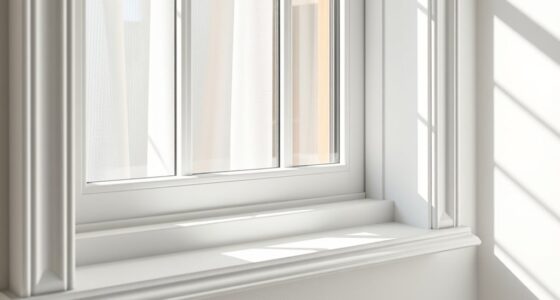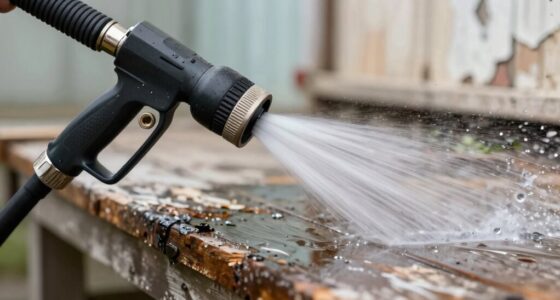
To spray built-ins without coating the rest of your room, set up a controlled spray booth using plastic sheeting or drop cloths to enclose your workspace. Use exhaust fans with filters to create negative pressure, keeping overspray contained. Wear protective gear and maintain steady airflow to guarantee even coverage. After finishing, thoroughly clean your equipment and filters. Keep in mind, proper setup and cleanup are key—continue with these tips to achieve a professional finish without messes.

Get tools and workshop supplies delivered free — and shop member deals
- Fast, free delivery on millions of items
- Access to Prime Big Deal Days deals on October 6–7
- Prime Video, Amazon Music and more included
Key Takeaways
- Use a dedicated spray booth or enclosure with plastic sheeting to contain overspray around built-ins.
- Employ directional airflow and exhaust fans to direct fumes and overspray away from other room surfaces.
- Seal openings and gaps around built-ins to prevent overspray from escaping into the room.
- Apply masking tape and drop cloths to protect surrounding walls, furniture, and floors during spraying.
- Utilize high-quality air filtration systems to capture airborne particles and maintain a clean environment.

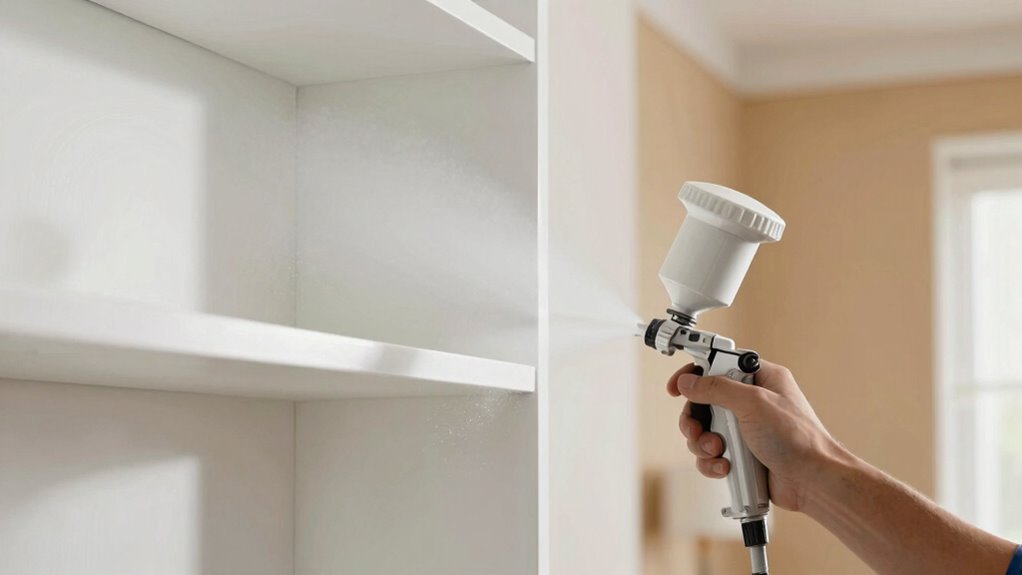
When you’re spraying built-in cabinets or shelves, it’s essential to avoid coating the entire room inadvertently. Proper preparation and the right setup are key to achieving a clean, professional finish without mess or overspray. One of the most effective ways to do this is by creating a controlled spray booth setup. This involves setting up a designated area where you can contain the spray, making sure the finish goes exactly where you want it and nothing else. A well-constructed spray booth minimizes airborne particles and overspray, protecting your walls, furniture, and floors from unwanted coating.
Creating a controlled spray booth keeps your project focused and prevents messes on surrounding surfaces.
To make this work, you need to focus on air filtration. Good air filtration systems capture airborne particles, dust, and overspray before they settle on surfaces outside your intended project area. Portable air filters with HEPA or activated carbon filters can be positioned strategically to scrub the air of harmful particles and fumes. This step is crucial because it prevents your nearby room from becoming coated in paint or varnish, maintaining a clean environment during and after spraying. Proper air filtration ensures that your workspace remains free of lingering fumes and residual overspray, which is vital for safety and cleanliness. Additionally, selecting the right filtration system can improve airflow control, helping you achieve a more even and professional finish.
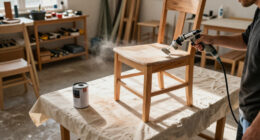
Setting up a spray booth doesn’t require elaborate equipment, but it does demand careful planning. You can use plastic sheeting or drop cloths to enclose the workspace, sealing off openings to prevent dust and overspray escape. Ventilation is just as important; you need to create a negative pressure environment, meaning more air gets exhausted than is introduced, pulling overspray away from open areas. An exhaust fan with a filtration system helps in this process, ensuring the airborne particles are captured and filtered out before the air is released outside.
While working within your spray booth setup, keep the airflow steady and controlled. This prevents uneven coating and reduces the risk of runs or drips. Also, wearing proper protective gear—like masks and goggles—will protect you from inhaling fumes and overspray. After finishing the spray job, take time to thoroughly clean your spray booth, air filtration units, and all equipment used. This prevents buildup and keeps your setup ready for future projects. Maintaining a clean workspace is an integral part of project success, especially when working on detailed or high-quality finishes.
portable spray booth for painting
As an affiliate, we earn on qualifying purchases.
As an affiliate, we earn on qualifying purchases.
Frequently Asked Questions
What Types of Finishes Work Best for Built-In Spray Painting?
For built-in spray painting, oil-based or latex spray paint types work best as they provide durable, smooth finishes. Use finishing techniques like light, even coats and masking to prevent overspray on surrounding surfaces. Consider high-quality spray paints designed for cabinetry or furniture, which offer better adhesion and finish. These options help you achieve professional results while protecting the rest of your space, making your project look polished and lasting.
How Long Does the Spraying Process Typically Take?
The spraying process usually takes a few hours, but it depends on the size and complexity of your built-ins. To guarantee a smooth finish, you need to follow DIY tips like prepping surfaces properly and maintaining your equipment. Don’t rush—clean your spray gun thoroughly between coats to prevent clogs. A little patience guarantees a flawless look, saving you time and effort in the long run.
Can I Spray Built-Ins Myself or Should I Hire a Professional?
You can spray built-ins yourself if you’re comfortable with painting and have the right equipment, but hiring a professional offers clear benefits. DIY tips include proper prep and masking to avoid overspray, but professionals guarantee a smooth, even finish quickly and efficiently. If you lack experience, the professional benefits—like quality results and saving time—may outweigh the cost. Consider your skill level and project scope before deciding.
What Safety Precautions Are Necessary During Spraying?
Did you know that improper spraying can expose you to harmful fumes, which is why safety matters? You should always wear personal protective equipment like a mask, goggles, and gloves. Make certain proper ventilation by opening windows and using fans to disperse fumes. These ventilation strategies and protective gear help keep you safe from inhaling dangerous particles and chemicals, making your DIY project safer and more effective.
How Do I Prevent Overspray on Nearby Surfaces?
To prevent overspray on nearby surfaces, you should first guarantee proper surface preparation by covering everything you want to protect with painter’s tape and plastic sheeting. Use effective ventilation strategies, such as opening windows and running fans, to control airflow and direct overspray away from other areas. This combination helps keep nearby surfaces clean while allowing you to spray built-ins accurately and safely.
Conclusion
Now that you know how to spray built-ins without turning your entire room into a paint jungle, you’re ready to take on the project like a pro. Think of it as wielding a magic wand—precise and controlled—rather than a wild spray of color. With patience and the right technique, your built-ins will look stunning, and the rest of your space will stay pristine. Happy spraying and transforming your space into a work of art!
Halloween Picks
halloween
As an affiliate, we earn on qualifying purchases.