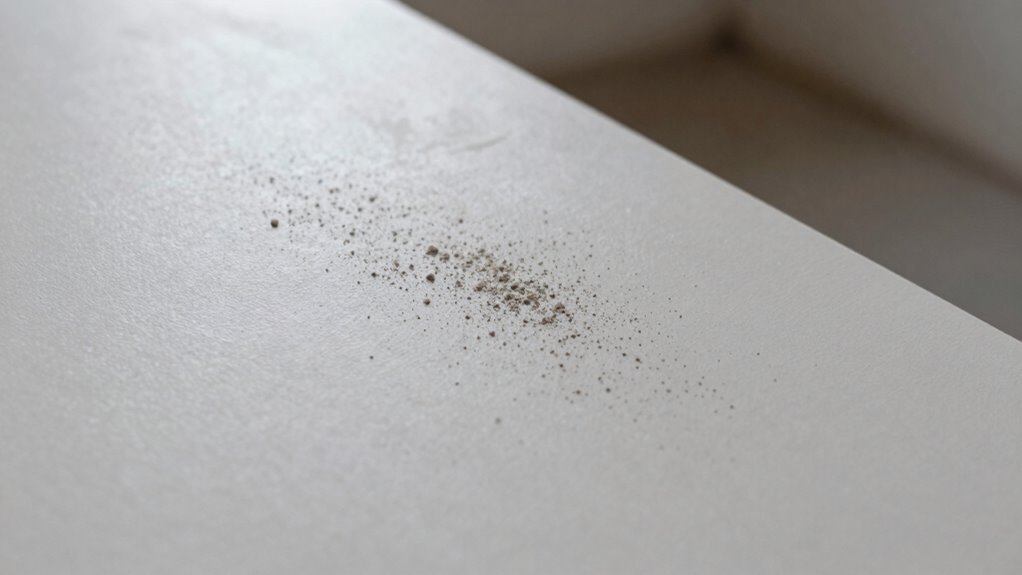

If your finish looks dusty, dry spray is likely the culprit. It happens when paint particles dry mid-air or upon contact, leaving a rough, powdery surface. This often results from poor surface preparation, contamination, or improper environmental conditions like humidity. You might also be using the wrong application techniques or thinning paint incorrectly. To fix and prevent this, you’ll want to improve surface prep, control your environment, and follow proper application methods. Learn more about how to achieve a smooth, professional finish.

Get business pricing on tools and workshop supplies
- Business-only prices and quantity discounts
- Tax-exempt purchasing
- Multiple users, one account, clear invoices
Key Takeaways
- Inadequate surface cleaning can cause contamination, leading to poor adhesion and dry spray formation.
- Improper paint mixing or thinning affects flow, increasing the risk of dry, dusty finishes.
- Environmental factors like high humidity or poor ventilation cause uneven drying and dust settling on wet paint.
- Applying paint too thickly or unevenly results in particles drying mid-air, creating a rough, dusty appearance.
- Lack of proper airflow and temperature control hampers even drying, leading to dry spray issues.
Have you ever encountered a dry spray problem that ruins a coating or finish? It’s frustrating to spend hours preparing and painting only to end up with a dusty, uneven surface. One common culprit is dry spray, which occurs when the paint particles don’t properly flow and form a smooth, glossy coat. Instead, they dry mid-air or upon contact, leading to a textured, rough appearance that looks dusty and unattractive. Understanding what causes this issue can help you prevent it and achieve a professional-looking finish every time.
Dry spray often happens because of poor paint adhesion. When your paint doesn’t stick well to the surface, it tends to dry quickly and unevenly, creating that dusty, uneven layer. One key factor that affects paint adhesion is surface contamination. If your surface isn’t thoroughly cleaned or contains oils, dust, or other residues, the paint won’t bond properly. This weak bond increases the likelihood of dry spray and results in a finish that looks inconsistent and dusty. Before painting, always clean your surface meticulously, removing any contaminants that could interfere with adhesion. This simple step can dramatically improve the final look and durability of your coating. Additionally, understanding the importance of surface prep can help you avoid these common pitfalls. Proper surface preparation ensures that the paint adheres evenly, reducing the chances of dry spray and rough finishes. Moreover, environmental factors like inadequate ventilation can cause humidity to build up and affect the drying process, so working in a well-ventilated area is essential. Ensuring good airflow can help paint dry more evenly and prevent dust from settling on the surface during drying. Properly mixing your paint and thinning it as recommended by the manufacturer can also help maintain optimal flow, reducing the chance of dry spray. Additionally, controlling environmental conditions such as temperature and humidity levels can significantly influence the drying process and paint finish quality.
Products Worth Considering

LEVOIT Vital 200S-P Smart Air Purifier for Large Rooms, White

Levoit Eleva 300X Air Purifier with Sealed HEPA Filtration

Levoit Vital 100S-P Air Purifier with Washable Pre-Filter
As an affiliate, we earn on qualifying purchases.
Frequently Asked Questions
Can Humidity Affect Dry Spray Application Quality?
Yes, humidity impact can affect dry spray application quality. High humidity levels hinder paint drying, causing the spray to appear dusty or uneven. Environmental factors like moisture in the air slow down the evaporation process, leading to a rough finish. To guarantee a smooth, professional look, you should monitor humidity and choose dry, low-humidity days for spray applications. This helps you avoid dustiness and achieve the best results.
What Types of Spray Equipment Reduce Dry Spray Issues?
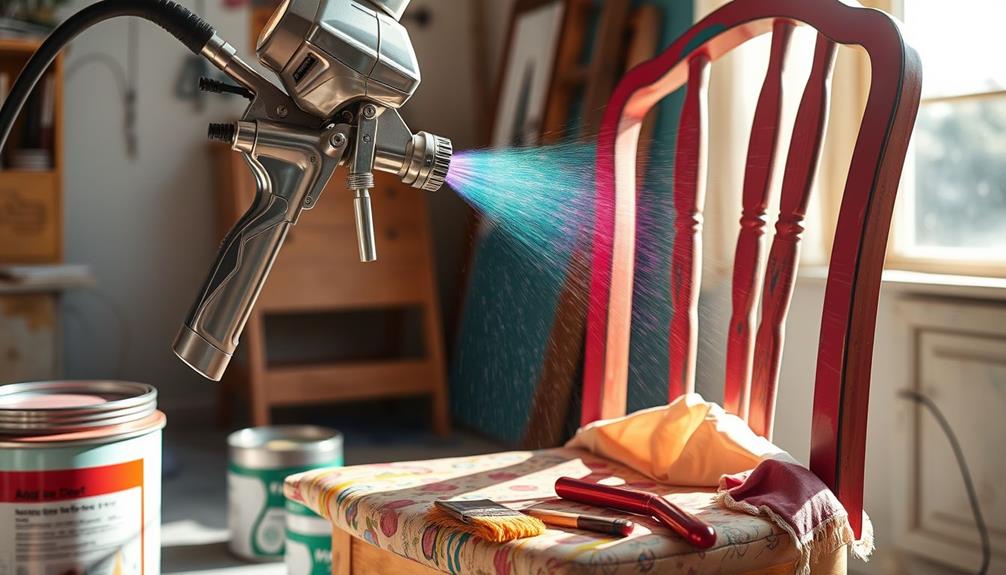
Using high-quality spray equipment that’s properly calibrated helps reduce dry spray issues. Look for equipment with adjustable controls to fine-tune your spray pattern and guarantee even application. Proper calibration makes your spray pattern consistent, preventing excessive overspray or dry spots. Regular maintenance and calibration are essential, as they keep the equipment working at its best, resulting in a smooth, dust-free finish.
How Does Paint Viscosity Influence Dry Spray Formation?
Your paint viscosity dramatically impacts dry spray formation—think of it as the difference between pouring honey and water. If your paint’s too thick, it’s like trying to spray glue; if too thin, it splatters. Achieving perfect paint consistency and using proper application techniques is essential to prevent dry spray. When you adjust viscosity correctly, you’ll get a smooth, flawless finish without that pesky dusting or rough texture.
Are Certain Paints More Prone to Dry Spray Problems?
Yes, certain paints are more prone to dry spray issues, especially those with a thick or uneven paint texture. These paints often have inconsistent flow, which can cause dry spray and affect color consistency. If you notice a rough or dusty finish, it’s likely due to these paint properties. To avoid this, choose paints with good flow characteristics and proper viscosity, ensuring a smooth, uniform finish free of dry spray.
What Maintenance Tips Prevent Dry Spray in Spray Guns?
Ever wonder how to prevent dry spray in spray guns? Regular maintenance is key. You should check paint penetration to guarantee smooth flow and calibrate the nozzle properly for even spray patterns. Clean your gun thoroughly after each use to prevent buildup and clogging. Properly adjusting pressure and viscosity also helps. These steps keep your spray gun in top shape, reducing dry spray and ensuring a flawless finish every time.
Conclusion
So, next time your finish looks dusty, consider the dry spray theory. It’s not just about applying paint too thick or too fast; sometimes, the underlying issue is moisture or improper technique. Think of it like life—sometimes, what seems like a small mistake can lead to bigger problems if not addressed early. By understanding the root cause, you can improve your process and achieve a smoother, dust-free finish. It’s all about paying attention and adjusting accordingly.