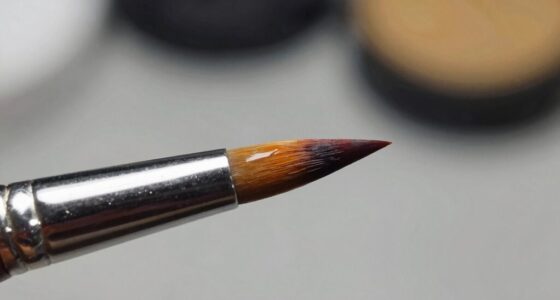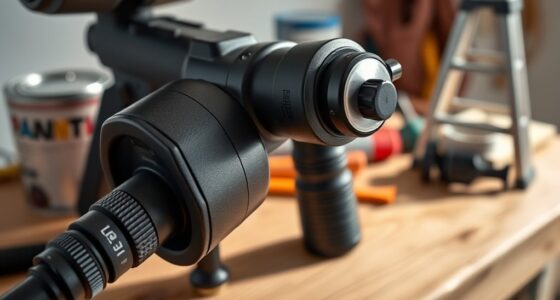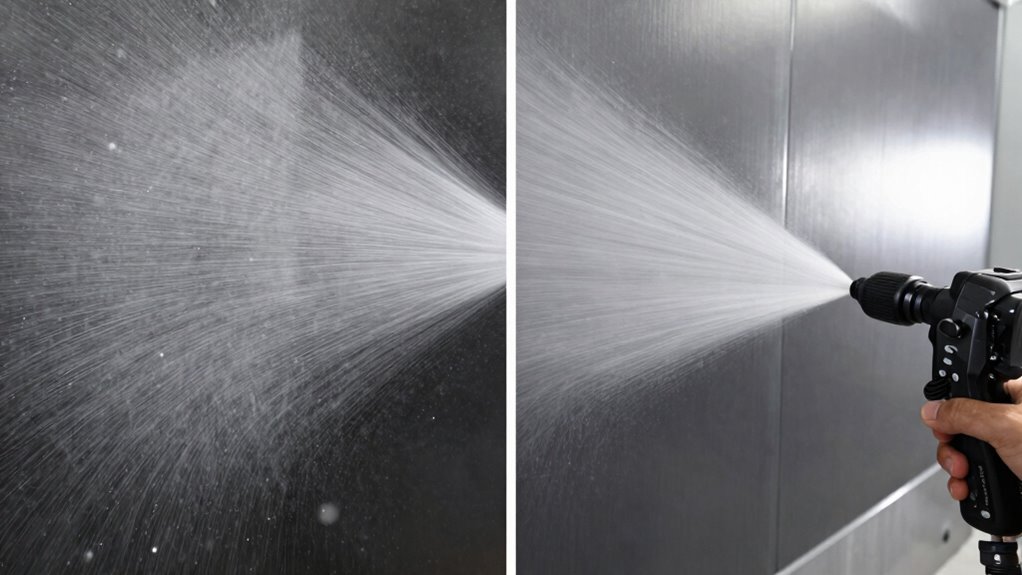
Production spraying is all about speed and efficiency, using high-flow equipment to cover large surfaces quickly, often with automated systems. Finish spraying, on the other hand, focuses on precision, using lighter, adjustable tools for detailed, flawless coats. If you want to achieve a smooth, high-quality finish or work on intricate areas, finish spraying is best. To understand how these techniques can match your project needs, keep exploring the details below.

Get business pricing on tools and workshop supplies
- Business-only prices and quantity discounts
- Tax-exempt purchasing
- Multiple users, one account, clear invoices
Key Takeaways
- Production spraying focuses on rapid, large-area coverage with high flow rates, while finish spraying prioritizes precision and detailed application.
- Production equipment is built for durability and continuous use, whereas finish spraying uses lighter, adjustable tools for fine control.
- Automated systems are common in production spraying to ensure consistency; finish spraying relies on manual, controllable spray guns.
- Production techniques aim for uniform coverage and efficiency, while finish techniques seek flaw-free, smooth surfaces.
- HVLP systems are typical in finish spraying for controlled, soft finishes, unlike high-volume airless systems used in production spraying.
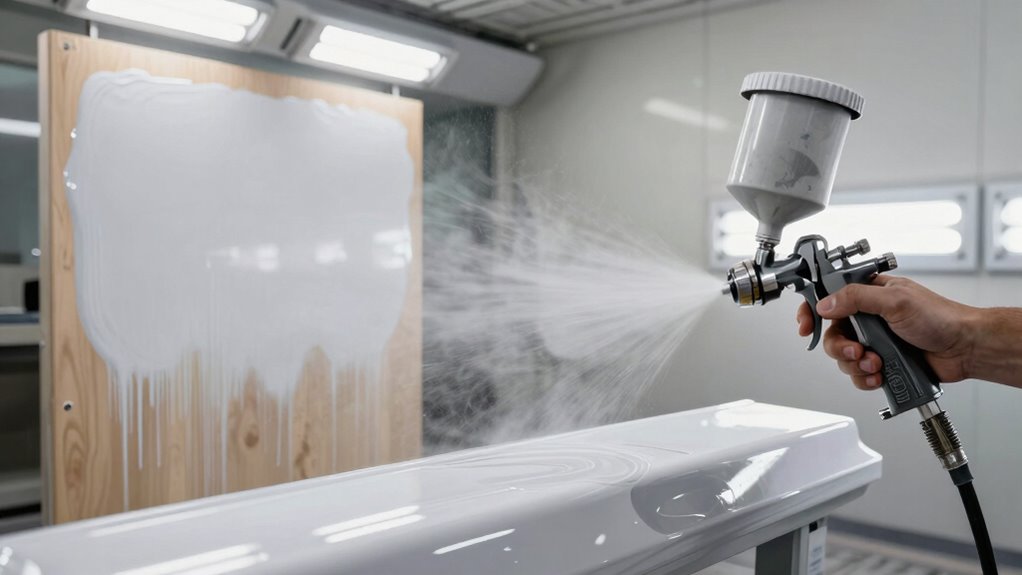
Have you ever wondered what sets production spraying apart from finish spraying? The answer mainly lies in their application techniques and equipment differences. Production spraying is all about efficiency and speed, often used in large-scale manufacturing environments. Here, your goal is to coat surfaces quickly and uniformly, which requires specific techniques and equipment designed for high-volume work. You’ll typically use air-assisted or airless spray guns that deliver a high flow rate, allowing you to cover large areas rapidly. These tools are built for durability and continuous operation, so they can withstand long hours of use without compromising performance. The application techniques focus on maintaining consistent spray patterns and ideal overlap, which helps achieve uniform coverage in the least amount of time. You might also use automated or robotic systems in production spraying, further enhancing efficiency and consistency. These systems are programmed to follow precise paths, minimizing human error and ensuring every surface gets the same coat. Additionally, high-volume, low-pressure (HVLP) systems are often employed in finish spraying for their ability to produce fine, controlled finishes. In contrast, finish spraying is more meticulous and detail-oriented. The application techniques here emphasize precision and quality over speed. You’ll often use handheld spray guns with finer spray patterns that allow for careful control, so you can target small or intricate areas. Equipment differences are significant; the tools used in finish spraying tend to be lighter, more maneuverable, and designed for detailed work. HVLP (high volume, low pressure) sprayers are common because they produce a softer, more controlled spray that reduces overspray and waste. You’ll also find that the equipment in finish spraying often includes adjustable nozzles, allowing you to fine-tune spray patterns based on the project’s needs. Because of the delicate nature of finish spraying, application techniques focus on achieving smooth, flawless coats with minimal texture or imperfections. Moreover, understanding the different application techniques is crucial for achieving the desired results in each type of spraying process, especially when considering the surface finish you aim to achieve.
Products Worth Considering

LEVOIT Vital 200S-P Smart Air Purifier for Large Rooms

Arlo Pro Wireless Security Camera, 2K HDR, 6th Generation, 4-Camera Kit

Blueair Blue Pure 511i Max Smart Air Purifier
As an affiliate, we earn on qualifying purchases.
Frequently Asked Questions
How Do Spray Techniques Vary Between Different Industries?
You adapt spray techniques across industries by selecting the right spray nozzle and managing paint viscosity accordingly. In automotive, you use specific nozzles for fine finishes, while in manufacturing, larger nozzles handle thicker coatings efficiently. You adjust viscosity to guarantee smooth application, preventing drips or uneven layers. By tailoring nozzle selection and viscosity management, you optimize efficiency and quality, making your spraying process suitable for each industry’s unique requirements.
What Safety Measures Are Essential During Spraying Processes?
Imagine shielding yourself behind an invisible barrier—protective gear becomes your armor, safeguarding against airborne particles and fumes. Always wear suitable protective clothing, masks, and goggles. Guarantee proper ventilation systems are in place to usher out lingering vapors, creating a safe breathing environment. Regularly inspect equipment for leaks and maintain a clean workspace. These safety measures help you stay protected, allowing you to focus on perfecting your spray work with peace of mind.
How Does Environmental Impact Differ Between Production and Finish Spraying?
During production spraying, environmental impact is typically higher due to larger volumes and less controlled emissions, making pollution control and environmental regulation essential. Finish spraying usually involves smaller quantities with stricter regulation, reducing pollution risks. You need to implement effective pollution control measures for both to minimize air and water contamination, but production spraying demands more rigorous environmental regulation to manage its broader impact.
What Are Common Troubleshooting Tips for Spray Equipment?
To troubleshoot spray equipment effectively, start by inspecting your spray nozzle for clogs or wear, as this impacts spray quality. Always guarantee proper equipment maintenance, like cleaning and lubricating parts regularly. Check for consistent pressure and leaks, which can cause uneven spraying. If issues persist, calibrate your equipment and replace worn or damaged parts promptly. Routine maintenance and attention to nozzle condition help prevent problems and keep your spraying efficient.
How Do Costs Compare Between Production and Finish Spraying?
Production spraying generally offers better cost efficiency because it covers large areas quickly, reducing labor and material expenses. Finish spraying tends to be more expensive due to its precision, slower application, and higher material costs for detailed work. You’ll find that while production spraying saves money on bulk coverage, finish spraying’s higher quality and detailed finish justify the added expenses in projects requiring fine detail.
Conclusion
As you step back to admire your work, it’s clear how production spraying and finish spraying each play their part—like two brushstrokes on a canvas. Production spraying quickly coats surfaces, like a swift breeze sweeping through, while finish spraying adds that delicate, detailed touch, much like a gentle hand guiding the brush. Together, they create a seamless harmony, transforming raw materials into a polished masterpiece, just as coincidence aligns the final touches perfectly into place.