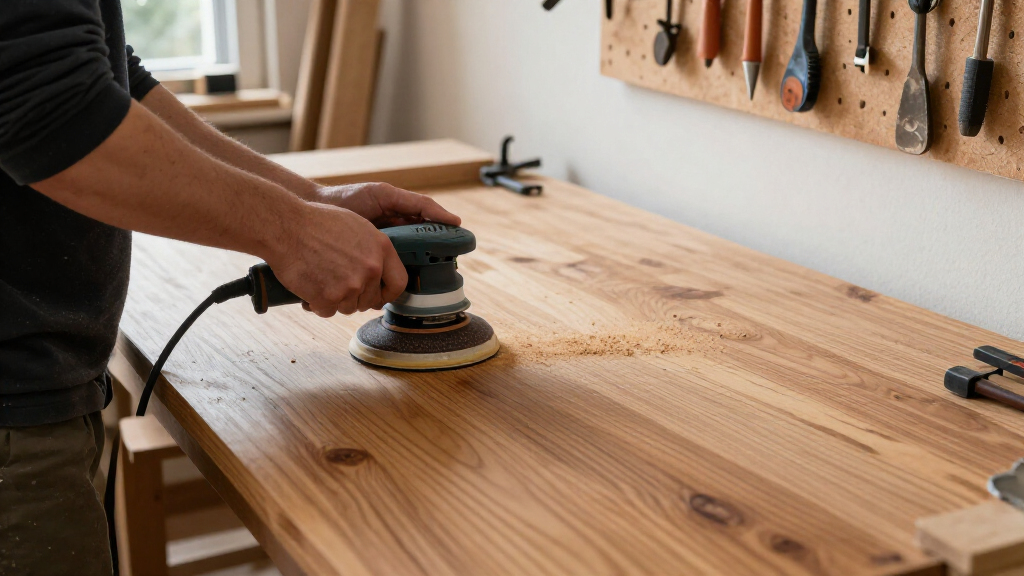
For most woodworking, I’d choose the Makita BO5041K as the best overall random orbital sander here: its variable speed and auxiliary handle suit both controlled finishing and longer sanding sessions. The BOSCH GET65-5N stands out for demanding work with its dual-mode design, while the SKIL SR211601 offers a simpler corded option with a cyclonic dust box. The main tradeoffs are control versus faster stock removal, dust collection versus shop-vac setup, and corded consistency versus cordless freedom. Pad size is similar across most of this lineup, so handling, power source, and dust management make more difference than headline speed alone. Read on for the full comparison, selection criteria, and guidance on choosing a sander for your projects.

Get business pricing on tools and workshop supplies
- Business-only prices and quantity discounts
- Tax-exempt purchasing
- Multiple users, one account, clear invoices
Complete the kit


Key Takeaways
- The Makita BO5041K leads as the most versatile woodworking pick because variable speed and an auxiliary handle support both steady surface work and more controlled sanding.
- The Bosch GET65-5N serves a different job than standard finishing sanders: its dual-mode setup is aimed at users who want a more aggressive option as well as random-orbit sanding.
- Dust collection separates workshop-ready choices from basic kits. The 3M Xtract is built around central vacuum use, while models with included bags or boxes suit buyers who do not have that setup.
- Cordless models make the most sense when mobility is a real need. Milwaukee’s M18 and Makita’s DBO180Z avoid cord management, but are bare units and depend on a compatible battery system.
- Included accessories do not tell the whole value story. Entry-level kits from SHALL, HYCHIKA, Dong Cheng, and DEKOPRO include abrasives, but buyers should also weigh speed control, dust handling, and long-term tool fit.


| random orbital sanders for woodworking | Power source | Dust collection | Weight | Pad diameter |
|---|---|---|---|---|
| 3M Xtract Pneumatic Random Orb | Compressed air | — | 3 lb | 5 in |
| SHALL 5-Inch Random Orbital Sa | Electric; product data lists 120V | Detachable dust bag | About 1.3 kg | 5 in (125 mm) |
| SKIL 5” Random Orbital Sander | Corded electric, 120V | Cyclonic X-flow dust container | 3.4 lb | 128 mm (about 5 in) |
| Makita BO5041K 5" Random Orbit | Corded electric, 120V | — | 3.1 lb | 5 in |
| DEWALT Random Orbit Sander | Corded electric | Locking dust bag or compatible DEWALT dust collector | — | 5 in |
| Makita BO5030K 5" Random Orbit | Corded electric, 120 volts | Through-the-pad collection with dust bag | — | — |
| Metabo HPT Random Orbit Finish | Corded electric, 120 volts | Dust bag and vacuum connector with adapters | 3.1 pounds | — |
| HYCHIKA 5-Inch Random Orbital | Corded electric, 120 volts | Dust bag with 8 dust-collection holes | — | — |
| Dong Cheng 5-Inch Random Orbit | Corded electric, 120 volts AC | Detachable dust box; 32 mm vacuum connection described | 3.3 pounds | — |
| Milwaukee Power Tools M18 BOS1 | 18V battery, sold separately | — | — | — |
| HYCHIKA 5 Inch Random Orbital | 120V corded electric | Eight-hole pad with locking dust bag | 2.95 lb | 5 inches |
| BOSCH GET65-5N 5 In. Dual-Mode | — | Vacuum connection; hose adapter included | 5.3 lb | 5 inches |
| Makita DBO180Z Cordless Body O | — | — | 1.3 kg (listed); 1.7 kg in product description | — |
| DEWALT Random Orbit Sander | — | Locking dust bag; port supports specified DEWALT dust collectors | 3.4 lb | 5 inches |
| Orbital Sander Corded Hand San | Corded electric | Detachable dust box | — | 5 inches |
More Details on Our Top Picks
3M Xtract Pneumatic Random Orbital Sander, 88944, 5 in, Central Vacuum
For woodworking shops that already run compressed air and central extraction, the 3M Xtract 88944 is the specialist pick here. Its 5-inch pad and 3/8-inch orbit suit broad surface prep, while the air-powered 209W motor is built for sustained shop-floor work. The main draw is the extraction setup: with compatible 3M net discs and dust extraction, the system is stated to capture up to 97% of sanding dust. That is a different proposition from the Makita BO5041K, which has a built-in dust bag and vacuum adapter but does not depend on a dedicated extraction system for its basic setup. The tradeoff is practical: this is an industrial-use tool, and it needs an air supply and compatible vacuum equipment. I would skip it for occasional home projects or a workshop without that infrastructure.
Pros:- Central-vacuum-ready design supports integration with an existing shop extraction system.
- Compatible 3M net discs and extraction are stated to capture up to 97% of sanding dust.
- Precision-balanced air motor is designed for smoother running during extended shop use.
- Three-pound weight and aluminum housing suit repeated sanding work.
Cons:- Requires compressed air, so it is less convenient than the corded Makita BO5041K or DEWALT DWE6423.
- Best dust performance depends on compatible extraction equipment and net discs.
- Marked for industrial or occupational use, making it a poor fit for casual home sanding.
Best for: Professional woodworkers with an air compressor and central vacuum or compatible 3M extraction equipment who sand for long stretches and prioritize dust control.
Not ideal for: DIY users without a compressed-air setup, or anyone seeking a standalone sander for occasional furniture repairs.
- Pad diameter:5 in
- Orbit diameter:3/8 in
- Motor power:209W (0.28 HP)
- Power source:Compressed air
- Maximum speed:12,000 rpm
- Weight:3 lb
- Dust connection:Central vacuum or compatible 3M dust extraction
Our verdict“Choose the 3M Xtract if your woodworking shop already has compressed air and dust extraction; otherwise, a corded sander such as the Makita BO5041K is more straightforward.”
SHALL 5-Inch Random Orbital Sander, 3.2 AMP, 6 Variable Speeds
The SHALL 5-inch sander is the most ready-to-start option in this group: its six speed settings and included 30-sheet assortment let a new woodworker move from aggressive stock removal to finer sanding without sourcing discs right away. The stated range of 6,000–13,000 rpm is broader at the upper end than the Makita BO5041K, while the 1.3 kg body is aimed at portable, hand-held work. Its detachable dust bag is convenient for small jobs, but it is not a substitute for the central extraction setup of the 3M Xtract. The product data also gives conflicting power details—350W in the description and 3A in the specs—so I would not choose it on a precise power comparison. It makes the most sense for a starter woodworking bench, not for sustained professional sanding or demanding dust management.
Pros:- Six speed settings support adjustment for rough sanding, finish preparation, and polishing.
- Includes 30 sheets across six grits from 40 to 240.
- Light 1.3 kg body is easier to handle during furniture and panel work.
- Detachable dust bag keeps basic cleanup self-contained.
Cons:- The listed motor output is inconsistent: 350W in the description and 3A in the specs.
- Dust bag offers less extraction capacity than the 3M Xtract central-vacuum system.
- Included abrasives are a starter assortment, not a replacement for matching discs to each project.
Best for: Beginning furniture refinishers who want a variable-speed 5-inch sander and a range of grits included for common wood-sanding stages.
Not ideal for: Professional woodworkers who need verified power specifications, dependable shop-level dust extraction, or a tool intended for long production runs.
- Pad diameter:5 in (125 mm)
- Speed range:6,000–13,000 rpm
- Speed settings:6
- Power source:Electric; product data lists 120V
- Weight:About 1.3 kg
- Included abrasives:30 sheets: five each of 40, 60, 80, 120, 180, and 240 grit
- Dust collection:Detachable dust bag
Our verdict“Pick the SHALL for beginner furniture work where included abrasives and speed adjustment matter more than shop-grade extraction or a clearly stated power rating.”
SKIL 5” Random Orbital Sander with Cyclonic Dust Box & 3pc Sanding Sheet – SR211601
The SKIL SR211601 suits woodworkers who value a compact body and simple onboard dust collection for furniture parts, edges, and smaller panels. Its speed dial spans 7,000–13,000 OPM, giving more control than the fixed-speed impression of a basic finishing tool, while the counterweight and soft rubber grip are intended to reduce vibration during longer sessions. The transparent cyclonic dust box is easy to check and empty, though it cannot match the extraction capacity of the 3M Xtract when paired with a central vacuum. Compared with the Makita BO5041K, the SKIL emphasizes a smaller, easier-to-place body rather than an adjustable front handle for corner work. It is a practical corded choice for controlled, intermittent sanding, but its three included sheets make it less ready for a full refinishing project than the SHALL bundle.
Pros:- Compact design helps with control around smaller parts and tighter work areas.
- Variable 7,000–13,000 OPM range adapts to different sanding stages.
- Cyclonic dust box is transparent and designed for easy emptying.
- Counterweight and soft rubber grip are intended to limit vibration fatigue.
Cons:- Onboard dust box has less capacity than a connected central-vacuum system such as the 3M Xtract setup.
- Only three sanding sheets are included, fewer than the 30-sheet SHALL assortment.
- At 3.4 lb, it is heavier than the SHALL’s stated 1.3 kg body.
Best for: Home woodworkers sanding furniture components and smaller workpieces who want variable speed, a compact grip, and a visible dust container.
Not ideal for: Users tackling large projects with heavy dust loads or anyone who wants a broad abrasive assortment included with the tool.
- Pad diameter:128 mm (about 5 in)
- Motor:2.8A
- Speed range:7,000–13,000 OPM
- Power source:Corded electric, 120V
- Weight:3.4 lb
- Dust collection:Cyclonic X-flow dust container
- Included sanding sheets:3
- Dimensions:7.87 × 4.8 × 5.51 in
Our verdict“Choose the SKIL for compact, variable-speed sanding on home furniture projects, but look to the SHALL for more included abrasives or the 3M Xtract for stronger extraction.”
Makita BO5041K 5″ Random Orbit Sander
The Makita BO5041K earns its place for woodworking that mixes broad faces with corners and confined areas. Its adjustable front handle gives a second hand a useful position when guiding the pad near cabinet edges, while the 4,000–12,000 OPM dial offers a lower starting range than the DEWALT DWE6423, which begins at 8,000 OPM. That lower speed can help with delicate finish sanding and heat-sensitive work. Makita also includes a case, dust bag, and vacuum-port adapter, so it is more flexible than a bag-only setup, though it still lacks the 3M Xtract’s central-vacuum-focused dust system. The tradeoffs are a corded design and a 1/8-inch orbit that prioritizes controlled finishing over the larger 3/8-inch orbit listed for the 3M. I would choose it for varied furniture work, not cordless mobility.
Pros:- Adjustable front handle gives added control around corners and confined areas.
- 4,000–12,000 OPM range provides a lower-speed option than the DEWALT DWE6423.
- Includes a dust bag, vacuum-port adapter, abrasive disc, and tool case.
- Pad-control system is designed to limit uncontrolled pad movement at startup.
Cons:- Corded power limits movement compared with cordless options in the roundup.
- Included dust bag is less suited to heavy dust control than the 3M Xtract central-vacuum system.
- The 1/8-inch orbit favors controlled sanding rather than the more aggressive 3/8-inch orbit specified for the 3M Xtract.
Best for: Cabinetmakers and furniture refinishers who need a corded sander that can handle flat panels, edges, and tighter corners with adjustable hand positions.
Not ideal for: Woodworkers who need cordless freedom, production-scale dust extraction, or a dedicated tool for the fastest stock removal.
- Pad diameter:5 in
- Motor:3A
- Speed range:4,000–12,000 OPM
- Orbit diameter:1/8 in
- Power source:Corded electric, 120V
- Weight:3.1 lb
- Abrasive attachment:5-inch, 8-hole hook-and-loop discs
- Included accessories:Abrasive disc, dust bag, tool case
Our verdict“Choose the Makita BO5041K for varied furniture and cabinet work where its adjustable front handle and low speed range are more useful than cordless mobility.”
DEWALT Random Orbit Sander, Variable Speed, 5-Inch (DWE6423)
The DEWALT DWE6423 is a straightforward choice for woodworkers who want a low-profile corded sander that keeps the hand close to the work. That shorter height can make it easier to guide the pad across panels and maintain control on edges; the separate counterweight is designed to reduce vibration, a useful pairing for repeated passes. Its 8,000–12,000 OPM range is narrower at the low end than the Makita BO5041K, so the Makita offers more latitude for delicate sanding. Dust collection is handled by a locking bag or compatible DEWALT extractors, with an adapter needed for other vacuum hoses. That is more practical for many home shops than the air-and-vacuum requirements of the 3M Xtract, but it does not provide the same stated extraction performance. It is a solid general-purpose pick, with less corner-focused versatility than the Makita’s adjustable front handle.
Pros:- Low-profile body helps keep the hand closer to the workpiece for controlled sanding.
- Separate counterweight is designed to reduce vibration during repeated passes.
- Variable speed supports different wood-sanding tasks within its 8,000–12,000 OPM range.
- Locking dust bag and compatible vacuum connections provide more than one collection option.
Cons:- Lowest speed is higher than the Makita BO5041K’s 4,000 OPM setting.
- Connecting to other vacuum systems may require a DWV9000 universal quick connector.
- Dust bag and extractor compatibility do not offer the 3M Xtract system’s stated dust-capture performance.
Best for: Woodworkers who want a low-profile corded sander for panels, furniture surfaces, and routine finish preparation, especially if they already use compatible DEWALT extraction.
Not ideal for: Users who need very low-speed control for delicate finishes, an adjustable front handle for corner work, or a cordless tool.
- Pad diameter:5 in
- Motor:3A
- Speed range:8,000–12,000 OPM
- Power source:Corded electric
- Pad attachment:Hook-and-loop
- Dust collection:Locking dust bag or compatible DEWALT dust collector
- Vacuum connection:DWV010 or DWV012 directly; DWV9000 connector for 1-1/4 in hoses
- Design:Low-profile body with separate counterweight
Our verdict“Pick the DEWALT DWE6423 for everyday woodworking where a low-profile body and vibration control matter more than the Makita’s lower-speed range or corner handle.”
Makita BO5030K 5″ Random Orbit Sander, with Tool Case
The BO5030K is a straightforward woodworking pick for buyers who want steady corded output rather than adjustable speed. Its 3-amp motor runs at 12,000 OPM, and the 1/8-inch orbit is intended to balance brisk stock removal with a smooth finish on broad panels and furniture parts. The pad-control system moderates startup, which helps limit an abrupt mark or gouge when the pad first meets a workpiece. Compared with the variable-speed Metabo HPT SV13YST, this Makita offers less control over delicate finishing or polishing, but its included case and through-pad dust collection make it a practical shop setup. The tradeoff is that the dust bag is not a substitute for a connected extractor, and the fixed speed is less flexible for mixed materials. I’d choose it for repeatable general sanding, not fine speed-sensitive work.
Pros:- 3-amp motor and 12,000 OPM provide consistent corded sanding output
- 1/8-inch orbit is suited to general stock removal and smoothing
- Pad-control system helps reduce aggressive movement at startup
- Includes a plastic tool case and dust bag
Cons:- Fixed speed gives less control than the variable-speed Metabo HPT SV13YST
- Dust bag collection is less suited to demanding dust-control needs than vacuum extraction
- Corded design limits movement away from an outlet
Best for: Woodworkers who want a corded 5-inch sander for routine panel, furniture, and finish-preparation work, with a case for storage.
Not ideal for: Users who regularly sand delicate finishes or switch among materials and need variable speed, or shops that require highly effective dust extraction from the tool alone.
- Disc diameter:5 inches
- Motor:3.0 amps
- Maximum speed:12,000 OPM
- Orbit diameter:1/8 inch
- Power source:Corded electric, 120 volts
- Abrasive attachment:5-inch, 8-hole hook-and-loop
- Dust collection:Through-the-pad collection with dust bag
- Included items:Tool case, dust bag, and one #120 abrasive disc
Our verdict“Choose the BO5030K for dependable, fixed-speed shop sanding and included storage, but pick a variable-speed model for delicate or varied finishing tasks.”
Metabo HPT Random Orbit Finishing Sander, 5-Inch Variable Speed, SV13YST
The SV13YST is the most finish-oriented corded choice in this group: its variable speed from 9,000 to 13,000 RPM lets woodworkers ease off on delicate surfaces and raise the pace for routine sanding. Its 3.1-pound body and soft palm grip are useful on longer furniture or cabinet sessions, where a heavy tool can become tiring. A hose connector and adapters give it a clearer path to vacuum collection than the Makita BO5030K’s included bag, although the Makita supplies a tool case and uses a 1/8-inch orbit specified for fast, smooth work. The Metabo HPT’s 2.8-amp motor is a little less powerful by the stated amperage, and the supplied abrasive is limited to one 120-grit sheet. I’d pick it for controlled finishing rather than the most aggressive stock removal.
Pros:- Variable speed allows adjustment for different wood and finishing stages
- Light 3.1-pound body and comfort grip suit extended sanding sessions
- Hose connector and adapters allow connection to dust extraction
- Hook-and-loop pad supports quick abrasive changes
Cons:- 2.8-amp motor has less stated amperage than the Makita BO5030K’s 3-amp motor
- Package includes only one 120-grit sanding sheet
- Corded power limits mobility around large workpieces
Best for: Furniture makers and home woodworkers who want variable speed for moving between coarse preparation and fine sanding, plus the option to connect a vacuum.
Not ideal for: Buyers prioritizing maximum stock removal, a substantial included abrasive assortment, or cordless freedom.
- Disc diameter:5 inches
- Motor:230 watts, 2.8 amps
- Speed range:9,000–13,000 RPM
- Weight:3.1 pounds
- Power source:Corded electric, 120 volts
- Abrasive attachment:Hook-and-loop
- Dust collection:Dust bag and vacuum connector with adapters
- Included abrasive:One 120-grit sheet
Our verdict“Choose the SV13YST if control over sanding speed and vacuum hookup matter more than a stronger stated motor or a fuller accessory kit.”
HYCHIKA 5-Inch Random Orbital Sander, 13000RPM Electric Palm Sander with 6 Variable Speeds
For a first corded sander, the HYCHIKA’s appeal is its ready-to-start bundle: 12 discs cover 80, 120, and 240 grit, so a beginner can move from rough preparation toward finer sanding without immediately sourcing several abrasives. Six speed settings and a maximum 13,000 RPM add flexibility for furniture refinishing and general woodwork. That is more adjustable than the fixed-speed Makita BO5030K, while the Metabo HPT SV13YST offers a stated speed range and a vacuum adapter for users with extraction equipment. HYCHIKA instead relies on its dust bag, and its listed 2.5-amp rating is lower than those two corded alternatives. The product description makes strong claims about collection, but the supplied information does not establish performance under every sanding condition. I’d treat it as a convenient entry kit, not a proven choice for sustained professional workloads.
Pros:- Six speed settings provide more flexibility than fixed-speed sanders
- Includes 12 discs in 80, 120, and 240 grit
- Rubberized grip is designed for control in horizontal and vertical positions
- Tool-free hook-and-loop abrasive changes
Cons:- Listed 2.5-amp rating is lower than the Makita BO5030K and Metabo HPT SV13YST
- Dust collection is described around a bag rather than a supplied vacuum adapter
- The provided product data does not specify an orbit diameter
Best for: New woodworkers and occasional furniture refinishers who want variable speed and several starter grits in one package.
Not ideal for: Professional users sanding for long periods, or anyone who needs a documented vacuum connection and dependable dust control for a dedicated shop.
- Disc diameter:5 inches
- Motor:300 watts, 2.5 amps
- Maximum speed:13,000 RPM
- Speed settings:6
- Power source:Corded electric, 120 volts
- Abrasive attachment:Hook-and-loop
- Dust collection:Dust bag with 8 dust-collection holes
- Included abrasives:12 discs: four each in 80, 120, and 240 grit
Our verdict“Pick this HYCHIKA as a convenient starter set for occasional woodworking, but favor the Metabo HPT for vacuum hookup or the Makita for a higher stated amperage.”
Dong Cheng 5-Inch Random Orbital Sander 3.2A 12800OPM
The Dong Cheng stands out for pairing six speed settings with a broad 20-disc assortment, including 80, 120, 180, 240, and 320 grit. That range is useful for a woodworker who wants to move from heavier material removal to finer surface preparation without buying abrasives right away. Its stated 380-watt motor and 8,000–12,800 OPM range give more adjustment than the fixed-speed Makita BO5030K, while its 3.3-pound weight is close to the Metabo HPT SV13YST’s listed 3.1 pounds. The package also includes spare carbon brushes and a tool bag. The tradeoffs are a heavier body than the Metabo and a dust box that may be less convenient for longer sessions than a vacuum-connected setup. I’d favor this kit for varied home projects; for finishing control with an explicit hose adapter, the Metabo HPT is the clearer fit.
Pros:- Six speed settings span 8,000 to 12,800 OPM
- Includes 20 discs across five grits, from 80 through 320
- 380-watt motor is the highest stated wattage among these corded models
- Package includes spare carbon brushes and a nylon tool bag
Cons:- At 3.3 pounds, it is heavier than the Metabo HPT SV13YST
- Supplied dust box may be less suitable than a vacuum-connected setup for extended sanding
- Its listed maximum speed is slightly below the 13,000 RPM HYCHIKA and Metabo HPT models
Best for: DIY woodworkers who tackle projects from rough sanding through fine preparation and value an included spread of grits, spare brushes, and a storage bag.
Not ideal for: Users who prioritize the lightest tool for long sessions or expect to connect directly to a shop vacuum using the supplied accessories.
- Disc diameter:5 inches
- Motor:380 watts, 3.17 amps
- Speed range:8,000–12,800 OPM
- Speed settings:6
- Weight:3.3 pounds
- Power source:Corded electric, 120 volts AC
- Dust collection:Detachable dust box; 32 mm vacuum connection described
- Included abrasives:20 discs in 80, 120, 180, 240, and 320 grit
- Included accessories:Nylon tool bag and a pair of carbon brushes
Our verdict“Choose the Dong Cheng for a varied sanding kit with multiple grits and adjustable speed, but choose the Metabo HPT for a lighter body and supplied vacuum adapters.”
Milwaukee Power Tools M18 BOS125-0 Random Orbital Sander 18V Bare Unit
The Milwaukee M18 BOS125-0 earns its place for woodworkers who need to sand away from an outlet: its 18V battery platform removes the cord from furniture work, installation jobs, and projects spread around a workspace. The variable dial covers 7,000–12,000 OPM, so it can run slower for controlled finishing or faster for routine material removal. That speed range is narrower at the top than the 13,000-RPM HYCHIKA and Metabo HPT SV13YST, and the Makita BO5030K offers a 3-amp corded motor without battery runtime concerns. This Milwaukee is also a bare unit; the battery and charger are sold separately, which makes it a more compelling fit for buyers who already own compatible M18 batteries. The supplied information does not describe included abrasives or dust accessories, so check the kit contents before planning a dust-management setup.
Pros:- Cordless 18V format supports work away from an outlet
- Variable speed from 7,000 to 12,000 OPM suits different sanding stages
- 5-inch pad uses a common size for woodworking abrasives
- Useful addition for existing Milwaukee M18 battery users
Cons:- Battery and charger are sold separately
- Maximum 12,000 OPM is below the HYCHIKA and Metabo HPT’s stated 13,000 RPM
- Provided product data does not specify included abrasives or dust-collection accessories
Best for: Woodworkers already invested in Milwaukee M18 batteries who need a 5-inch sander for portable repair, installation, or work away from outlets.
Not ideal for: Buyers without compatible M18 batteries, or anyone who wants a complete corded kit with included abrasives and clearly specified dust-collection accessories.
- Disc diameter:5 inches
- Power source:18V battery, sold separately
- Speed range:7,000–12,000 OPM
- Maximum speed:12,000 OPM
- Speed control:Variable-speed dial
- Battery and charger:Not included
- Item weight:1.4 kg
- Item dimensions:10.31 × 6.54 × 5.59 inches
Our verdict“Choose the Milwaukee for cordless convenience if you already own M18 batteries; otherwise, a corded model such as the Makita BO5030K is a more complete starting point.”
HYCHIKA 5 Inch Random Orbital Sander, 13000 RPM Electric Palm Sander
I’d shortlist this HYCHIKA for furniture and cabinet projects that move between material removal and finer surface work. Its six speed settings span 6,000–13,000 OPM, giving it more control over sanding pace than the single-speed DEWALT DWE6420. The 300W corded motor and included 12 discs make it a ready-to-use option for a home workshop, while the 2.95-pound body is a practical advantage when working across broad panels. Its sealed construction and locking dust bag address common workshop annoyances, though a bag is still less suitable than vacuum extraction for keeping fine dust out of the air. I’d choose it for flexible general woodworking, not for heavy stock removal like the Bosch GET65-5N’s turbo mode or for cordless work away from an outlet.
Pros:- Six speed settings support both faster sanding and gentler finishing.
- Light 2.95-pound body can reduce fatigue during extended hand-held work.
- Includes 12 sanding discs for getting started without a separate abrasive purchase.
- Eight-hole pad, locking dust bag, and dust-sealed construction support cleaner operation.
Cons:- Dust bag collection is less effective for fine-dust control than a shop vacuum connection.
- Corded operation limits reach and mobility compared with the Makita DBO180Z.
- Does not offer the Bosch GET65-5N’s high-removal turbo mode.
Best for: DIY woodworkers sanding furniture, cabinet faces, and small projects who want speed control and included abrasives.
Not ideal for: Woodworkers who need aggressive stock removal, vacuum-based dust extraction, or a cordless tool for work away from power.
- Pad diameter:5 inches
- Motor power:300W
- Speed settings:6
- Operating speed:6,000–13,000 OPM
- Weight:2.95 lb
- Power source:120V corded electric
- Dust collection:Eight-hole pad with locking dust bag
- Included abrasives:12 sanding discs
Our verdict“Choose this HYCHIKA for varied DIY woodworking where adjustable speed and a light corded body matter more than aggressive removal or cordless freedom.”
BOSCH GET65-5N 5 In. Dual-Mode Random Orbit Sander
The Bosch GET65-5N stands apart from conventional finishing sanders because its dual-mode design adds a direct-drive turbo setting for much faster material removal. That makes it a better fit than the DEWALT DWE6420 when flattening or stripping a substantial wood surface, while its standard random-orbit mode remains suited to routine sanding and finishing. The variable-speed motor and multi-hole pad system also give woodworkers more flexibility with abrasives and work pace. This capability comes with a learning curve: turbo mode is less forgiving near edges and on delicate veneer, so I’d switch back to standard mode before finishing. Dust collection requires a vacuum and hose rather than a simple self-contained bag, and its 5.3-pound weight is greater than lighter palm-sander options such as the HYCHIKA.
Pros:- Turbo direct-drive mode offers substantially faster stock removal than standard random-orbit sanding.
- Standard mode provides a separate setting for general sanding and finishing.
- Variable speed and multi-hole pad support different woodworking tasks and abrasive layouts.
- Auxiliary handle and vacuum adapters support controlled work and dust extraction.
Cons:- Turbo mode can remove material too aggressively for delicate surfaces or edge work.
- Requires a vacuum and hose for dust collection rather than collecting dust in an included bag.
- At 5.3 pounds, it is heavier than the HYCHIKA and other compact palm sanders.
Best for: Experienced woodworkers who regularly remove finish or level larger wood surfaces and can connect a vacuum for dust extraction.
Not ideal for: Beginners sanding delicate veneer or small trim, and buyers seeking a light sander with a self-contained dust bag.
- Pad diameter:5 inches
- Motor:Variable-speed corded motor
- Motor amperage:6.5 A (description); 7.5 A listed in product information
- No-load speed:290–640 RPM
- Orbit speed:3,300–7,300 OPM
- Operating modes:Standard random orbit and turbo direct-drive eccentric orbit
- Weight:5.3 lb
- Dust collection:Vacuum connection; hose adapter included
Our verdict“Pick the Bosch when faster removal is a priority and you want a separate finishing mode, but skip it if most of your work is delicate sanding.”
Makita DBO180Z Cordless Body Only Cordless 18 V Li-ion Random Orbit Sander, 125 mm by Makita
For woodworking that happens away from a convenient outlet, the Makita DBO180Z is the clearest alternative to corded models such as the DEWALT DWE6420. Its 18V battery platform removes the cord from furniture repairs, on-site trim work, and sanding large pieces that are awkward to position near a receptacle. Three electronic speed settings let it handle both general sanding and lighter finishing, while its compact form and low center of gravity favor maneuverability. The tradeoff is that this is a bare unit: buyers need a compatible battery and charger, which are not supplied. Its 125mm pad is close to, but not exactly, the five-inch standard, so check abrasive compatibility before stocking discs. I’d favor it for convenience, not for turbo-level removal like the Bosch GET65-5N.
Pros:- Cordless 18V operation makes sanding easier at jobsites and around large workpieces.
- Three speed settings support different sanding stages.
- Compact body and low center of gravity aid control in tighter working positions.
- Pad brake and dust-extractor connection support cleaner, more controlled operation.
Cons:- Battery and charger are not included, so it is a less complete purchase for new users.
- 125mm pad size may limit direct compatibility with standard five-inch abrasives.
- Does not offer the Bosch GET65-5N’s dedicated aggressive-removal mode.
Best for: Woodworkers already equipped with compatible Makita 18V batteries who need a maneuverable sander for repairs, site work, or pieces far from outlets.
Not ideal for: First-time cordless-tool buyers without Makita batteries, or woodworkers who need maximum removal speed and a clearly stated vacuum or dust-bag setup.
- Pad size:123 mm (paper size: 125 mm)
- Battery platform:18V Li-ion
- Speed settings:3
- No-load orbits:7,000 / 9,500 / 11,000 per minute
- Sanding strokes:14,000 / 19,000 / 22,000 per minute
- Orbit diameter:2.8 mm
- Weight:1.3 kg (listed); 1.7 kg in product description
- Abrasive attachment:Hook-and-loop
- Included:MAKPAC case; battery and charger not supplied
Our verdict“Choose the Makita DBO180Z if you already own compatible 18V batteries and value freedom from a cord over maximum stock-removal speed.”
DEWALT Random Orbit Sander, PSA, 5-Inch (DWE6420)
The DWE6420 is a straightforward choice for woodworkers who want a familiar corded sander without speed controls to manage. Its 12,000 OPM single-speed motor suits routine smoothing and finish preparation, while the low-profile body helps keep the tool close to the workpiece for control on panels and furniture parts. A separate counterweight and rubber overmold are aimed at reducing the strain of longer sessions. Compared with the six-speed HYCHIKA, though, it offers less ability to slow down for delicate surfaces or adjust to different abrasives. This model also uses a PSA pad, so abrasive changes depend on pressure-sensitive discs rather than the hook-and-loop fastening used by the Makita DBO180Z and several other options here. I’d pick it for repetitive, predictable sanding—not for users who want flexible disc changes or variable speed.
Pros:- Single 12,000 OPM speed offers a simple setup for routine sanding tasks.
- Low-profile design brings the hand closer to the workpiece for control.
- Separate counterweight and rubber overmold are designed to reduce vibration discomfort.
- Dust-sealed switch and locking dust bag support workshop use.
Cons:- No variable-speed control for delicate woods or different sanding stages.
- PSA pad is less convenient for quick disc changes than hook-and-loop systems.
- Dust-bag collection does not match a dedicated vacuum connection for fine-dust control.
Best for: Woodworkers who prefer a simple corded sander for routine panel, furniture, and finish-preparation work and are comfortable using PSA abrasives.
Not ideal for: Buyers who need variable speed, quick hook-and-loop disc changes, or cordless mobility.
- Pad diameter:5 inches
- Motor:3 A corded motor
- Speed:12,000 OPM
- Speed control:Single speed
- Pad fastening:PSA
- Weight:3.4 lb
- Dust collection:Locking dust bag; port supports specified DEWALT dust collectors
- Body design:Low-profile design with separate counterweight
Our verdict“Choose the DWE6420 for uncomplicated, repeatable sanding with PSA discs, but pick the HYCHIKA if you need speed adjustment.”
Orbital Sander Corded Hand Sander: DEKOPRO 5″ Random Orbital Sander with Dust Box, 6 Various Speeds Electric Palm Sander with Dust Box, 16Pcs Sandpapers for Woodworking & Sanding-Yellow
The DEKOPRO’s strongest woodworking appeal is its six-speed range and 16 included sanding discs, which cover several grit levels for moving from rougher prep toward finer finishing. That makes it more immediately adaptable than the DEWALT DWE6420, whose single speed and PSA pad favor a narrower routine. A detachable dust box and rubber grip also suit small furniture or DIY projects where quick cleanup and hand comfort matter. The product information lists a 220V supply, while the description gives a speed of up to 14,000 RPM and the specs list 13,000 RPM; I’d verify the correct electrical version and rating before buying. Compared with the Bosch GET65-5N, it lacks a separate turbo mode for fast stock removal, so its role is general sanding rather than heavy material removal.
Pros:- Six speeds allow adjustments across rougher sanding and finer surface work.
- Includes 16 discs in multiple grits for a range of woodworking stages.
- Detachable dust box offers a self-contained collection option for small projects.
- Hook-and-loop fastening supports quick abrasive changes.
Cons:- Product information lists 220V, so buyers should verify compatibility with their electrical supply.
- Speed information differs between the description and specifications.
- Dust box collection is less suitable than vacuum extraction for controlling fine sanding dust.
Best for: DIY woodworkers who want multiple speed settings and a broad selection of included grits for furniture refinishing and general sanding.
Not ideal for: Buyers who need high-capacity vacuum extraction, aggressive stock removal, or a clearly verified electrical rating for their workshop supply.
- Pad diameter:5 inches
- Motor amperage:2.5 A
- Speed settings:6
- Maximum speed:14,000 RPM in description; 13,000 RPM in product information
- Voltage:220V listed
- Power source:Corded electric
- Abrasive attachment:Hook-and-loop
- Included abrasives:16 discs; listed grits include 60, 80, 120, 240, 400, and 1000
- Dust collection:Detachable dust box
Our verdict“Consider the DEKOPRO for small woodworking projects that benefit from varied grits and adjustable speed, after confirming its voltage and speed details.”
How We Picked
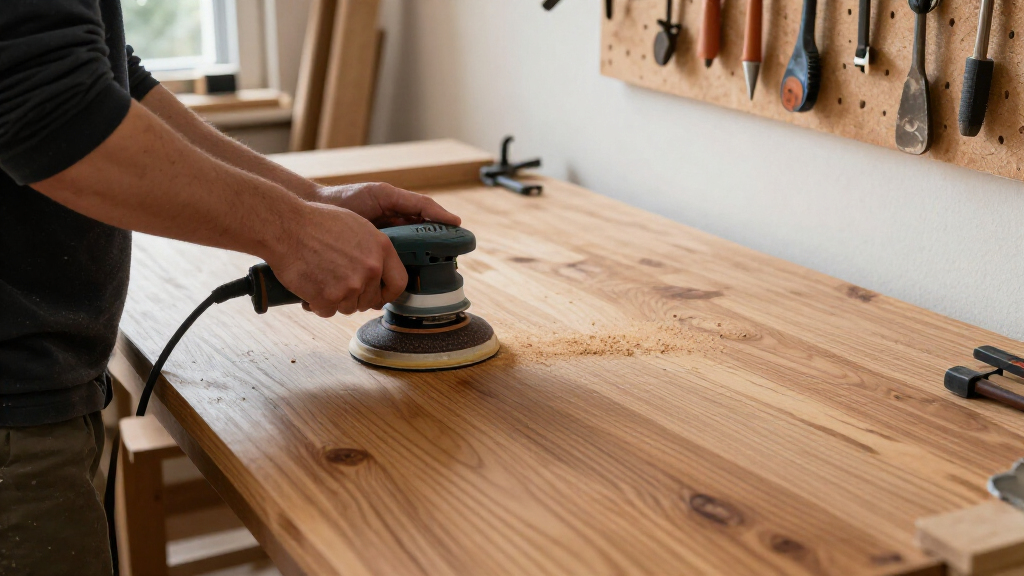
I compared these 15 sanders by how well their stated features match common woodworking jobs: flattening and smoothing boards, preparing furniture for finish, and sanding between coats. Ranking priorities included speed control, handling features, dust collection options, power source, and whether a model’s design favors routine finishing or more demanding material removal. I also separated standard 5-inch corded sanders from cordless tools, central-vacuum equipment, and dual-mode models rather than treating them as interchangeable.
The ranking favors useful control and versatility for the widest range of woodshop tasks, then recognizes models that make a clear case for a particular buyer or setup. A dust bag is not equivalent to a central-vacuum connection, and a bare cordless tool is not a complete kit for someone without compatible batteries. Included sandpaper and accessories add convenience, but do not outweigh handling, dust-management fit, or the kind of work the sander is designed to do.
Factors to Consider When Choosing Random Orbital Sanders For Woodworking
Choosing a woodworking sander involves more than comparing motor speed. I’d match the tool to the surfaces you sand, the dust-control setup you own, and how much control you need near edges or on delicate stock. These broader factors can prevent a common mismatch: buying a feature-rich tool that does not suit your projects or shop.
Match sanding behavior to the work
Random orbital sanders are suited to general smoothing because the pad both spins and moves in an offset orbit, helping reduce obvious swirl patterns when used correctly. That does not make every model equally suited to removing material quickly. If most of your work is finish preparation, controllable speed and a comfortable grip may matter more than a high maximum speed. For rough boards or heavy removal, check whether the tool offers a more aggressive mode rather than assuming a standard finishing sander can replace a dedicated stock-removal tool. A common mistake is pressing down harder to speed sanding; that can leave uneven marks and make the pad work less effectively. Start with the least aggressive approach that makes progress, then change grit or mode if needed.
Choose speed control for your materials
Variable speed is useful when one sander will handle several species, coatings, and stages of finishing. Lower settings can help with delicate veneer, softwood, or work near edges, while higher settings can suit routine smoothing when the abrasive and surface allow it. Speed is not a substitute for selecting the right grit: an overly coarse sheet can leave scratches that remain visible under stain or clear finish. Buyers who mainly sand ordinary boards may find a simple fixed-speed tool adequate, while furniture refinishers often benefit from a wider control range. Check whether adjustment is easy to reach without changing your grip. Consider the full workflow too, since sanding between coats calls for a lighter touch than removing old finish.
Plan dust collection around your shop
Dust collection ranges from an attached bag or box to a connection intended for a central vacuum system. A bag is convenient for quick jobs and portability, but it should not be treated as equivalent to a properly matched shop-vac or extraction setup. If you already own a dust extractor, check the sander’s port and any adapter requirements before buying; incompatible fittings can turn a promising feature into a nuisance. Fine wood dust can spread through a room and settle on nearby tools, so collection matters for cleanup as well as visibility and comfort. Do not assume that a dust box captures all sanding debris. Keep the pad holes, abrasives, and collection path clear, and use suitable respiratory protection for the material and work environment.
Decide whether cordless freedom earns its tradeoffs
A cordless sander is appealing when you move between rooms, work outdoors, or need to avoid dragging a cord across a finished piece. The tradeoff is battery runtime, added battery weight, and the need to own or buy a compatible battery and charger. Bare-unit listings are especially easy to misread as complete kits, so check exactly what is included before choosing one. Corded models are generally simpler for long sessions at a fixed bench because they do not require battery changes. For a small shop with one sanding station, a cord may be a minor inconvenience; for built-ins or site work, mobility can be worth more. Think about where the tool will spend most of its working time, not just where it is easiest to carry.
Prioritize handling and pad control
Comfort affects consistency: a sander that is hard to guide can leave dips, uneven edges, or visible sanding marks even when its motor is capable. Look for a grip arrangement that lets you keep the pad flat and maintain a relaxed hold during longer passes. Auxiliary handles can help when you need two-handed control, while a compact palm grip may suit quick furniture or cabinet tasks. Buyers often focus on motor figures and overlook vibration, reach, and how easily they can keep the tool level. If possible, compare the tool’s shape with the way you work—over a tabletop, along a cabinet side, or on a vertical panel. Good control reduces the temptation to press harder, which is rarely a reliable shortcut.
Check abrasives, pads, and ongoing fit
Many sanders in this roundup use a 5-inch pad, but the abrasive attachment and hole pattern still affect convenience. Confirm that replacement discs are easy to find and that their dust holes line up with the pad; poor alignment can impair collection. Included sandpaper is useful for starting a project, but a small assortment should not decide a long-term tool purchase. Plan a grit sequence that removes the previous grit’s scratches rather than jumping too far between grades. Also check whether the model uses hook-and-loop or another attachment system, since that determines how easily you can swap discs during a project. A tool that fits common abrasives and your dust setup may save more time over years of work than an extra pack of starter sheets.
Frequently Asked Questions
Is the Makita BO5041K a better first woodworking sander than a basic fixed-speed model?
It may be a better fit if you expect to sand more than one type of project, since variable speed gives you more control over delicate surfaces and routine smoothing. Its auxiliary handle can also help new users keep the tool steady. A simpler fixed-speed model can still suit occasional flat-board sanding and may be easier to justify if your tasks are limited. Whichever you choose, consistent movement, light pressure, and a sensible grit sequence matter more than extra settings. I’d favor the Makita when versatility and handling are priorities, not just because it has more features.
Should I choose a dust bag, a dust box, or a central-vacuum sander?
Choose based on the extraction equipment and work location you already have. A bag or box keeps a sander self-contained for short jobs, though it is not the same as a dedicated extractor. The 3M Xtract is the distinct choice in this lineup for a shop arranged around central vacuum collection. Before buying, verify hose or port compatibility rather than assuming a vacuum will connect directly. If dust containment is a priority, plan for suitable extraction and respiratory protection instead of relying on the included collector alone.
Is a cordless random orbital sander worth choosing for furniture work?
It can be, especially if you move a piece between rooms or sand away from a convenient outlet. The Milwaukee M18 and Makita DBO180Z are most compelling when you already own compatible batteries, since both are listed as body-only tools. For a fixed bench and long sanding sessions, a corded model avoids battery changes and keeps power available. Battery weight can also affect comfort during extended work. Choose cordless for mobility you will use often, not simply because a cord seems inconvenient in theory.
Do I need the Bosch dual-mode model for ordinary woodworking?
Most routine furniture and board finishing does not require a dual-mode sander. The Bosch GET65-5N is more suited to buyers who want the option of a more aggressive sanding mode alongside random-orbit work. That added capability can be useful when a project includes both heavier removal and finishing, but it may be unnecessary for someone who mainly smooths already-prepared wood. Aggressive sanding also calls for careful control to avoid removing too much material or leaving marks. If your usual work is light finish preparation, a standard variable-speed model may be the simpler match.
Are the sandpaper bundles in the budget kits enough for a full woodworking project?
They can cover initial practice or a small task, but the listed sheet counts do not tell you whether the included grits suit your project. Different jobs need different grit progressions, and abrasive wear depends on the wood, coating, and amount of material removed. Check the grit range in the kit and compare it with the steps you expect to use. Also confirm disc size and hole alignment before buying replacement sheets. I would treat bundled abrasives as a convenience, not as the main reason to choose one sander over another.
Conclusion
For a single sander to handle varied woodworking tasks, I’d choose the Makita BO5041K as the best overall for its variable speed and auxiliary-handle control. For a lower-complexity entry point, the SKIL SR211601 is my beginner-friendly pick, with a straightforward corded format and cyclonic dust box; among accessory-rich budget kits, compare the SHALL with HYCHIKA, Dong Cheng, and DEKOPRO based on the controls and dust setup you prefer. The BOSCH GET65-5N is my premium choice for buyers who will use its dual-mode capability, rather than someone doing only light finish sanding. Choose the 3M Xtract for a central-vacuum shop, or the Milwaukee M18 and Makita DBO180Z when cordless mobility fits your existing battery system. If a dependable corded tool for basic finishing is your priority, compare the Makita BO5030K, DEWALT DWE6423, Metabo HPT SV13YST, and DEWALT DWE6420 by their speed control and handling needs. My final choice would follow the work you do most: control for fine finishing, extraction for dust-conscious shop use, or cordless freedom when the job moves around.