TL;DR

Get business pricing on tools and workshop supplies
- Business-only prices and quantity discounts
- Tax-exempt purchasing
- Multiple users, one account, clear invoices
An Ideal Home report says dusty or air-locked radiators, blocked airflow and incorrect settings may contribute to rooms feeling cold. The article cites home-heating experts on cleaning, bleeding and radiator balancing, but its efficiency figures and advice are not independently tested in the supplied material.
Ideal Home has published advice on radiator problems that can leave a home feeling colder than expected, including dust buildup, trapped air and furniture blocking heat. The report draws on comments from home-heating and appliance experts, but it does not document a controlled test or establish that these issues explain every poorly heated room.
The report grew out of its writer’s experience in an old, draughty house that remained cold even with central heating running. The writer acknowledged that poor insulation and draughts were likely factors, then asked experts whether radiator condition and use could also contribute.
Martin Garbutt, head of technical governance at home services platform Ding, said dust inside radiator fins can affect performance and indoor air quality. He estimated that dust could reduce a radiator’s efficiency by up to 10%. That figure is an expert claim quoted by the publication; the supplied source does not describe a test method or define the comparison baseline.
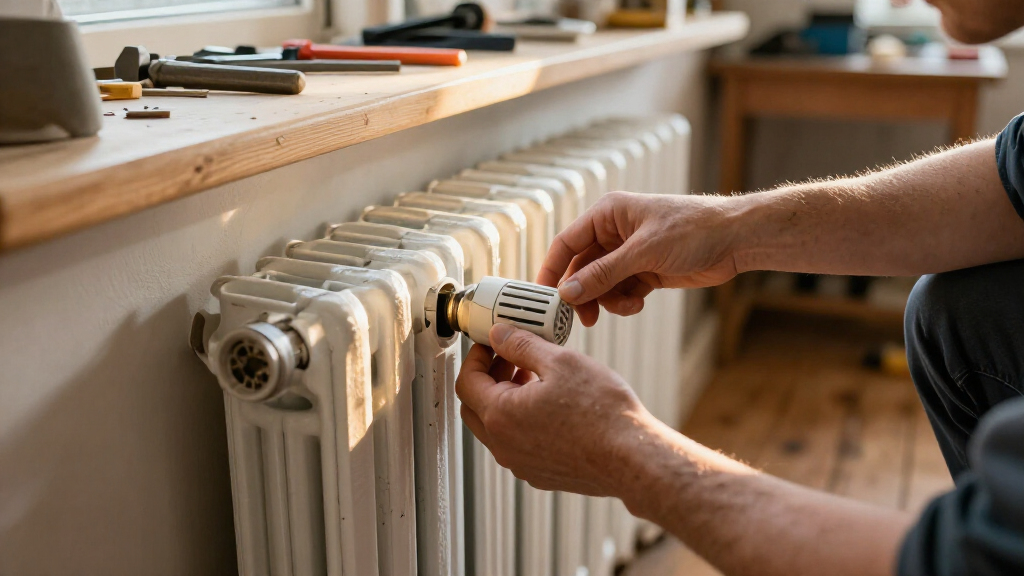
The article recommends switching a radiator off and letting it cool before cleaning it, then removing dust with a vacuum nozzle or hairdryer and wiping accessible surfaces. Ian Palmer-Smith of Domestic & General said a radiator that is cold at the top and hot at the bottom, or one making gurgling or banging noises, may have trapped air and need bleeding. He said bleeding should be part of annual maintenance. If uneven heating remains, Ant Langston of HeatandPlumb.com said a lockshield valve may need adjustment to balance heat distribution.
Why Radiators May Leave Rooms Cold
The advice matters to households preparing to use central heating because basic maintenance and unobstructed airflow may improve how heat spreads through a room. Dust, trapped air or furniture in front of a radiator can affect its operation or circulation, according to the experts cited in the report.
Those checks do not replace investigating other causes. The report’s writer noted that draughts and poor insulation were likely contributing to the cold home. A radiator that still heats unevenly after bleeding or that has persistent problems may need assessment by a qualified heating professional rather than repeated adjustments by the homeowner.
Products Worth Considering

Sonos Era 100 Wireless Smart Speaker, Black

Dyson V8 Cordless Vacuum

Dyson Car+Boat Cordless Handheld Vacuum
As an affiliate, we earn on qualifying purchases.
The Advice Behind the Report
The source is a practical home-heating article from Ideal Home, rather than a new study, official safety notice or change to heating guidance. Its writer describes a personal problem and gathers responses from three named industry sources: Garbutt on cleaning, Palmer-Smith on bleeding, and Langston on balancing.
The supplied text also discusses radiator placement. Garbutt advises against blocking radiators with large furniture, saying this can restrict heat circulation. The writer describes radiators concealed behind doors, beneath shelves or covered by hanging coats. The article’s broader point is that where a radiator sits and what surrounds it may affect how well heat reaches the room.
“If your radiator feels cold at the top and hot at the bottom, this means there is trapped air inside of it that is preventing hot water from circulating.”
— Ian Palmer-Smith, appliance repair expert at Domestic & General, as quoted by Ideal Home
Limits of the Heating Advice
The supplied report does not provide an independent test of the up-to-10% efficiency estimate, explain how that number was measured, or say how widely it applies across radiator types and homes. It also does not establish whether cleaning or bleeding would resolve the writer’s cold-house problem.
The source text cuts off during a section about thermostat use, so it does not provide the full thermostat advice or the complete set of findings. It is also not clear from the supplied material whether the writer tested any of the recommendations or recorded a change in room temperature or energy use. Radiator symptoms can have different causes, and the article’s comments should not be treated as a diagnosis for a specific heating system.
Checks Before Heating Season
The article’s practical sequence is to check for dust and clean radiators only once they are switched off and cool, look for cold patches or unusual noises, and keep furniture and other obstructions clear of radiator surfaces. If symptoms suggest trapped air, the source recommends bleeding as routine maintenance; homeowners should follow the manufacturer’s instructions for their system.
If a radiator remains cold or the house heats unevenly after basic checks, the report points to possible balancing issues but gives no detailed procedure in the supplied text. A qualified heating professional can inspect the system and advise on valve adjustments or other faults. The source does not report a formal follow-up test, so whether these steps improved the writer’s home remains unknown.
Key Questions
What are signs that a radiator may need bleeding?
According to appliance repair expert Ian Palmer-Smith, a radiator that is cold at the top and hot at the bottom, or one making gurgling or banging noises, may have trapped air. These symptoms can have other causes, so they are not a definitive diagnosis.
How often does the report recommend bleeding radiators?
Palmer-Smith said bleeding should be part of standard maintenance at least once a year. Follow the instructions for your heating system, and seek professional help if you are unsure how to do it safely.
Can furniture make a room feel colder?
The experts quoted by Ideal Home say large furniture or other items placed in front of a radiator can obstruct heat circulation. Moving obstructions may help heat spread, but it will not address other problems such as draughts or poor insulation.
Does cleaning a radiator improve its efficiency by 10%?
Garbutt told Ideal Home that dust can reduce radiator efficiency by up to 10%. The supplied report does not describe a test or baseline for that estimate, so it should be understood as an attributed expert claim, not a guaranteed saving for every home.
Source: idealhome.co.uk