TL;DR

Get business pricing on tools and workshop supplies
- Business-only prices and quantity discounts
- Tax-exempt purchasing
- Multiple users, one account, clear invoices
A House Beautiful report describes renewed designer interest in decorative marbling, a historic technique that creates organic, non-repeating patterns. Designers featured in the report use it on wallpaper, murals, furniture, textiles and lampshades; the report does not establish how widespread the trend is across the industry.
Designers featured in a House Beautiful report are bringing decorative marbling into 2026 interiors, applying its flowing, irregular patterns to wallpaper, murals, furniture and accessories. The examples show how the historic craft is being used as an alternative to plain surfaces and repeated prints, though the report does not measure how broadly the look is spreading.
The report attributes the interest partly to demand for interiors with more character. Designer Cara Woodhouse says some clients want more expressive surfaces after years of greige and other subdued palettes. She describes marbling as adaptable: depending on its colors and treatment, it can appear painterly, graphic or soft.
Designers are not limiting the motif to traditionally marbled paper. Sasha Bikoff says the defining feature is the movement of color and the organic patterns that result, which can be translated into wallpaper, furniture, textiles and decorative objects. Reported examples include a large-scale stairwell mural, flowing wallpaper in a Zaha Hadid-designed building, resin chairs and hand-marbled lampshades.
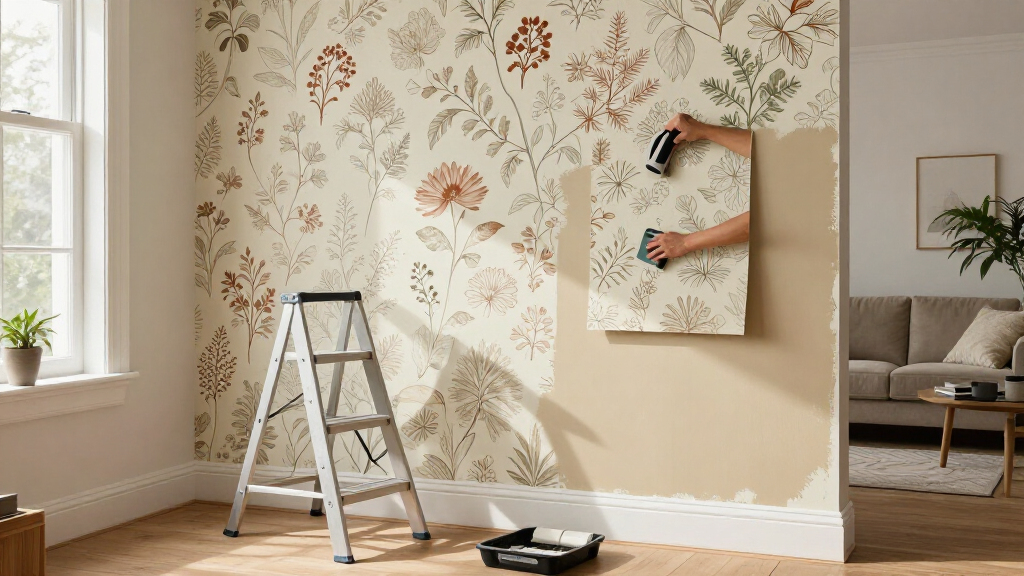
Other projects use marbling to guide a room’s colors or add detail without covering every surface. Designer Marta St. Amour used Lee Jofa Taplow wallpaper as a palette reference for a bathroom, pairing its amber, blue and beige tones with stone and tile. In a powder room, Analisse Taft-Gersten used marbled silk for a sink skirt. The source presents these as individual design projects, not evidence of sales growth or a measured shift in the wider home-decor market.
A Pattern Beyond Plain Walls
For homeowners and designers, marbling offers a way to introduce movement and color without relying on a uniform, repeating pattern. Because each marbled pass differs, the effect can give a wall or object a more individually made appearance. That does not mean every room needs a full mural: the projects cited range from expansive wallpaper to a lampshade or a textile accent.
The range of applications also makes the look easier to adapt to different budgets and levels of commitment. A wallpapered stairwell makes a strong visual statement, while a chair, shade or small fabric detail can bring in the motif on a smaller scale. The practical point in the report is versatility; whether the trend is replacing neutral walls more broadly remains unverified.
Products Worth Considering

Bose Lifestyle Ultra Wireless Home Speaker

eufy Security eufyCam C37 4-Camera Kit with 360° Pan and Tilt

Blueair Blue Pure 511i Max Smart Air Purifier
As an affiliate, we earn on qualifying purchases.
From Paper Craft to Interiors
Marbling has a long history as a decorative technique. The report traces related practices to 10th-century Japan, where artisans made “floating ink” designs by manipulating ink on water. By the 15th century, it was known in Turkey as “the art of clouds” and later reached Venetian and Florentine bookbinders.
That history informs the contemporary appeal described by the designers, but today’s uses go beyond book paper. Jo Plant, chief creative officer at lighting brand Pooky, points to marbling’s expressive lines and soft edges; the report also notes studios experimenting with patterned fabrics and designers applying the look to architectural surfaces and furnishings.
“People are tired of flat, safe walls.”
— Cara Woodhouse, designer
How Broad Is the Trend?
The report supplies designer opinions and project examples, but no survey, sales figures or other data showing how common marbling has become. It also does not establish that the pattern is literally replacing beige walls across the market; that framing is broader than the evidence presented.
Some examples are described in detail, while the source excerpt ends partway through its discussion of organic shapes and does not provide complete information on every one of the nine ideas it introduces. Product availability, costs and installation requirements are not covered, and the report does not say whether the interest will persist beyond 2026.
More Applications, No Measured Forecast
The report points to continued experimentation across wall coverings, fabrics, furniture and lighting, but gives no forecast or next industry milestone. Readers considering the look can compare a small accessory with a larger application and assess how the pattern’s colors relate to existing materials and architecture.
For now, the clearest development is a set of designers using a historic decorative technique in varied contemporary settings. Whether that amounts to a lasting, widespread move away from plain walls remains to be seen.
Key Questions
What is decorative marbling?
Decorative marbling creates flowing, irregular patterns by manipulating color. The technique has historical roots in paper decoration and is now applied in the examples to wallpaper, textiles, furniture and accessories.
Where are designers using marbled patterns?
The report describes marbling on murals and wallpaper, resin chairs, lampshades and a silk sink skirt. The applications range from large surfaces to individual accents.
Is marbling replacing beige walls everywhere?
The source does not establish a market-wide shift. It reports designer projects and opinions, but provides no statistics on how many homes are moving away from beige or other neutral walls.
How can someone try the look without covering a room?
The examples include a marbled lampshade and patterned furniture, which introduce the motif on a smaller scale than a mural or full-wall wallpaper.
Source: housebeautiful.com