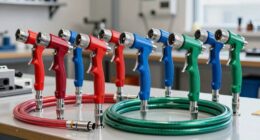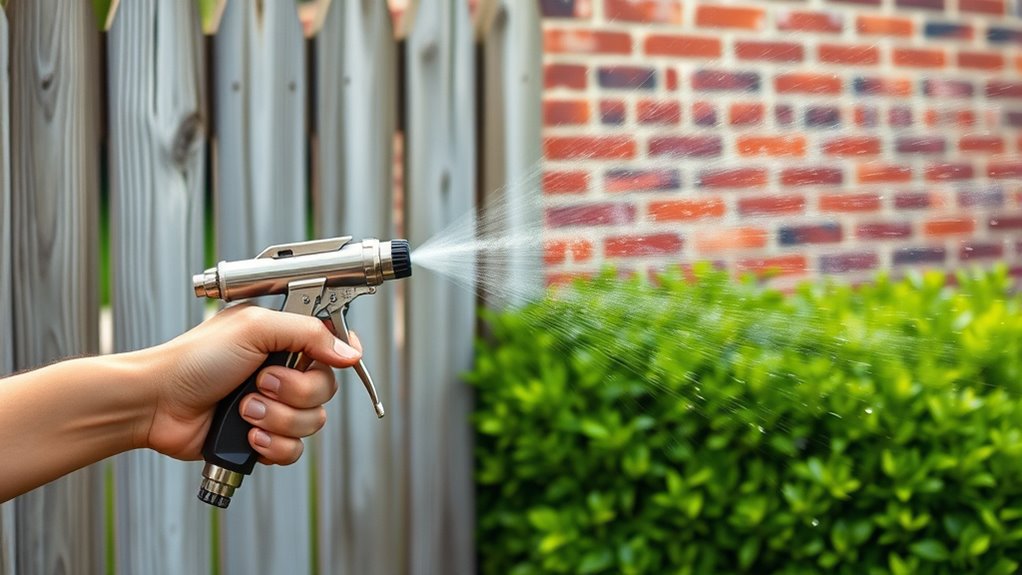

To adjust spray patterns for different surfaces, start by selecting the right nozzle type—wide fan for large areas or narrow for detail work. Use your sprayer’s pressure control to fine-tune the spray, increasing pressure for rough textures and lowering it for delicate surfaces. Test your adjustments on scrap material first to make certain of even coverage. Mastering these tweaks leads to cleaner, more professional results, and if you keep exploring, you’ll discover even more tips to perfect your technique.
Key Takeaways
- Test the spray pattern on a scrap surface to determine if adjustments are needed before working on the main area.
- Use higher pressure settings for textured or rough surfaces to ensure proper coverage and adhesion.
- Reduce pressure for delicate surfaces to prevent overspray, drips, or damage during application.
- Select nozzle type and pattern (wide fan or narrow cone) based on surface size and detail requirements.
- Fine-tune the spray pattern by gradually adjusting pressure until a smooth, even coating is achieved.
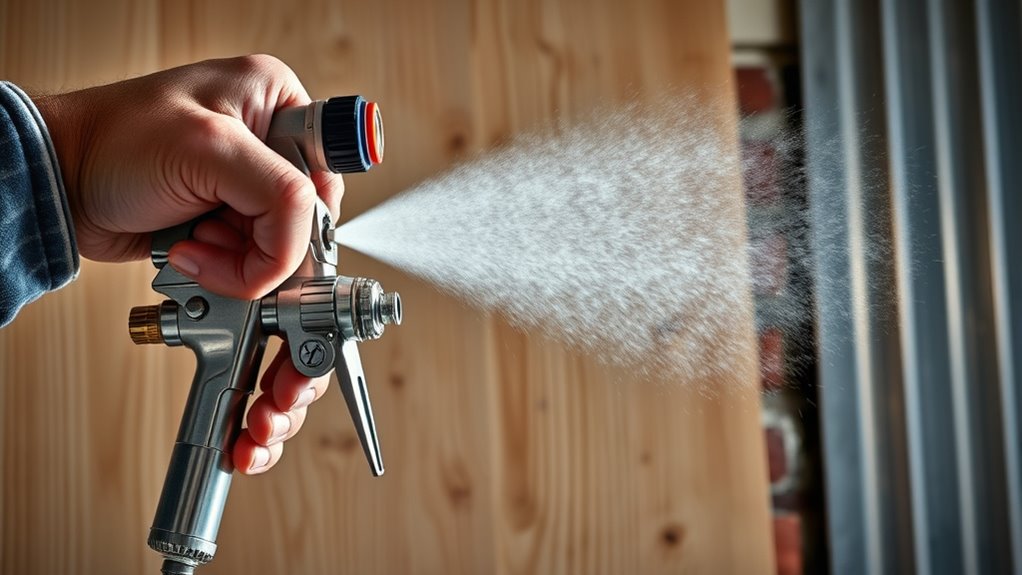
Have you ever struggled to get even coverage from your spray nozzle? If so, you’re not alone. Achieving the right spray pattern depends heavily on understanding your spray nozzle types and mastering pressure adjustment techniques. Different nozzles are designed for specific tasks, and knowing how to tweak your pressure settings can make all the difference in your project’s success. Whether you’re painting a wall, staining a deck, or applying a sealant, adjusting your spray pattern correctly ensures a smooth, even finish without drips or missed spots.
Getting even coverage depends on nozzle types and pressure adjustments for a smooth finish.
First, familiarize yourself with the various spray nozzle types. Some nozzles produce a wide, fan-shaped spray, ideal for large surfaces like walls or floors. Others generate a narrow, cone-shaped spray perfect for precision work or tight corners. There are also adjustable nozzles that let you change the spray pattern on the fly, giving you versatility for different surfaces. Selecting the right nozzle type for your task is vital because it influences how the paint or coating will distribute. For example, a wide fan nozzle provides broad coverage quickly but may overspray on detailed areas. Conversely, a narrow nozzle offers control but takes longer to cover larger spaces. Knowing which to use in each situation saves time and prevents waste.
Next, focus on pressure adjustment techniques. Most sprayers have a pressure control dial or valve that allows you to fine-tune the amount of pressure exerted through the nozzle. Proper pressure adjustment ensures an even, consistent spray pattern. Too high pressure can cause overspray, drips, or a rough finish, while too low pressure might result in uneven coverage or streaks. To find the ideal pressure, start with the manufacturer’s recommended settings, then test on a scrap surface. Increase or decrease pressure gradually while observing the spray pattern. A good rule of thumb is to set the pressure so the spray appears smooth and uniform, with no spattering or excessive mist. Adjusting pressure can also help adapt to different surface textures; rough surfaces may require higher pressure for proper penetration, whereas delicate surfaces benefit from lower pressure to prevent damage.
Combining the right spray nozzle type with effective pressure adjustment techniques allows you to customize your spray pattern for each surface. Take the time to experiment and observe how your spray behaves. Proper pattern adjustment not only improves the quality of your work but also increases efficiency, reduces material waste, and minimizes clean-up afterward. Remember, a well-adjusted spray pattern is key to professional-looking results, whether you’re covering a broad wall or detailing intricate trim. With a clear understanding of nozzle types and pressure control, you’ll find it easier to tackle any surface with confidence and precision.
Frequently Asked Questions
Can I Use the Same Spray Pattern on All Surfaces?
You shouldn’t use the same spray pattern on all surfaces because of surface compatibility issues. Different surfaces require specific spray pattern versatility to guarantee proper coverage and avoid damage. For example, a narrow spray works well for detailed areas, while a wider pattern covers larger surfaces efficiently. Adjusting your spray pattern based on the surface ensures ideal results and prevents overspray or uneven coating. Always tailor your spray pattern to the surface you’re working on.
How Do I Prevent Overspray When Adjusting Patterns?
To prevent overspray when adjusting patterns, you should carefully calibrate your equipment first, ensuring it’s set correctly for the desired spray pattern. Always start spraying on a test surface to check for mistakes prevention, so you can fine-tune the pattern without wasting material. Keep a steady hand, maintain consistent distance, and adjust your spray pressure accordingly. This approach helps you avoid overspray and achieve a clean, precise finish.
Are There Specific Spray Patterns for Delicate Surfaces?
Yes, there are specific spray patterns for delicate surfaces. Use a fine, narrow spray pattern to guarantee spray pattern safety and prevent overspray. Before painting, carefully prepare the delicate surface by cleaning and masking nearby areas. Always test the spray pattern on a small, inconspicuous spot to avoid damage. Adjust your spray gun to maintain a gentle, even flow, reducing the risk of overspray and ensuring a smooth, professional finish.
How Often Should I Readjust the Spray Pattern?
Think of your spray gun as a musical instrument; it needs tuning for perfect harmony. You should readjust the spray pattern during spray pattern maintenance whenever you notice uneven coverage, drips, or overspray. Regular equipment calibration keeps your spray consistent and efficient. Don’t wait for issues to pile up—check your spray pattern often, especially when switching surfaces or finishes. This keeps your work smooth and your results flawless.
What Tools Are Best for Fine-Tuning Spray Patterns?
You should use a fine-tuning tool like a nozzle adjustment wrench to maintain spray pattern consistency. These wrenches allow precise control over the nozzle, helping you achieve uniform spray. Regular nozzle cleaning is essential to prevent clogs that can disrupt spray patterns. By keeping your nozzles clean and using the right tools, you guarantee consistent spray quality and efficient application every time.
Conclusion
Now that you know how to adjust spray patterns for different surfaces, you can spray with confidence, spray with precision, and spray with efficiency. Whether you’re working on a delicate finish or a tough surface, adjusting your spray pattern guarantees better results, saves you time, and reduces waste. Keep practicing, stay attentive to the surface requirements, and enjoy the process. With these tips, you’ll become more skilled, more adaptable, and more successful in every spray project you take on.