Air-assisted airless sprayers are a game-changer for achieving a smoother, more professional finish. They combine the power of traditional airless systems with added compressed air, which improves atomization and control. This means less overspray, better surface coverage, and the ability to work with thicker paints without thinning too much. If you want a sleek, precise look and less mess, this might just be the upgrade you didn’t realize you needed—keep going to learn how it works.

Get business pricing on tools and workshop supplies
- Business-only prices and quantity discounts
- Tax-exempt purchasing
- Multiple users, one account, clear invoices
Key Takeaways
- Combines airless and HVLP technology for a smoother, more controlled finish with less overspray.
- Uses compressed air to refine paint atomization, resulting in a more professional, detailed surface application.
- Allows the use of higher viscosity paints without extensive thinning, improving coverage and color depth.
- Provides adjustable spray patterns and atomization for tailored finishing on various surfaces.
- Enhances application efficiency, reducing waste and cleanup while achieving high-quality, consistent results.
Have you ever wondered how to achieve a smoother, more efficient paint finish? If so, you’re not alone. Many painters overlook the subtle yet powerful difference that an air-assisted airless sprayer can make. This innovative tool combines the best features of traditional airless and HVLP spray systems, giving you a high-quality finish with less overspray and better control. To understand why it’s such a game-changer, you need to get familiar with spray gun mechanics and how paint viscosity influences your results.
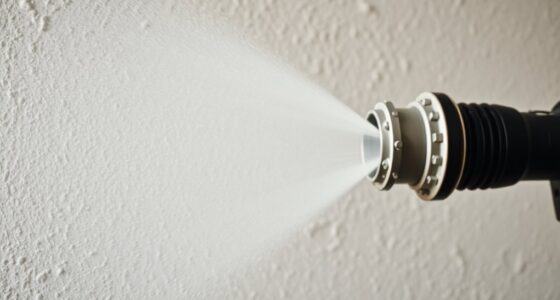
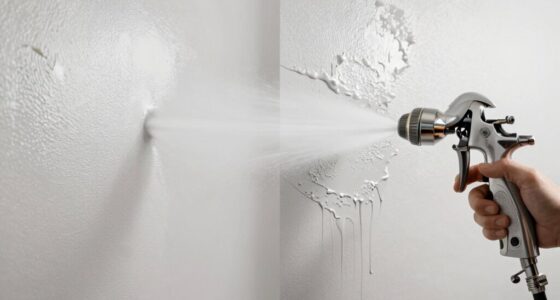
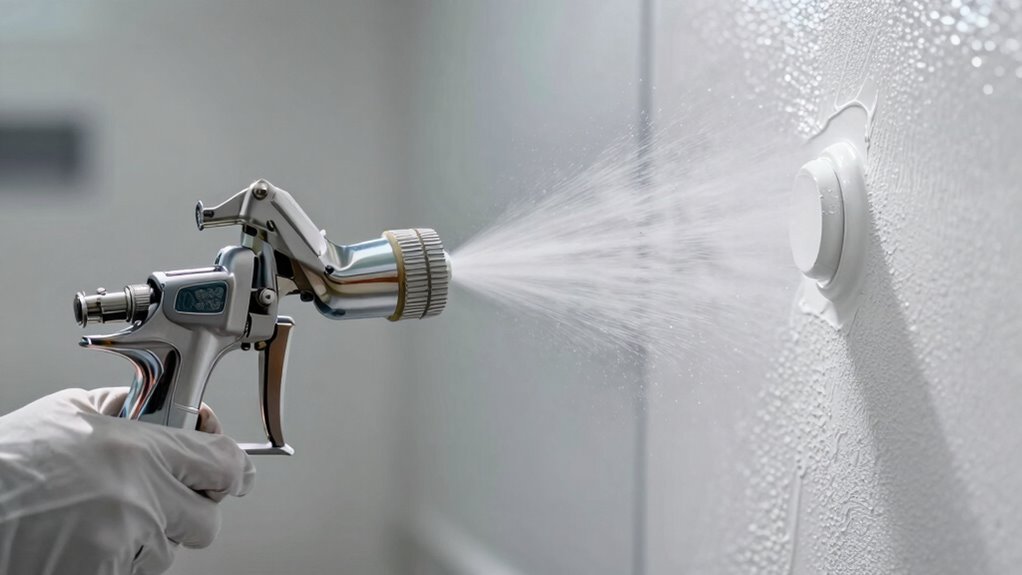
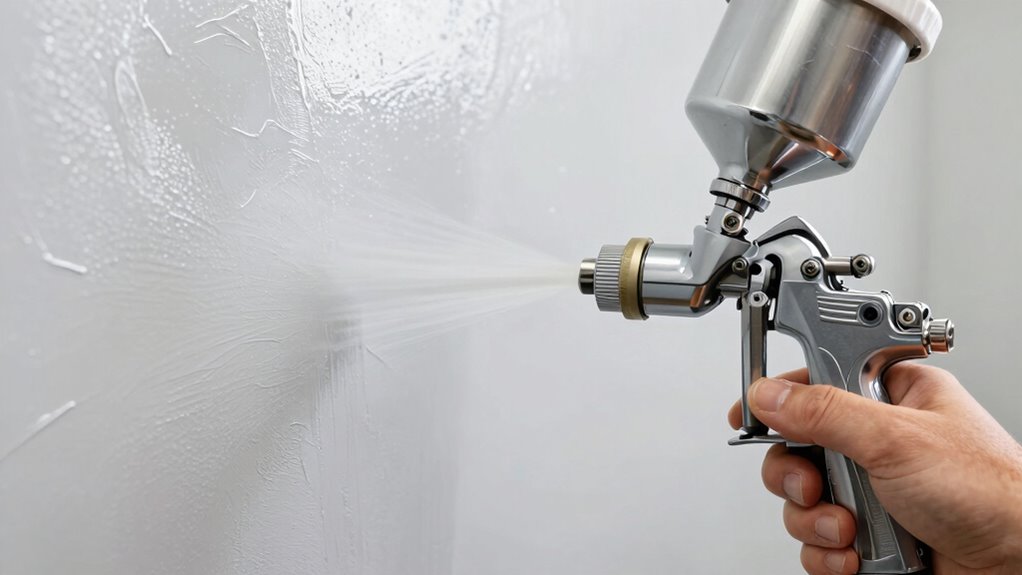
Spray gun mechanics play a pivotal role in how paint is atomized and applied. In an air-assisted airless system, a small amount of compressed air is introduced to the high-pressure paint stream. This addition helps break up the paint into finer particles, resulting in a more uniform spray pattern and smoother finish. Unlike standard airless sprayers, which rely solely on high pressure to atomize paint, the air-assisted airless mixes air at just the right point in the process. This means you get better control, less overspray, and a more refined application, especially on detailed surfaces or delicate finishes.
Air-assisted airless sprayers introduce compressed air to improve spray uniformity and control.
Understanding the atomization process of your spray system can significantly enhance your application quality.
Paint viscosity is another key factor in achieving ideal results with an air-assisted airless sprayer. Thicker paints, like latex or heavy primers, require proper thinning to flow smoothly through the spray gun. If the paint is too viscous, it won’t atomize properly, leading to uneven coverage or clogs. Conversely, if it’s too thin, you risk drips and runs. With an air-assisted airless, you can often work with slightly higher viscosity paints compared to traditional airless sprayers because the added air helps break up the paint more effectively. This means you don’t need to dilute your paint excessively, preserving its color depth and adhesion qualities.
Adjusting the spray gun mechanics to match your paint’s viscosity is essential. You’ll want to fine-tune your pressure settings and air-to-liquid ratio to optimize the spray pattern. This fine-tuning allows you to control the spray’s atomization and pattern, providing a smoother, more professional-looking finish. It also reduces waste and cleanup time since you’re applying the paint more efficiently.
air-assisted airless paint sprayer
As an affiliate, we earn on qualifying purchases.
As an affiliate, we earn on qualifying purchases.
Frequently Asked Questions
How Does Air-Assisted Airless Compare in Cost to Traditional Sprayers?
You’ll find that air-assisted airless sprayers tend to have a higher initial cost compared to traditional sprayers, but their efficiency can save you money in the long run. When considering a cost comparison, keep your budget considerations in mind—these sprayers often reduce material waste and improve finish quality. If you prioritize faster application and better results, the investment might be worth it, especially for larger projects.
What Types of Projects Benefit Most From Air-Assisted Airless?
Think of your project as a blank canvas ready for fine detail. You’ll find air-assisted airless ideal for decorative finishes and precise brush applications, where control and smoothness matter most. It’s perfect for projects like cabinets, furniture, or intricate wall designs. With its ability to produce a high-quality finish quickly, you’ll appreciate how it elevates your work, especially when detail and finesse are priorities.
Is Special Training Required to Operate Air-Assisted Airless Systems?
You don’t need special training to operate air-assisted airless systems, but some basic training is recommended to guarantee safe and effective use. Your operator expertise plays a key role in maximizing results and avoiding issues like overspray or inconsistent finishes. Many manufacturers offer training sessions, which help you understand settings, maintenance, and troubleshooting. With proper guidance, you’ll quickly become confident in handling this advanced equipment.
Can Air-Assisted Airless Be Used With All Paint Types?
Yes, you can use air-assisted airless systems with various paint types, but you need to check paint compatibility first. Thinner paints and coatings generally work well, but thicker paints may require proper primer and thinning. Always review primer requirements and manufacturer recommendations to guarantee ideal results. This helps prevent clogging or uneven application, making your project smoother and more professional-looking.
What Maintenance Is Needed to Keep the System Running Smoothly?
You keep your system running smoothly by regularly inspecting and cleaning the filter and fluid nozzle. Coincidentally, these small tasks prevent big problems, like clogs or uneven spray. Make sure to replace filters when they show signs of wear and clear any paint buildup from the nozzle. Proper filter maintenance and fluid nozzle care guarantee consistent performance, extending your equipment’s lifespan and helping you achieve flawless finishes every time.
Conclusion
Once you’ve experienced the subtle touch of air-assisted airless spraying, you’ll wonder how you ever painted without it. It quietly elevates your work, making your finish smoother and more refined, almost like a gentle whisper of perfection. Embrace this upgrade, and let your projects speak softly but confidently of your craftsmanship. Sometimes, the quiet improvements are what truly transform your work, turning good into unforgettable. After all, excellence often begins with the smallest, most graceful steps.
Fall yard work Picks
leaf blowers
As an affiliate, we earn on qualifying purchases.