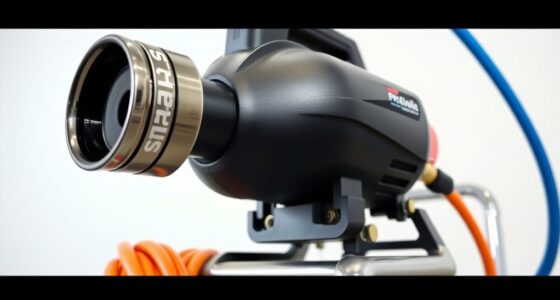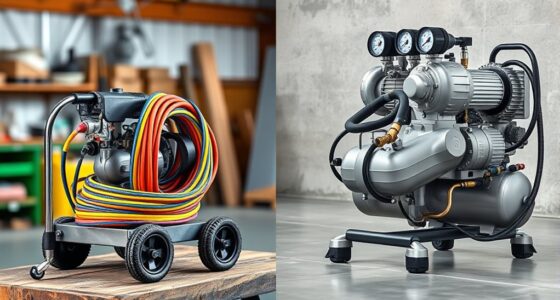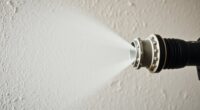
Multi-spray systems combining airless and air-assisted technology give you versatile control for various coating tasks. You can easily switch between spray patterns to handle different surfaces, whether you’re doing fast coverage or detailed work. These systems improve finish quality, reduce overspray, and save material. They also boost efficiency, lowering costs and speeding up projects. To discover how these advanced tools can enhance your work, keep exploring their features and applications.
Key Takeaways
- Multi-spray systems integrate airless and air-assisted technologies for versatile coating applications.
- They enable quick switching between spray patterns for different surface types and project needs.
- These systems improve finish quality with uniform coating distribution and smoother surfaces.
- They enhance operational efficiency by reducing equipment changes and minimizing material waste.
- Adjustable settings allow precise control over spray patterns, pressure, and flow for various tasks.

Multi-spray systems that combine airless and air-assisted technology are transforming the way coatings are applied, offering versatility and efficiency in various industries. These systems optimize the spray pattern, enabling you to adapt to different surfaces and project requirements with ease. By integrating both methods, you gain better control over the spray, resulting in a more uniform coating and smoother finish. This flexibility means you can switch between high-volume, fast coverage for large surfaces and more precise, detailed work without changing equipment. As a result, your workflow becomes more streamlined, saving you time and reducing setup costs.
The key advantage of multi-spray systems lies in their ability to improve equipment efficiency. Traditional single-technology sprayers might struggle to handle diverse tasks, but combining airless and air-assisted features means you can tailor your approach to suit specific projects. For broad, thick coatings, airless mode delivers high pressure and fast application. For finer finishes or coatings that require a softer spray, switching to air-assisted mode creates a more controlled spray pattern with less overspray. This adaptability not only enhances your productivity but also minimizes waste, ensuring you make the most of your materials. Plus, these systems often incorporate adjustable settings, giving you even more control over pressure, fluid flow, and spray angle.
In practical terms, using a multi-spray system allows you to optimize the spray pattern for each task. You can achieve a wider pattern for quick coverage or a narrower, more focused spray for detailed work. This precision helps you avoid uneven coats or runs, ultimately producing a better quality finish. Additionally, the equipment tends to be more efficient because it reduces the need for multiple tools or frequent adjustments. Instead of switching machines or attachments, you simply modify the settings on a single unit, saving time and effort. This efficiency translates into faster project completion and less fatigue, especially when working on large or complex surfaces.
Furthermore, the versatility of multi-spray systems makes them ideal for various industries—from industrial manufacturing to residential painting. They can handle different coatings, viscosities, and surface types, making your job easier and more manageable. Incorporating proper maintenance and cleaning procedures prolongs the lifespan of your equipment and ensures consistent performance. Overall, by combining airless and air-assisted technology, you gain a powerful tool that enhances your control over the spray pattern and maximizes equipment efficiency. It’s an investment that pays off by delivering higher-quality finishes, faster turnaround times, and more efficient use of your resources.
Frequently Asked Questions
How Do Multi-Spray Systems Improve Application Efficiency?
Multi-spray systems improve application efficiency by optimizing your spray pattern, ensuring even coverage and reducing overspray. They enhance paint adhesion by delivering consistent, controlled application, which minimizes rework. With better control over spray angles and flow, you can cover surfaces faster while maintaining quality. This combination results in less paint waste, quicker project completion, and a smoother finish, making your work more efficient and cost-effective.
What Are the Maintenance Requirements for Combined Spray Systems?
You’ll think maintenance is a breeze, but neglecting cleaning protocols can turn it into a nightmare. Regularly clean spray tips and hoses to prevent clogs, and check spare parts like seals and filters to keep everything running smoothly. Keep a stock of essential spare parts on hand, so downtime stays minimal. With proper care, your combined spray system stays efficient, reliable, and ready to handle any project, no matter how demanding.
Can These Systems Be Used for Specialized or Hazardous Coatings?
You can use these systems for specialized or hazardous coatings, but you must prioritize safety considerations and regulatory compliance. Guarantee proper ventilation, wear protective gear, and follow manufacturer guidelines to prevent health risks. Check that the coatings meet industry standards and regulations. Regular maintenance and thorough training help minimize hazards. Always assess the specific properties of the hazardous materials to determine if the system’s features and safety measures are sufficient.
How Do Costs Compare Between Traditional and Multi-Spray Systems?
You’ll find that multi-spray systems can be more cost-effective overall, saving you up to 30% on labor and material usage. A thorough cost analysis shows they often have higher initial investments but lower operational costs over time. When considering your budget considerations, these systems may offer long-term savings despite the upfront expense, making them a smart choice for efficient, high-quality coatings on complex projects.
Are There Any Limitations on the Types of Surfaces These Systems Can Handle?
You might find that multi-spray systems are limited by surface texture and material compatibility. They work best on smooth, even surfaces but can struggle with rough or textured ones, which may cause uneven coating or overspray. Also, certain materials like thick or highly viscous paints may not atomize well with these systems, requiring adjustments or alternative methods. Always consider surface texture and material compatibility before choosing a multi-spray system.
Conclusion
By choosing multi-spray systems that combine airless and air-assisted technologies, you can considerably boost your application efficiency. Did you know these systems can increase coverage speed by up to 30% compared to traditional methods? This means less downtime and higher productivity for your projects. Incorporating these advanced systems allows you to deliver smoother, more even finishes while saving time and resources. Embrace this innovative approach to stay ahead in your coating applications.