
To effectively waterproof your foundations and basements, start by ensuring proper drainage around your property with clean gutters, downspouts, and French drains to direct water away. Repair any cracks with sealants or epoxy and consider applying waterproof coatings or membranes on interior and exterior walls. Exterior waterproofing, although more involved, offers a more durable barrier, and combining methods can give you the best protection. Keep learning to discover step-by-step techniques for lasting results.
Key Takeaways
- Inspect and repair any cracks in the foundation before applying waterproofing materials.
- Choose between interior and exterior waterproofing methods based on site conditions and needs.
- For exterior waterproofing, excavate around the foundation to apply waterproof coatings or membranes directly.
- Ensure proper drainage systems, like gutters and French drains, are functional to divert water away from the foundation.
- Regularly maintain and inspect waterproofing layers and drainage components to ensure long-term protection.

Waterproofing foundations and basements is essential to protect your home from water damage, mold, and structural issues. When you focus on effective drainage solutions, you help move water away from your foundation, reducing the risk of leaks and flooding. Proper drainage involves installing or maintaining gutters, downspouts, and exterior drainage systems like French drains, which channel water away from your basement walls. Ensuring these systems are clear and functioning correctly is crucial because clogged or damaged drainage can cause water to pool around your foundation, increasing pressure and the likelihood of leaks. You should regularly inspect and maintain these components to prevent potential water intrusion.
Crack repair plays a vital role in waterproofing your basement. Over time, small cracks can develop due to shifting soil, settling, or temperature fluctuations. If left unaddressed, these cracks can expand and allow water to seep into your basement. Repairing cracks promptly with appropriate sealants or epoxy injections creates a watertight barrier that prevents water infiltration. Not only does this reinforce your foundation’s integrity, but it also helps maintain a dry and healthy basement environment. When repairing cracks, you want to ensure the materials used are compatible with your foundation type and that the repair is thorough, sealing every crevice to prevent future leaks. Additionally, understanding your foundation’s waterproofing needs can guide you in choosing the most effective preventative measures.
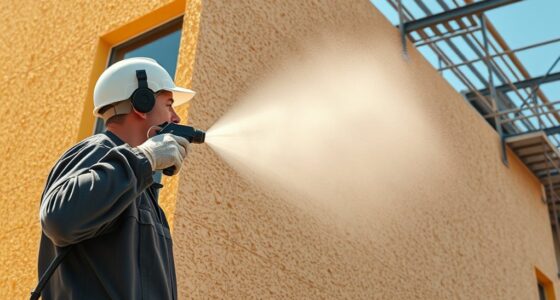
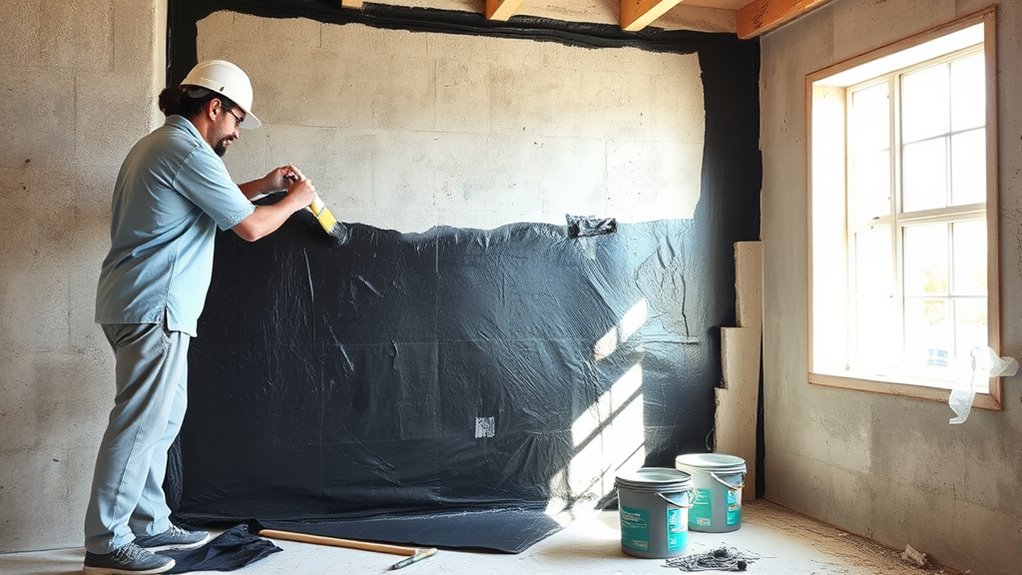
In addition to drainage solutions and crack repair, applying waterproof coatings or membranes on your basement walls adds an extra layer of protection. These materials act as barriers, preventing moisture from penetrating the concrete or masonry. You might consider applying a waterproof paint or membrane on the interior or exterior walls, depending on your home’s setup. Exterior waterproofing involves excavating around the foundation to apply sealants directly to the wall’s surface, which is more comprehensive but also more invasive. Interior waterproofing, such as applying sealants or installing interior drainage systems, is less invasive and works well in conjunction with exterior methods.
Frequently Asked Questions
How Often Should I Reapply Waterproofing Treatments?
You should reapply waterproofing treatments every 5 to 10 years, depending on your maintenance schedule and the waterproofing lifespan. Regular inspections help identify wear or damage early. If you notice cracks, leaks, or deteriorating material, it’s time for a reapplication. Staying proactive guarantees your foundation remains protected, preventing costly repairs later. Keep an eye on weather conditions and use quality products to extend the effectiveness of your waterproofing efforts.
Can Waterproofing Be Done After Foundation Cracks Appear?
Yes, you can do waterproofing after foundation cracks appear. Start with crack repair to prevent water intrusion, then apply foundation sealing to protect against future leaks. Addressing cracks early helps maintain structural integrity and keeps moisture out. Properly sealing and repairing cracks guarantees your basement stays dry and prevents further damage. Regular inspections and timely repairs can extend the effectiveness of your waterproofing efforts, saving you money long-term.
What Are the Signs of Waterproofing Failure?
Did you know that over 60% of basement moisture issues go unnoticed until significant damage occurs? If you notice persistent dampness, mold growth, or a musty smell, these are signs of waterproofing failure. Moisture intrusion can weaken your foundation and cause structural damage over time. Keep an eye out for cracks or water stains on walls, and address issues promptly to protect your home’s integrity.
Is Waterproofing Necessary in All Climates?
Waterproofing isn’t necessary in every climate, but climate considerations are vital. If you live in an area with heavy rain, snow, or high humidity, waterproofing your foundation is a smart move. Seasonal timing matters too; applying waterproofing during dry, mild weather ensures better adhesion and effectiveness. If you experience fluctuating temperatures or frequent storms, waterproofing helps protect your home from water damage year-round.
How Does Waterproofing Affect Home Insurance Policies?
Waterproofing your home can positively impact your insurance policies by reducing the risk of damage, which may lower insurance claims and premiums. However, it might also lead to coverage limitations if the waterproofing work isn’t considered part of necessary repairs or is done improperly. Always check with your insurer before starting waterproofing projects, so you understand how it could affect your coverage and avoid surprises if a claim is needed later.
Conclusion
By waterproofing your foundation, you’re planting a sturdy shield against the storms of time and nature. Think of it as building an unbreakable fortress that guards your home’s heart, allowing your dreams to flourish without fear. With each layer of protection, you’re nurturing a safe sanctuary where memories grow strong. Embrace this act as planting a seed of resilience—your home’s silent guardian, standing firm through every challenge life throws your way.