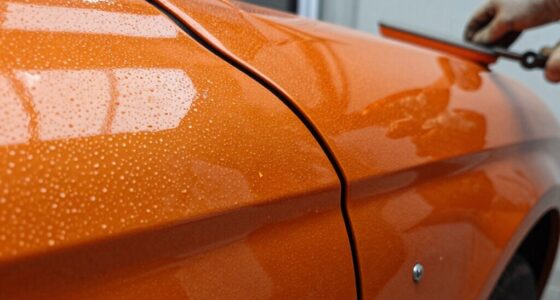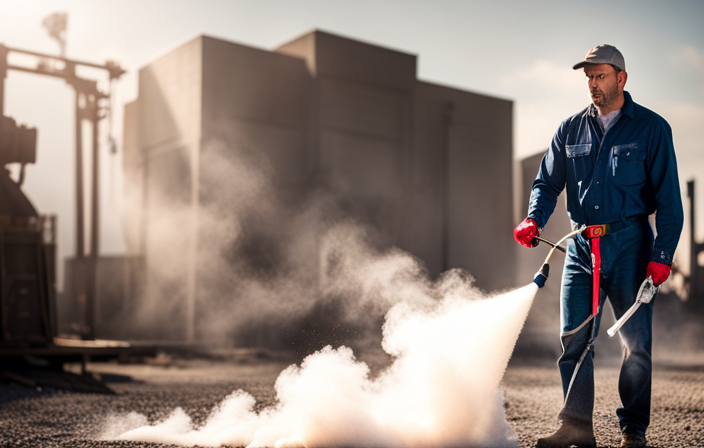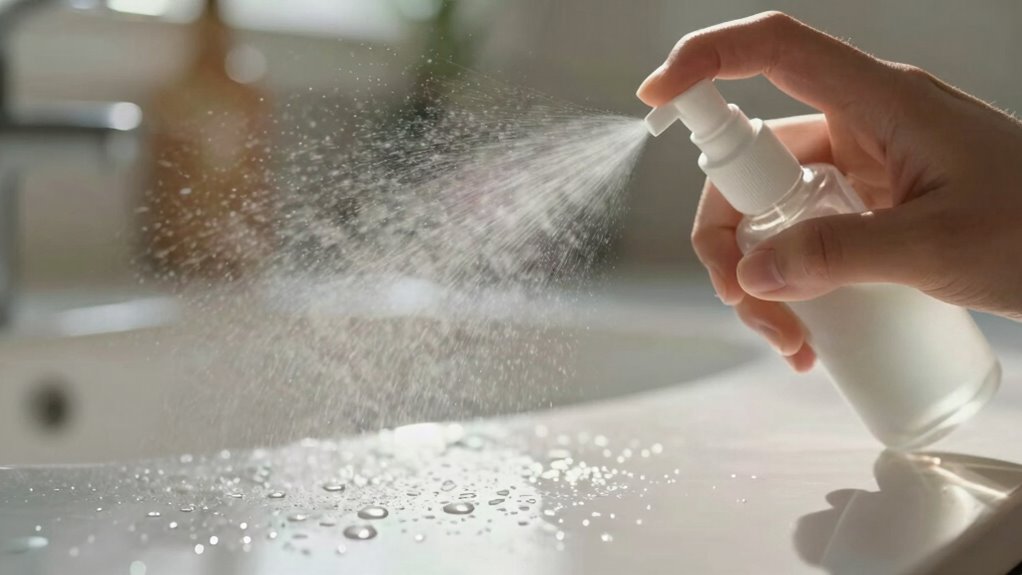

To avoid drowning the surface when spraying, keep a steady hand and maintain the right distance—about 6-12 inches—while moving smoothly across the area. Adjust your spray pressure and flow rate based on practice on scrap material to control how much paint is applied. Use thin, overlapping coats and start spraying just before the edge, then stop beyond it to prevent buildup. If you want to perfect your technique, learn more tips to achieve professional results.

Get business pricing on tools and workshop supplies
- Business-only prices and quantity discounts
- Tax-exempt purchasing
- Multiple users, one account, clear invoices
Key Takeaways
- Maintain the appropriate spray distance (6-12 inches) to prevent excessive application and pooling.
- Adjust spray pressure and flow rate based on practice to achieve even coverage without overload.
- Use smooth, overlapping strokes to distribute paint evenly and avoid buildup in any area.
- Start spraying before the surface edge and stop after passing beyond it for a controlled application.
- Keep the spray consistent and steady, avoiding jerky motions that can cause drips or pooling.
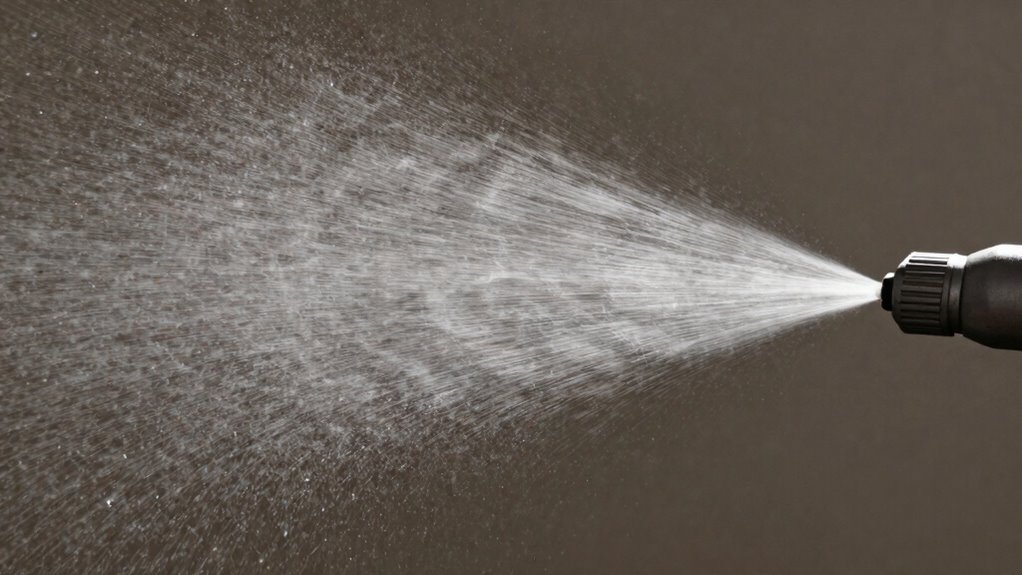
Spraying a surface might seem straightforward, but without the right technique, you risk flooding it and ruining the finish. To get it right, you need to understand how to control the spray and your tools effectively. One of the most vital aspects is mastering the brush technique and knowing how to use spray equipment properly. Your goal is to achieve a smooth, even coat without pooling or drips, which requires a steady hand and a clear plan.
First, when approaching the surface, make certain your spray equipment is set up correctly. Adjust the nozzle for the desired spray pattern—whether it’s a wide fan or a narrow cone—and keep the pressure at an appropriate level. Too high, and you’ll get overspray and runs; too low, and the paint won’t atomize properly. Before starting on the main surface, practice on a scrap piece to get a feel for the spray pattern and flow rate. This preparation helps you avoid surprises once you begin working on the actual surface.
Next, focus on your brush technique if you’re blending spray with brushwork or doing touch-ups afterward. Maintain a consistent distance from the surface—usually about 6 to 12 inches—and keep your hand moving in smooth, overlapping strokes. This overlap is key to avoiding streaks and ensuring even coverage. When using spray equipment, move your entire arm, not just your wrist, to keep a steady motion. Keep your movements fluid and controlled, avoiding sudden stops or jerky motions that can lead to uneven patches. Additionally, understanding the importance of proper setup ensures your equipment performs optimally and helps prevent issues like drips or uneven coats. Practicing on a scrap surface also allows you to gauge the flow rate and adjust accordingly. Being mindful of the air pressure is equally important, as it directly impacts spray consistency and finish quality.
Timing your spray passes is essential. Start spraying before you reach the edge of the surface, and stop spraying after you’ve passed beyond the other side. This prevents buildup and drips at the edges. Maintain a consistent speed; moving too quickly can cause uneven coverage, while moving too slowly increases the risk of pooling. If you notice any excess paint, back off your spray pressure or reduce the distance slightly to thin the coat.
Finally, always keep a wet edge. This means you should work in sections where the new spray overlaps the wet edge of the previous section. This technique prevents lap marks and results in a seamless finish. Combining this with a steady brush technique and properly calibrated spray equipment allows you to spray effectively without drowning the surface in paint. Proper technique and setup are key to achieving a professional-looking finish, especially when working with large or delicate surfaces. With practice and patience, you’ll master the art of spraying smoothly, efficiently, and with a professional-looking finish.
As an affiliate, we earn on qualifying purchases.
Frequently Asked Questions
What Type of Spray Gun Is Best for Delicate Surfaces?
For delicate surfaces, you should choose a high-quality, fine-detail spray gun like a gravity feed or HVLP (High Volume Low Pressure) model. These spray guns provide better control, reducing over-spray and minimizing damage. Remember, proper painting surface preparation and regular spray gun maintenance are essential for achieving smooth finishes. Use light, even coats and adjust the spray pressure to prevent drowning the surface, ensuring a gentle, professional look.
How Do I Adjust Spray Pressure for Optimal Coverage?
You should adjust the spray pressure using the pressure regulation feature on your spray gun. Start by setting the pressure to a lower level, around 15-20 PSI, and test on a scrap surface. Gradually increase it until you achieve smooth, even coverage without runs or overspray. Make sure the spray nozzle is appropriate for your project, as it influences the spray pattern and atomization, helping you get ideal coverage without damaging delicate surfaces.
Can I Use Water-Based Paints With This Technique?
Yes, you can use water-based paints with this technique, but proper surface preparation is key. Think of the surface as a clean canvas, where paint adhesion depends on texture and cleanliness. Lightly sand and prime your surface first to guarantee the water-based paint bonds well, preventing drips or uneven coverage. This preparation creates a smooth flow, much like a gentle stream, helping you achieve a flawless finish without drowning the surface.
How Do Environmental Conditions Affect Spraying Without Drowning?
Environmental conditions, like weather impact your spraying process considerably. Humidity, wind, and temperature can cause overspray or uneven coats, making it harder to avoid drowning the surface. You should guarantee proper surface preparation by cleaning and priming beforehand. Check weather forecasts, spray in calm, dry conditions, and avoid high humidity or extreme temperatures. These steps help you control the spray, achieve smooth results, and prevent drowning the surface.
What Safety Precautions Should I Take During Spraying?
You should wear proper personal protective equipment like masks, goggles, and gloves to shield yourself from fumes and splashes. Make sure good ventilation in your workspace to prevent inhaling harmful vapors and reduce fire risks. Keep your area clear of unnecessary items, and follow safety guidelines for the spray materials. Always read the manufacturer’s instructions and work in a well-ventilated area to protect your health during spraying.
Conclusion
By following these tips, you can achieve a smooth, even spray without drowning the surface. For instance, imagine you’re painting a delicate wooden chair; using controlled, light coats prevents drips and guarantees a professional finish. Practice your technique on scrap material first, and always keep the spray at the right distance. With patience and proper control, you’ll enjoy flawless results every time, transforming your projects into stunning, polished pieces without the mess or mishaps.
Fall Picks
fall essentials
As an affiliate, we earn on qualifying purchases.