

To prevent striping on large surfaces, make sure your surface is clean, dry, and smooth before you start. Work quickly and steadily to keep a wet edge, overlapping each stroke in a consistent W-shape. Use high-quality tools and avoid applying too much pressure. Thin your paint slightly if needed to maintain the right consistency. Patience is key—allow each coat to dry fully before adding the next. For more tips, you’ll find essential details that help achieve a flawless finish.

Get business pricing on tools and workshop supplies
- Business-only prices and quantity discounts
- Tax-exempt purchasing
- Multiple users, one account, clear invoices
Key Takeaways
- Use high-quality rollers with appropriate nap and maintain consistent pressure during application.
- Work in manageable sections, overlapping each stroke to maintain a wet edge.
- Apply paint evenly with smooth, W-shaped strokes to prevent streaks and lines.
- Ensure proper paint consistency, stirring thoroughly and thinning slightly if needed.
- Allow each coat to dry completely before applying the next to avoid uneven sheen and striping.
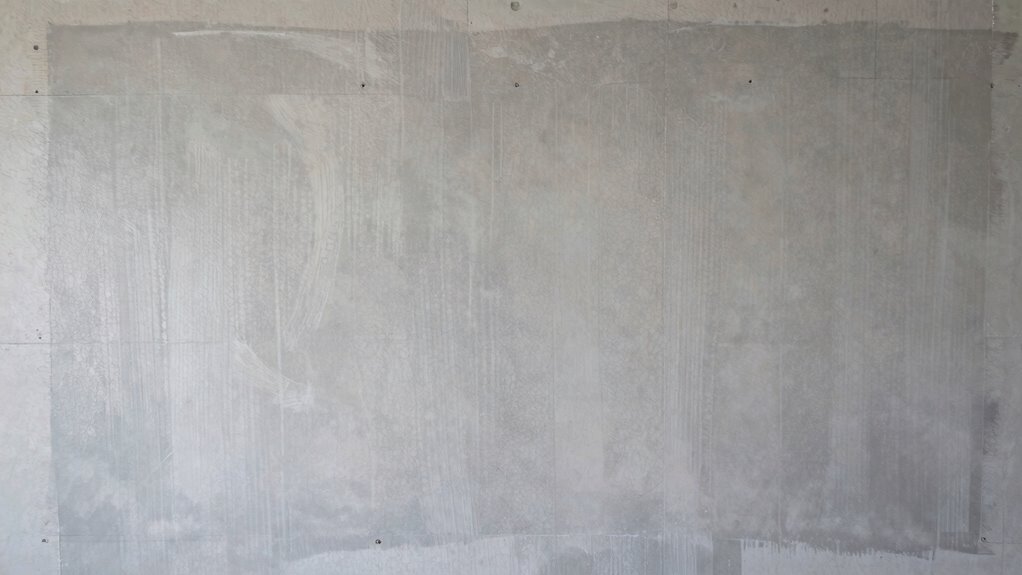
Painting large open surfaces can be challenging, especially when it comes to avoiding striping that ruins a smooth finish. The key to a flawless look starts long before you pick up your brush or roller. Proper surface preparation is essential. You want to make sure the surface is clean, dry, and free of dust, grease, or any loose particles. Sanding rough spots and repairing holes or cracks will create a smooth base for your paint. When you take the time to prep correctly, you greatly reduce the chances of uneven absorption or visible imperfections that can lead to striping.
Proper surface prep ensures a smooth, flawless finish and prevents striping on large surfaces.
Next, pay close attention to your paint consistency. If your paint is too thick or too runny, you’ll struggle to achieve a uniform finish. Always stir your paint thoroughly to ensure an even consistency before applying it. If necessary, thin your paint slightly with the recommended solvent, like water or paint thinner, to achieve a smooth, creamy texture. This consistency allows for smooth application and helps prevent roller marks or streaks, which are common causes of striping. Additionally, paint adhesion can be improved by proper surface prep, ensuring that the paint bonds evenly and reduces the risk of uneven finish. Proper application techniques also help in preventing paint streaking, especially on large surfaces.
When applying paint, work in manageable sections, especially on large surfaces. Use a high-quality roller with a fresh, even nap suited for the surface texture. Begin by cutting in edges with a brush, then roll in overlapping, W-shaped strokes. Maintain a wet edge by keeping your roller loaded with paint and working steadily without pausing for too long in one spot. This technique helps the paint blend seamlessly, avoiding visible lines or streaks. Additionally, maintaining a consistent technique throughout your painting process can significantly reduce the risk of striping and uneven textures. Working at a steady pace ensures you don’t lose the wet edge, which is crucial for a smooth finish.
Another tip is to work quickly enough to keep a wet edge but not so fast that the paint dries before you can blend it. If you notice the paint starting to dry or skin over, lightly mist the area with water or a blending product to keep it workable. Additionally, using the right tools and equipment, like a high-quality roller, can make a big difference in achieving a smooth finish. Avoid applying too much pressure on your roller, which can cause uneven paint thickness and lead to striping. Instead, use consistent, moderate pressure to apply the paint evenly across the surface.
Finally, patience is key. Allow each coat to dry thoroughly before applying the next one. Sometimes, striping occurs because the underlying layer isn’t fully dry, causing uneven absorption or sheen differences. Additionally, understanding how paint absorption works helps in achieving a uniform finish. With proper surface prep, correct paint consistency, and careful application technique, you’ll avoid striping and achieve a smooth, professional finish on your large surface.
high quality paint roller with appropriate nap
As an affiliate, we earn on qualifying purchases.
As an affiliate, we earn on qualifying purchases.
Frequently Asked Questions
What Types of Paints Are Best for Large Surfaces?
For large surfaces, latex or acrylic paints are your best options because they offer good durability and smooth application. Choose paints with a flat, satin, or matte finish to minimize texture variations and avoid unwanted striping. These finishes help create a uniform appearance across big areas. Be sure to use high-quality paints that flow well and apply evenly, making your project look professional and flawless.
How Does Surface Temperature Affect Striping?
Surface temperature greatly impacts striping because it affects paint adhesion. If the surface is too cold or hot, the paint may dry unevenly, causing visible streaks or lines. Ideally, you should paint when surface temperatures are between 50°F and 85°F to guarantee proper adhesion and a smooth finish. Always check the weather forecast, and avoid painting in direct sunlight or on surfaces that are too hot or cold for best results.
Can Environmental Factors Influence Paint Application?
Think of painting as sailing; weather conditions and surface cleanliness are your wind and water. If the weather’s too humid or windy, your paint might not settle evenly, causing striping. Dirty surfaces trap paint unevenly, like debris in a harbor. To avoid this, paint in ideal weather, confirm surfaces are clean and dry, and check forecasts. Proper preparation guarantees your project stays smooth and flawless, like a steady voyage.
What Tools Help Prevent Striping?
To prevent striping, you should use the right tools and techniques. Choose a high-quality roller suited for large, open surfaces, and select a roller nap that matches your surface texture. Employ smooth brush techniques along edges and corners to guarantee even coverage. Keep a wet edge while painting, and avoid pressing too hard with your roller. Proper tool selection and consistent application help achieve a uniform, stripe-free finish.
How Often Should Surfaces Be Prepared Before Painting?
You should prepare surfaces before painting every time you plan to paint. Surface priming is essential, especially on raw or uneven surfaces, to guarantee smooth paint layering. Experts recommend priming at least once, but for best results, apply a second coat if the surface has stains or previous paint. Proper preparation minimizes striping, improves adhesion, and assures a uniform finish, saving you time and effort in the long run.
Conclusion
By following these tips, you can achieve a smooth, professional finish on large surfaces without those pesky stripes. Remember to prep properly, use the right tools, and apply even coats. Don’t let uneven paint ruin your project—are you ready to tackle your next big painting challenge with confidence? With a little care and attention, you’ll create a flawless surface that truly stands out. So, why settle for anything less than perfection?
Fall yard work Picks
leaf blowers
As an affiliate, we earn on qualifying purchases.