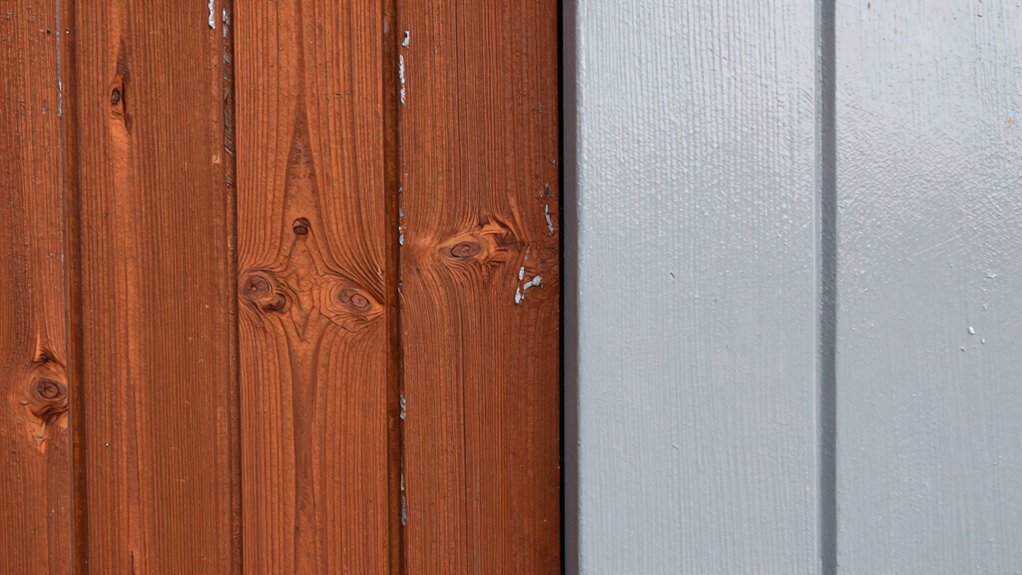

Cedar fencing and standard wall paint behave differently because cedar is porous and absorbs water easily, causing it to swell, crack, or peel paint over time. Wall paints are made for smooth, non-porous surfaces like drywall and don’t adhere well to cedar’s moisture fluctuations. To protect cedar effectively, you need proper surface prep, sealing primers, and exterior-grade paints. Continuing will reveal how choosing the right techniques and materials can guarantee your cedar stays beautiful longer.

Get business pricing on tools and workshop supplies
- Business-only prices and quantity discounts
- Tax-exempt purchasing
- Multiple users, one account, clear invoices
Key Takeaways
- Cedar’s porous nature causes it to absorb moisture, leading to swelling and contraction, which affects paint adhesion and durability.
- Standard wall paints are designed for smooth surfaces, making them less effective on rough, porous cedar.
- Cedar’s moisture fluctuations cause paints to blister, peel, or crack if not properly sealed or primed.
- Exterior cedar requires specialized, moisture-resistant paints and primers to prevent early deterioration.
- Proper surface preparation and material selection are essential for long-lasting paint performance on cedar fencing.
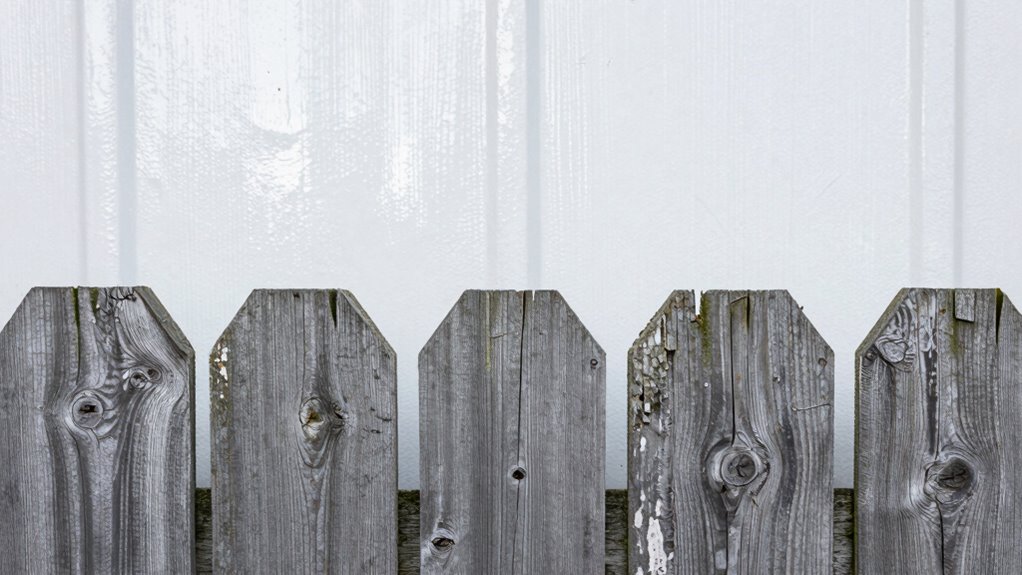
Cedar fencing and wall paint often interact in ways that can affect the longevity and appearance of your outdoor surfaces. One of the main reasons is how cedar naturally absorbs moisture, which plays a significant role in how paint adheres and lasts over time. Cedar is a porous wood, meaning it readily soaks up water from rain, humidity, and dew. This moisture absorption can cause the wood to swell and contract, leading to cracks and peeling in the paint. When you paint over cedar, if the wood isn’t properly prepared or sealed, the paint struggles to form a strong bond. Poor paint adhesion results in quicker deterioration, as the paint can lift or flake off when the wood expands and contracts.
Cedar’s natural moisture absorption can cause paint to crack, peel, and deteriorate faster without proper preparation and sealing.
Unlike wall surfaces typically made of less porous materials, cedar’s inherent moisture content makes it a challenging substrate for paint. Standard wall paints are formulated to adhere well to smooth, non-porous surfaces like drywall or plaster, where moisture absorption isn’t a concern. When applied to cedar, however, these paints often don’t bond effectively because they can’t penetrate the wood’s surface or accommodate its moisture fluctuations. This leads to a higher likelihood of blistering, peeling, or cracking over time, especially if the paint isn’t specifically designed for outdoor wood or if the cedar isn’t properly primed.
To improve paint adhesion on cedar, you need to take into account the wood’s moisture dynamics. Proper preparation involves cleaning the surface thoroughly and allowing it to dry completely. Applying a high-quality, oil-based primer or a bonding primer designed for wood can help seal the pores and create a better surface for the paint to cling to. These primers act as a moisture barrier, reducing the amount of water the paint has to contend with and helping it adhere more securely. Additionally, choosing a high-quality exterior paint formulated for wood and outdoor conditions can make a noticeable difference. Such paints are designed to withstand moisture fluctuations and resist peeling, cracking, and fading. Recognizing wood’s moisture absorption properties and selecting materials accordingly can significantly extend the life of your paint job.
Furthermore, understanding the porous nature of cedar can guide you in selecting the most effective sealing and painting techniques. When you select the right primer and paint, and properly prepare the surface, you give your paint the best chance to bond effectively and last longer. Without these steps, the natural moisture absorption of cedar will continue to challenge paint adhesion, causing your outdoor surfaces to deteriorate faster than you’d like. Proper maintenance and the right materials make all the difference in preserving both the beauty and durability of your cedar features.
exterior wood primer for cedar fencing
As an affiliate, we earn on qualifying purchases.
As an affiliate, we earn on qualifying purchases.
Frequently Asked Questions
How Do Climate Changes Affect Cedar Fencing and Wall Paint Differently?
Climate changes impact cedar fencing and wall paint differently because cedar naturally resists moisture absorption and UV degradation better than paint. When exposed to increased moisture, cedar swells less and resists rot, whereas paint may peel or blister due to moisture or UV damage. You’ll notice cedar aging gracefully with less maintenance, while paint needs more frequent touch-ups to combat UV degradation and moisture effects.
Can Specific Cleaning Methods Improve the Longevity of Cedar and Paint?
Yes, specific cleaning methods can improve the longevity of cedar and paint. You should use gentle cleaning techniques, like soft brushes or low-pressure water, to prevent damage. Applying protective coatings after cleaning helps seal surfaces against moisture and UV rays, extending their lifespan. Regular maintenance with these methods keeps cedar fencing and painted walls looking fresh longer, reducing the need for costly repairs or replacements over time.
Are There Eco-Friendly Options for Both Cedar Treatments and Wall Paints?
Like choosing a gentle rain over a storm, eco-friendly finishes and sustainable cleaning options exist for cedar and wall paints. You can opt for natural oils and water-based paints that are free from harmful chemicals. These eco-friendly options help protect the environment while maintaining your home’s beauty. By selecting sustainable cleaning methods, you prolong the life of your fence and walls, ensuring they stay vibrant without compromising your commitment to green living.
What Maintenance Routines Are Recommended for Each Material?
You should regularly inspect your cedar fencing and apply cedar sealing every couple of years to protect against weathering. For wall paint, clean surfaces gently and touch up chipped areas as needed, using proper painting techniques for a smooth finish. Both materials benefit from keeping them clean and protected; cedar sealing maintains wood health, while proper wall painting preserves appearance and longevity. Consistent maintenance guarantees your outdoor fence and interior walls stay their best.
How Do Initial Costs Compare Between Cedar Fencing and Wall Paint?
When you compare initial costs, cedar fencing often feels like investing in a sturdy, long-term friend, costing more upfront but offering better durability. In contrast, wall paint is like a quick, affordable fix, with lower initial expenses. Your budget will weigh heavily here—cedar’s higher upfront cost reflects its durability, while paint’s lower cost suits short-term needs. Over time, durability differences can shift the overall value.
Conclusion
So, don’t assume that just because cedar fencing and wall paint look similar, they’ll behave the same way over time. You might think paint is enough for outdoor durability, but cedar’s natural oils require different care. If you want your fence to last without constant touch-ups, embrace the unique needs of cedar. It’s worth the extra effort — otherwise, you’ll end up replacing your fence sooner than expected. Trust me, your future self will thank you.
Halloween Picks
halloween
As an affiliate, we earn on qualifying purchases.