
TL;DR
Yotam Ottolenghi’s kitchen update includes a hand-painted tile mural by artist Cecilie Maurud Barstad, replacing a standard backsplash with a personal design. The report presents the project as part of a wider interest in decorative kitchen murals, while designers caution that materials must suit heat, water, cleaning and the room’s overall design.
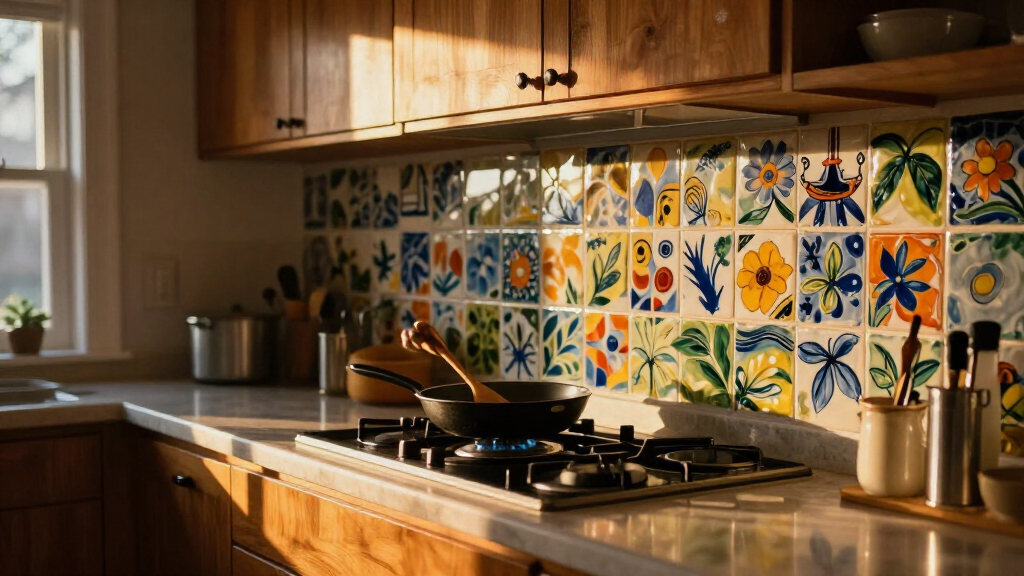
Chef Yotam Ottolenghi has added a hand-painted tile mural to his recently updated kitchen, making the backsplash the main change in a renovation that otherwise kept the existing layout and replaced white cabinet fronts with new white ones. The design, by artist Cecilie Maurud Barstad of Gilles & Cecilie, includes references to Ottolenghi’s children and reflects a growing interest among designers in using kitchen backsplashes for personal artwork as well as practical protection.

Get business pricing on tools and workshop supplies
- Business-only prices and quantity discounts
- Tax-exempt purchasing
- Multiple users, one account, clear invoices
The mural covers the wall above the cooker and the area behind the shelves. Barstad included small illustrations requested to connect the kitchen to Ottolenghi’s family: a taco, a Dungeons & Dragons logo, and a cartoon-style portrait drawn by the children of their cousin. Ottolenghi told Livingetc that the details were chosen because they are meaningful to his children, and that he hopes the wall will feel like “a wall of memories” when they return home as adults.
The tiles were painted off-site, fired and then fitted, according to the report. That is one of several ways to create a mural backsplash. Designers also use artwork applied directly to walls, stained glass and wallpaper. The examples cited by Livingetc range from a meadow-inspired tiled mural in a London kitchen to a hand-painted wallcovering in Shanghai and a custom stained-glass panel made for clients by JAM Design Works and specialist maker Tenby & Penny.
These approaches bring different practical demands. For the stained-glass installation, designer Jules Gallop said the panel’s weight required reinforcement behind the wall, and the piece was arranged so its LED panels could be reached for servicing. Wallpaper and textile finishes may need a separate protective barrier: de Gournay’s Harald Donoghue advised using glass or Perspex to shield such surfaces from splashes and humidity.
Making the Backsplash Personal
The shift described in the report is about how homeowners and designers treat the kitchen: not only as a work area, but also as a place for color, memory and individual expression. Ottolenghi’s mural illustrates that approach without changing the room’s layout. Its family references make the wall specific to the people who use the kitchen, rather than relying on a generic decorative pattern.
The practical stakes are different from choosing artwork for a dry room. A backsplash sits near heat, water, grease and regular cleaning, so the design has to work as part of a functional surface. Material choice, installation and protection can affect durability, appearance and cost. The examples also show that a mural can be a modest tiled area or a more complex installation involving glass, lighting or a protective screen.
For readers planning a renovation, the reported advice points to decisions that should be made early: how the mural relates to cabinetry, counters and lighting; how it will fit around sockets and shelves; and whether the chosen finish is rated or protected for its location. A striking design can still fail as a backsplash if its materials are not suited to kitchen conditions.
Products Worth Considering

Ring Battery Doorbell Plus (2nd Gen) with Quick Release Battery Pack, Nickel Silver

Philips Hue Bridge Pro Smart Lighting Hub, 1-Pack

eufy E25 Robot Vacuum and Mop
As an affiliate, we earn on qualifying purchases.
From Plain Tile to Story Wall
According to Livingetc, Ottolenghi asked kitchen company Roundhouse to retain the existing layout. The cabinets remained white, with new fronts replacing the old ones; he described the tiles as the biggest difference. The project is therefore presented not as a full kitchen redesign, but as a focused change to a prominent wall.
The report links that choice to a broader pattern among designers commissioning murals for kitchens. One example is a floral mural by artist Anna Glover in a London project by Studio Ashby, intended to evoke an English meadow. Another is de Gournay’s Uki Hana wallcovering, printed on tarnished silver-gilded paper for a kitchen in Shanghai. The report says the company recommends a Perspex cover for that wallpaper in a setting exposed to splashes and humidity.
Other projects show why custom work needs careful planning. JAM Design Works created a stained-glass splashback with personal colors and references for its clients, then worked with specialist makers on the heavy installation. Muralist Charlotte Fuller, whose work also appears in the report, recommends choosing colors in conversation with finishes already in the room and considering what will sit in front of the artwork, such as a shelf or tap.
““The biggest difference was the tiles.””
— Yotam Ottolenghi, speaking to Livingetc
Costs and Durability Still Vary
The source does not provide the cost, installation schedule or long-term performance of Ottolenghi’s mural, and it gives no exact date for the kitchen update. It also does not establish how widespread the trend is: the report offers examples and designer views, but no market data or measurement of demand.
Performance will depend on the material, its location and the protection used. The report includes warnings about wallpaper and textile finishes, but it does not give a single maintenance standard applicable to every mural. Readers would need specifications from the artist, supplier and installer for a particular kitchen, including how the surface handles heat, moisture, cleaning products and repairs.
Plan Design Before Installation
No further work or public announcement about Ottolenghi’s kitchen is reported. For homeowners considering a similar feature, designers quoted by Livingetc recommend treating the mural as part of the overall kitchen plan rather than adding it at the end. That means reviewing samples alongside cabinetry and worktops, accurately templating around sockets and cupboards, and confirming that the selected materials suit exposure to heat, water and cleaning.
Installers may also need to assess structural support for heavier elements, as Gallop said was necessary for the stained-glass project. Where wallpaper or fabric is used near a sink or cooker, a protective glass or Perspex screen may be appropriate, though the source notes that some protective finishes can dull colors or design details. The next step for any project is to settle those specifications with the relevant designer, maker and installer before fabrication begins.
Key Questions
What changed in Yotam Ottolenghi’s kitchen?
The layout was retained and new white cabinet fronts replaced the old ones. Ottolenghi told Livingetc that the tiles were the biggest difference, with a hand-painted mural installed above the cooker and behind shelves.
What does Ottolenghi’s backsplash mural depict?
Artist Cecilie Maurud Barstad included a taco, a Dungeons & Dragons logo and a cartoon-style portrait the children drew of their cousin. Ottolenghi said the illustrations were chosen because they are meaningful to his children.
Are kitchen backsplash murals made only with tiles?
No. The report describes murals painted on tiles, artwork applied directly to walls, stained glass and wallpaper. Each option has different installation and protection needs, particularly in areas exposed to splashes, humidity or heat.
What should homeowners check before installing a mural backsplash?
Designers quoted in the report recommend coordinating colors and scale with cabinetry, worktops and lighting, taking accurate measurements around sockets and shelves, and confirming that materials are suitable for kitchen conditions. Samples can help show how colors and textures look beside the room’s other finishes.
Source: rss