To determine how far you really need to reach with your hose, measure from your water source to the furthest point you want to water or clean. Add 10 to 20 feet for flexibility and movement, avoiding constant repositioning. Consider your outdoor layout, pathways, and potential obstacles, ensuring you choose a hose length that prevents slack, tangles, or damage. If you want to optimize your setup and learn more tips, keep exploring this guide.

Get business pricing on tools and workshop supplies
- Business-only prices and quantity discounts
- Tax-exempt purchasing
- Multiple users, one account, clear invoices
Key Takeaways
- Measure the distance from your water source to the farthest outdoor point, then add 10-20 feet for flexibility.
- Avoid underestimating to prevent constant repositioning or overestimating to prevent tangling and excess weight.
- Consider outdoor layout, such as narrow pathways or corners, to determine the necessary hose length.
- Choose hose material and diameter that support optimal water flow and durability for your specific needs.
- Proper planning reduces hazards, saves effort, and ensures a steady water supply for gardening or cleaning tasks.
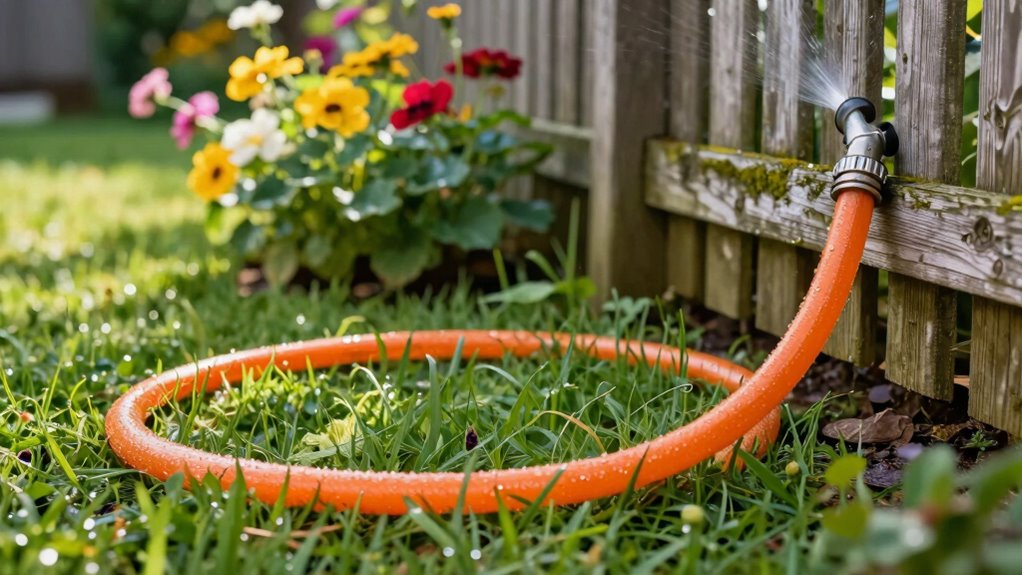
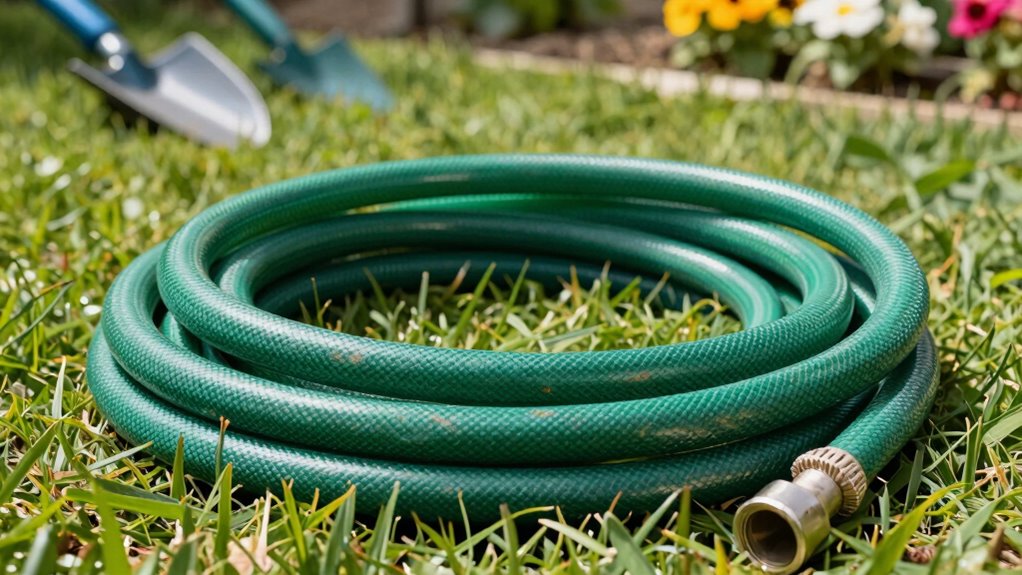
When planning your hose setup, choosing the correct length is essential to guarantee efficiency and safety. The right hose length ensures you can reach all the necessary areas without excess slack, which can cause tripping hazards or kinks that reduce water flow. Whether you’re watering your garden or tackling outdoor cleaning chores, understanding how far you need to reach helps you avoid unnecessary wear on your hose and maintains a steady water supply. Proper hose length planning is a simple yet effective way to improve your outdoor tasks and ensure safety. Start by evaluating the size of your yard or garden. Measure the distance from your water source to the farthest point you want to reach. This step guarantees you buy a hose that covers your entire space without overestimating or underestimating your needs. Remember, having a hose that’s too short means you’ll have to move it around constantly, which is inconvenient and time-consuming. Conversely, a hose that’s too long can lead to unnecessary tangling, increased weight, and potential damage from dragging or snagging over rough terrain.
For garden irrigation purposes, it’s best to add a little extra length—about 10 to 20 feet—beyond your measured distance. This buffer provides flexibility for moving around plants, hanging baskets, or garden beds that are slightly farther apart. It also ensures you don’t strain the hose or your connections when reaching distant spots. In outdoor cleaning, the same principle applies. You want enough length to reach all areas you plan to wash, like patios, decks, or vehicles, without excess slack that could cause accidents or damage. hose material can influence durability and flexibility, affecting how well your setup performs over time. Additionally, selecting hoses with appropriate diameter can help maintain optimal water pressure for your tasks.
Another consideration is the layout of your outdoor space. Narrow pathways or angled corners might require additional hose length to navigate comfortably. If you have multiple zones, you may need a longer hose or even multiple hoses connected via fittings. Keep in mind that longer hoses can slightly reduce water pressure, so choose a hose diameter that maintains adequate flow for your needs. If pressure drops are noticeable, consider upgrading your hose or installing a pressure booster. Additionally, hose length and material can influence durability and flexibility, affecting how well your setup performs over time.
Ultimately, planning your hose length carefully saves you time, effort, and potential hazards. It streamlines your outdoor tasks, whether watering your garden efficiently or cleaning outdoor surfaces thoroughly. When you get it right, you’ll find it easier to manage your outdoor chores, stay organized, and avoid the frustration of having a hose that’s either too short or excessively long. Proper hose length planning is a simple step that makes a big difference in maintaining a safe, functional outdoor space.
Products Worth Considering

Shark AI Ultra Robot Vacuum with Self-Empty Base

Philips Hue Large Smart Light Tube, Black – White and Color Ambiance LED Color-Changing Light – 1 Pack

Samsung 85-Inch M70H Series Mini LED 4K Smart TV (2026)
As an affiliate, we earn on qualifying purchases.
Frequently Asked Questions
How Do I Measure Hose Length Accurately?
To measure hose length accurately, lay the hose along your intended route, keeping it straight without kinks. Use a flexible tape measure or a measuring wheel for precision. Consider the hose material—rubber hoses stretch more than plastic ones, so account for that. After measuring, store your hose properly—coil it loosely and avoid sharp bends for longevity. This guarantees you get the right length and maintain your hose’s durability.
What Types of Hoses Are Best for Long Distances?
For long distances, rubber hoses are your best choice due to their superior garden durability and flexibility. They withstand harsh weather and resist kinks better than vinyl hoses. When comparing materials, rubber is more durable but heavier, while vinyl is lightweight and easier to handle. If you need a hose that lasts longer and performs well over extensive stretches, go for rubber; it offers reliable, long-term use.
Can Expandable Hoses Help Reduce Length Requirements?
Expandable hoses can definitely help reduce length requirements, especially if you often deal with limited storage space. They stretch to a longer length when in use, then contract for easy storage, making them a great storage solution. This flexibility means you don’t need a hose that’s constantly at maximum length, saving space and effort. Plus, their lightweight design makes handling and storing much simpler, ideal for efficient gardening or outdoor cleaning.
How Does Hose Flexibility Affect Length Planning?
Hose flexibility directly impacts your length planning because a flexible hose made from durable hose material can easily bend and navigate around obstacles, reducing the need for extra length. When choosing your hose, consider connection fittings that allow smooth movement without kinking. Flexible hoses help you reach farther with less effort, so you can work efficiently without constantly adjusting or adding extensions, ultimately saving time and effort during your tasks.
Are There Safety Concerns With Overly Long Hoses?
Overly long hoses can pose safety hazards and storage challenges. You might trip over excess length, leading to falls or injuries, especially in busy work areas. Additionally, long hoses are harder to store safely, increasing the risk of damage or leaks. To avoid these issues, choose a hose length that fits your needs, keeps pathways clear, and minimizes clutter, ensuring a safer, more efficient workspace.
Conclusion
Remember, planning your hose length isn’t about endless extensions or guessing your needs. It’s about choosing just the right length to reach comfortably without unnecessary slack, saving you time and hassle. And if you worry about buying the wrong size, know that most hoses are adjustable or come in multiple lengths—so you can always find a perfect fit. With a little planning, watering becomes easier, more efficient, and less of a chore.