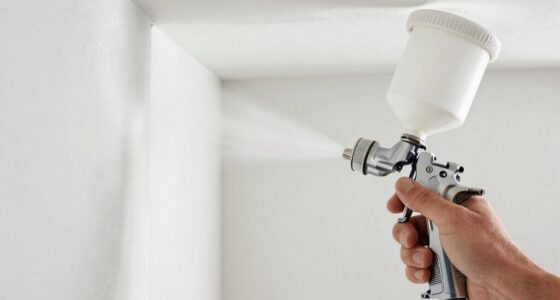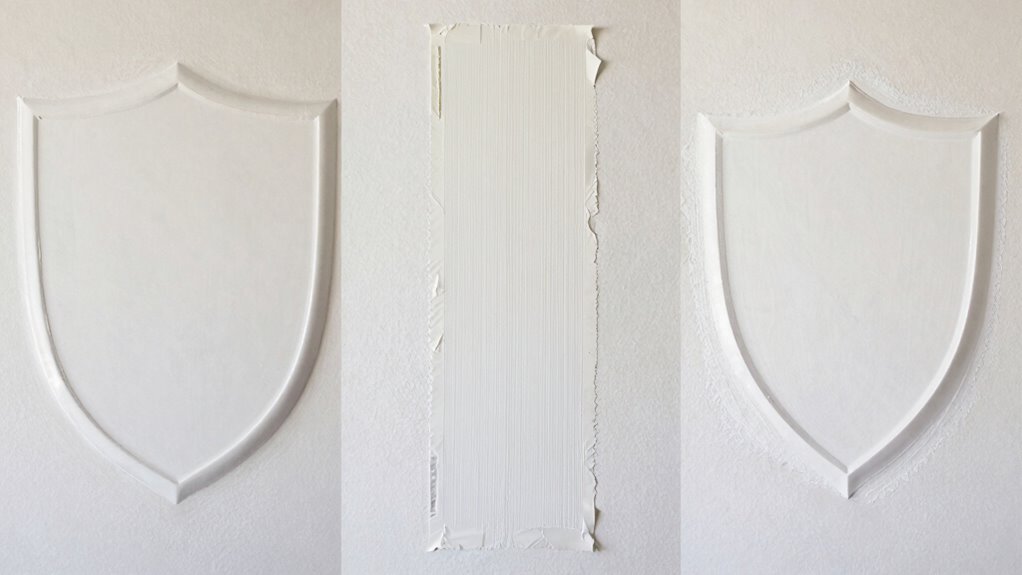

When choosing between shields, tape, or cutting in for a clean-line finish, consider your project’s needs. Shields provide quick, sharp edges but require controlled brushwork for accuracy. Tape offers precise lines if applied carefully and removed promptly, but can sometimes cause bleed or damage if not used correctly. Cutting in gives you maximum control for tight spaces, but it takes patience and skill. Keep exploring these techniques to master the perfect clean line every time.
Key Takeaways
- Shields provide quick, clean lines but require precise placement and control with brushes.
- Tape offers sharp edges but can cause bleed or lifting if not applied or removed carefully.
- Cutting in with a high-quality brush and proper technique yields the most control for detailed edges.
- Shields are ideal for large, flat surfaces, while tape is better for irregular shapes or complex patterns.
- Combining methods—using shields for large areas and cutting in for tight edges—ensures the cleanest finish.

When it comes to achieving clean, professional paint lines, choosing the right masking technique is vital. The method you select can make all the difference in the final look of your project. One critical aspect often overlooked is how your brush techniques and paint consistency influence the outcome. Proper brush control allows you to create crisp edges without drips or uneven coverage, especially when cutting in along trim or corners. Maintaining the right paint consistency—neither too thick nor too runny—ensures smooth, even application. Thin, well-mixed paint flows better off your brush, reducing the risk of bleed-under and ensuring sharp lines.
Proper brush control and consistent paint thickness are key to sharp, professional paint lines.
Using your brush correctly is key. When cutting in, hold your brush at a slight angle and use steady, controlled strokes. Avoid pressing too hard, which can cause paint to spill or feather out, ruining clean edges. Instead, use light, deliberate strokes and work slowly along the edge. This technique minimizes brush marks and helps you achieve a straight, defined line. Keep your brush slightly damp with paint, but not overloaded, to prevent drips. If your paint is too thick, you’ll struggle to create smooth lines and risk uneven coverage. Conversely, if it’s too thin, it may bleed under your masking or tape, leading to smudged edges. Consistently checking and adjusting your paint’s thickness as you work is vital for precision. Additionally, understanding the types of masking materials can help you select the best option for your specific project, ensuring cleaner lines and less touch-up work.
When choosing between shields, tape, or cutting in, each method demands specific brush techniques and paint consistency. Shields can be very effective for quick, clean lines, but you need to ensure your brushwork is controlled to avoid gaps or overlaps. Tape is versatile but requires careful application and removal, especially if your paint is too runny or thick. Cutting in with a good-quality brush and well-mixed paint gives you the most control, especially in tight spaces or detailed areas. No matter which method you prefer, the key to success lies in your ability to manage your brush techniques and maintain the proper paint consistency throughout the job.
Ultimately, mastering these fundamentals will help you produce sharp, professional lines with minimal touch-up. Practice your brush control and always test your paint’s consistency before starting your project. With patience and attention to detail, you’ll find that your masking techniques become more precise and your lines cleaner, giving your walls a polished, flawless finish.
Frequently Asked Questions
Which Method Is Most Cost-Effective for Large Projects?
For large projects, cutting in is the most cost-effective method because it minimizes material costs and reduces setup time. Tape and shields can add up in expenses and labor, impacting your budget considerations. By choosing cutting in, you streamline the process, saving you money overall. Always compare the cost difference, and consider the project scale to ensure you select the most economical approach without sacrificing quality.
How Long Does Each Method Typically Last?
You’ll find that shields last the longest, often several years, protecting against paint seepage and wall damage. Tape typically lasts around one to two years before peeling or allowing seepage, which can cause wall damage. Cutting in offers no lasting barrier, so it requires touch-ups more frequently. When choosing a method, consider durability; shields provide the best longevity, reducing the risk of damage and repainting costs over time.
Can These Techniques Be Used on Textured Walls?
Textured walls pose a tricky task, but you can definitely use these techniques. Shields, tape, and cutting in help you achieve clean, crisp edges, even on textured surfaces. Just guarantee proper paint adhesion by prepping the wall well—cleaning and priming if needed. With patience and precision, you can masterfully manage textured walls, making your paint job flawless and professional-looking, no matter the texture’s tangles.
Are There Safety Concerns With Any of the Methods?
You should watch out for safety concerns with all methods, especially regarding paint overspray and surface damage. Shields and tape help prevent overspray from reaching unintended areas, reducing cleanup and potential damage. Cutting in requires steady handwork, so take your time to avoid accidental surface scratches or paint splatters. Always wear protective gear, work in well-ventilated spaces, and guarantee surfaces are properly prepared to minimize risks and protect your walls.
How Do These Methods Impact Paint Adhesion and Durability?
Your choice dramatically influences paint adhesion and durability, transforming your project into a masterpiece or a flaking disaster. Proper surface preparation and paint compatibility are crucial; shields, tape, or cutting in each impact how well paint sticks and lasts. Shields offer superior adhesion, tape provides moderate durability, and cutting in relies heavily on skill. Ensuring surfaces are clean and compatible with your paint guarantees long-lasting, flawless results, no matter which method you choose.
Conclusion
Ultimately, choosing between shields, tape, or cutting in depends on your project needs. Some worry that cutting in might be messy or time-consuming, but with practice, it becomes quicker and cleaner. Don’t let fear hold you back—each method can give you crisp, professional lines if you follow the right techniques. Trust the clean-line method, and you’ll achieve sharp, precise results that make your painting look flawless every time.