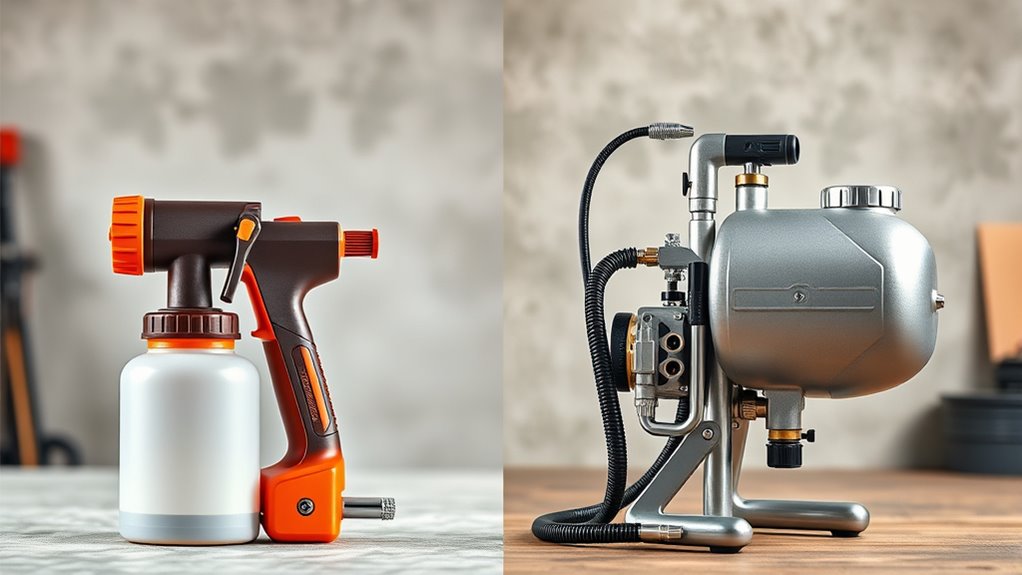
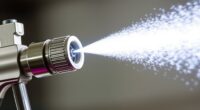
Consumer airless sprayers are built for light use, with smaller tips, lower flow rates, and less durability, making them ideal for small projects like furniture or touch-ups. Professional models, on the other hand, feature larger tips, higher flow rates, and rugged construction to handle large-scale or frequent jobs efficiently. If you want to understand how these differences can affect your project and which sprayer suits your needs, the details ahead will guide you.
Key Takeaways
- Consumer sprayers have smaller spray tips (0.11-0.15 inches) for detailed work, while professional models use larger tips (0.17-0.33 inches) for faster coverage.
- Professional sprayers feature higher paint flow rates and capacities suitable for large projects, unlike consumer models designed for smaller tasks.
- Consumer units are lightweight and simple, whereas professional sprayers are rugged and built for heavy-duty, frequent use.
- Higher initial cost and durability make professional sprayers more cost-effective for regular, large-scale projects than cheaper consumer options.
- Consumers typically use sprayers for small projects and touch-ups, while professionals handle large areas like exteriors and industrial surfaces.
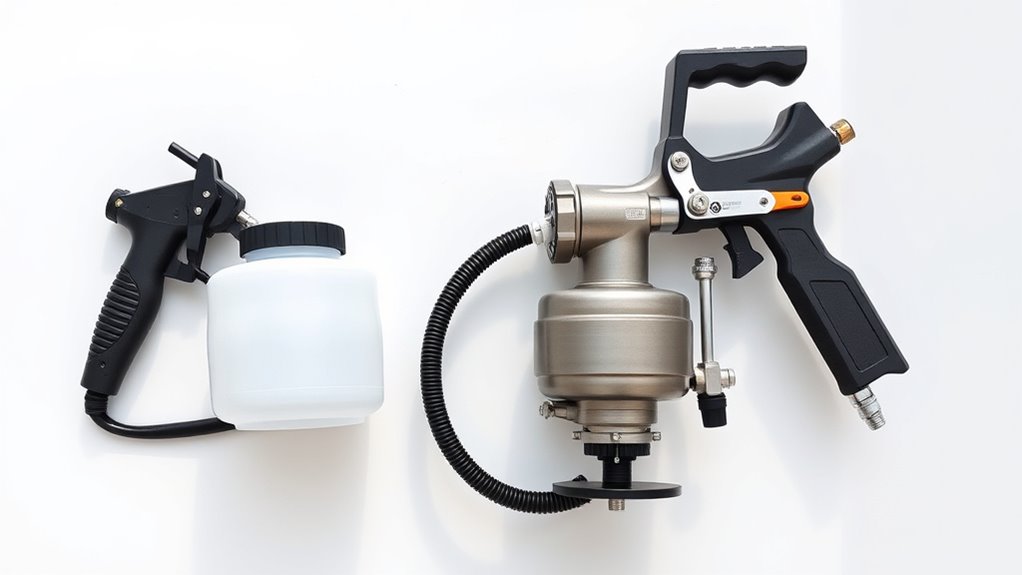
When it comes to choosing an airless sprayer, understanding the key differences between consumer and professional models can save you time and money. One of the most important factors to weigh is the spray tip size. Consumer sprayers typically come with smaller tips, usually between 0.11 and 0.15 inches, which are ideal for detailed work or smaller projects. Professional models, however, often feature larger tips, ranging from 0.17 to 0.33 inches, allowing for faster coverage of big surfaces. Selecting the appropriate spray tip size directly impacts the paint flow rate, which determines how much paint is delivered per minute. A larger tip with a higher paint flow rate enables you to cover larger areas more quickly, but it also requires a sprayer capable of handling increased volume and pressure.
In consumer models, the paint flow rate is usually lower, making them suitable for small to medium projects like furniture, cabinets, or touch-up work. These sprayers are designed for ease of use, with adjustable settings that help you control the paint flow, but they lack the capacity to sustain high flow rates over extended periods. Professional sprayers, on the other hand, are built for high-volume, continuous use. They can handle higher paint flow rates, which means you can work more efficiently on large jobs such as exterior walls or industrial projects. This increased capacity comes with more robust pumps and better pressure control, allowing you to adjust the spray pattern and flow rate precisely to match the task at hand.
Another key difference tied to spray tip size and paint flow rate is the overall durability and build quality. Consumer models tend to be lightweight and portable, with simplified controls suitable for occasional use. They often feature smaller pumps that aren’t built to withstand the rigors of daily or heavy-duty painting. Professional sprayers are heavier, more rugged, and equipped with powerful pumps capable of maintaining consistent flow rates for long periods. They also offer a wider range of spray tips and pressure adjustments, giving you greater flexibility to adapt to different surfaces and paint types.
Furthermore, the cost of professional sprayers is generally higher due to their advanced features and durable construction, but they can be more cost-effective in the long run for frequent users. Ultimately, choosing between a consumer and professional airless sprayer hinges on your project scope and frequency of use. If you’re tackling small jobs or occasional projects, a consumer model with a smaller spray tip size and lower paint flow rate should suffice. But if you plan to paint large areas regularly or require a high degree of precision and efficiency, investing in a professional-grade sprayer with larger tips and higher flow capacity will save you time and produce better results.
Frequently Asked Questions
What Maintenance Do Professional Airless Sprayers Require?
You need to follow proper cleaning routines after each use, including flushing the system with solvent and cleaning the filters. Regularly inspect and replace worn parts like seals and tips to keep your sprayer in top shape. When storing, make certain the equipment is clean and dry, and store it in a cool, dry place. Proper maintenance prevents clogs, prolongs equipment life, and ensures consistent, professional results.
How Long Does It Take to Learn Using a Professional Sprayer?
Learning to use a professional sprayer is like mastering a musical instrument; the initial learning curve can be steep, but consistent practice speeds skill development. Most users start feeling comfortable within a few days, but achieving expert proficiency might take weeks of dedicated use. With hands-on experience, you’ll develop confidence quickly, and by the end of your first project, you’ll be managing the sprayer with precision and ease.
Are There Specific Safety Precautions for Consumer Sprayers?
You should always wear safety gear like goggles, masks, and gloves when using consumer sprayers to protect yourself from paint fumes and splatters. Be aware of hazards such as high pressure and overspray, which can cause injuries or messes. Read the user manual thoroughly, make certain of proper ventilation, and keep the sprayer away from children. Staying cautious and prepared helps prevent accidents and ensures a safer painting experience.
Can Consumer Sprayers Handle Industrial-Grade Paints?
Consumer sprayers typically can’t handle industrial-grade paints because their paint quality and sprayer durability aren’t designed for such heavy-duty materials. Using thick, high-viscosity paints can clog or damage your sprayer, reducing its lifespan. To guarantee proper application and avoid damage, stick to paints recommended by the manufacturer. For industrial-grade paints, consider professional sprayers built to withstand tougher paints and extended use.
What Are the Warranty Differences Between Consumer and Professional Models?
You’ll notice that warranty coverage for professional models typically lasts longer and covers more repairs compared to consumer models. Professional sprayers often come with extensive repair services, ensuring quick fixes when issues arise. Conversely, consumer models usually have shorter warranties with limited repair options. It’s essential to review each warranty’s details, so you understand what’s covered and how you can access repair services when needed.
Conclusion
Think of consumer and professional airless sprayers as different brushes in an artist’s toolkit. While the consumer sprayer is like a small, nimble brush perfect for quick sketches, the professional is a broad, powerful brush ready for large murals. Choosing the right one depends on your project’s size and detail. With the right sprayer in hand, you’ll paint your vision smoothly, turning a simple task into a vibrant masterpiece.