
Airless paint sprayers can transform time-consuming painting jobs into faster, more consistent projects, but choosing and using one successfully requires more than selecting the most powerful machine. The right setup depends on what you plan to paint, the coating you will use, the finish you expect, and how often you anticipate spraying. A homeowner refreshing interior walls has different needs from someone coating a roof, restoring metal furniture, or applying automotive paint.

Get business pricing on tools and workshop supplies
- Business-only prices and quantity discounts
- Tax-exempt purchasing
- Multiple users, one account, clear invoices
This hub will help you understand how airless sprayers work, decide whether the technology suits your project, compare the features that matter, and find detailed guidance for specific coatings and surfaces. Use it as your starting point, then follow the linked guides for deeper comparisons within the category that matches your work.
How an Airless Paint Sprayer Works
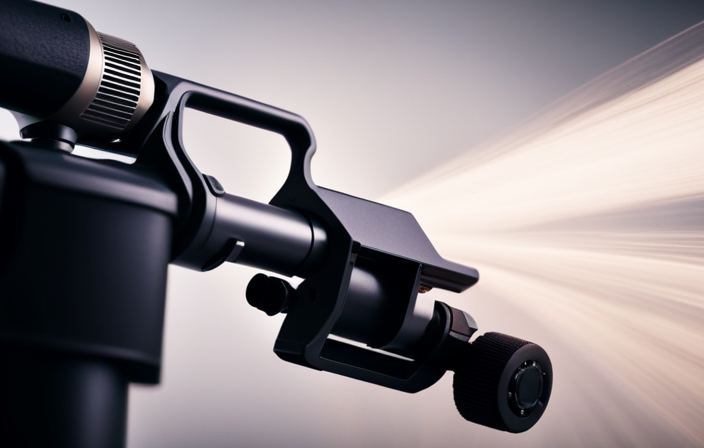
An airless sprayer uses a pump to pressurize paint and force it through a small opening in the spray tip. Unlike pneumatic equipment, it does not rely on compressed air to atomize the coating. The resulting spray pattern can cover broad surfaces efficiently, making airless systems popular for walls, ceilings, fences, siding, decks, and other substantial projects.
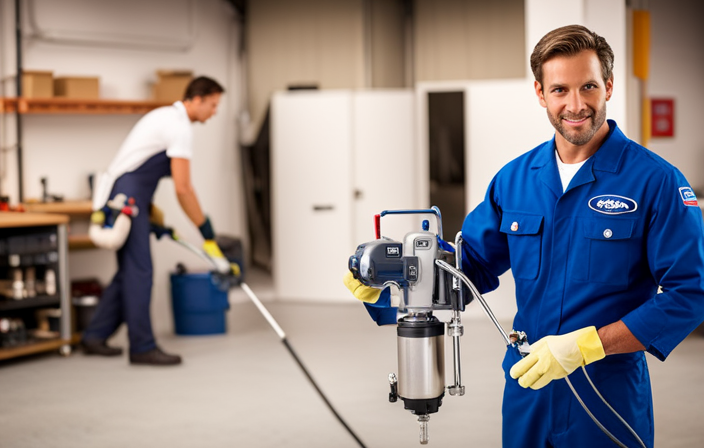
A typical setup includes the sprayer, an intake tube or paint container, a high-pressure hose, a spray gun, filters, and a reversible tip. The tip influences the width of the fan and the size of the opening through which the coating passes. Matching that tip to both the material and the surface is one of the most important steps in achieving controlled coverage.
Airless technology is especially useful when a project involves a large area or repeated painting. For very small objects, frequent color changes, or work requiring extremely fine control, another application method may be more convenient. The value of an airless sprayer becomes clearer when the time saved during application outweighs the preparation and cleanup required.
As an affiliate, we earn on qualifying purchases.
Who Should Consider an Airless Sprayer?
Homeowners and Renovators
Homeowners commonly use airless equipment for room makeovers, ceilings, garages, exterior siding, fences, and rental-property maintenance. A suitable homeowner machine should be manageable to move, straightforward to clean, and compatible with the coatings used around the house. Occasional users may value simple controls and storage-friendly designs, while frequent renovators may prioritize durability, longer hoses, and support for larger jobs.
If your projects span several parts of the home, begin with the guide to the best airless paint sprayers for homeowners. It focuses the selection process on practical residential needs instead of assuming every buyer requires professional-scale equipment.
Budget-Conscious DIY Users
An entry-level budget does not remove the need to consider pressure control, supported tip sizes, hose length, coating compatibility, and replacement-part availability. It simply makes prioritization more important. Think about the largest realistic project you will tackle, not an unlikely future job that could lead you to buy more machine than you need.
For accessible options, compare the airless paint sprayers under $200. DIYers with more room in their budget can also explore the airless paint sprayers under $300. These guides provide focused starting points, but you should still confirm that a particular sprayer supports your intended coating and project size.
Frequent DIYers and Workshop Users
People who regularly build furniture, renovate rooms, maintain outbuildings, or complete woodworking projects may benefit from a more serviceable setup. Consistent pressure adjustment, readily available filters and tips, and a hose long enough to reduce constant repositioning can matter more over time than a compact footprint alone.
Frequency also changes the ownership calculation. A machine that feels excessive for one bedroom may make sense across a series of renovations. Conversely, even a capable sprayer can become inconvenient if most of your projects are tiny and require more masking than actual painting.
Choose the Sprayer Around the Coating
Latex and Water-Based Paint
Latex paint is widely used for residential walls, ceilings, and exterior surfaces. Because formulations vary in viscosity, always review the paint manufacturer’s application instructions and the sprayer’s supported materials. Some combinations may work without thinning, while others may call for a different tip, filtration, or preparation approach.
The guide to airless paint sprayers for latex paint narrows the field to equipment intended for this common coating category. It is particularly useful if interior or exterior house paint will account for most of your spraying.
Oil-Based Paint and Compatible Finishes
Oil-based materials introduce different compatibility and cleanup considerations. Seals, hoses, filters, and flushing products must be appropriate for the coating. Ventilation and responsible handling are also essential, and the coating label should remain your primary source for safety, thinning, and cleanup directions.
Consult the airless paint sprayer guide for oil-based paint when this material is central to your project. Do not assume that a sprayer suitable for water-based wall paint automatically suits every solvent-based coating.
Heavy and Specialized Coatings
Roof coatings and other high-build materials can demand more from a pump, hose, gun, and tip than ordinary architectural paint. Material composition varies, so compatibility should be verified for the exact coating rather than inferred from a general product description. Check recommended tip ranges, preparation requirements, and whether the coating manufacturer permits airless application.
For these demanding jobs, use the airless paint sprayer guide for roof coatings as a specialized resource. Roof work also introduces fall hazards, weather constraints, and surface-preparation requirements that extend well beyond the choice of sprayer.
Match the Equipment to the Surface
Walls, Ceilings, Siding, and Fences
Large, relatively continuous surfaces are where airless spraying is often most attractive. A wider fan can move efficiently across open walls or long fence panels, while pressure adjustment helps reduce unnecessary overspray. Corners, trim, fixtures, windows, and nearby landscaping require careful protection before spraying begins.
For indoor work, remove or cover furnishings, isolate the work area, and account for airborne paint particles. Outdoors, watch the wind and protect neighboring property, vehicles, plants, and hardscaping. Application may be fast, but thorough masking remains a central part of the project.
Woodworking and Furniture
Airless equipment can be used on cabinets, doors, built-ins, furniture, and larger woodworking projects, but finish expectations should guide the setup. Surface preparation, sanding, dust removal, coating choice, pressure, tip selection, and spraying technique all influence the result. A smaller fan may offer better control on narrow components than a tip selected for broad walls.
Before committing to the finished piece, test the complete setup on scrap material with similar porosity and orientation. This reveals whether the spray pattern is even, whether the coating is flowing properly, and whether adjustments are needed.
Metal Surfaces
Metal projects can include gates, railings, outdoor furniture, machinery housings, and structural components. Successful coating depends heavily on removing loose rust, grease, dust, and failing finishes. The sprayer applies the material; it cannot compensate for contamination or poor adhesion beneath it.
Explore the best airless paint sprayers for metal surfaces for equipment-oriented guidance. Pair that information with the coating manufacturer’s requirements for cleaning, rust treatment, primers, film thickness, and recoat timing.
Automotive Projects
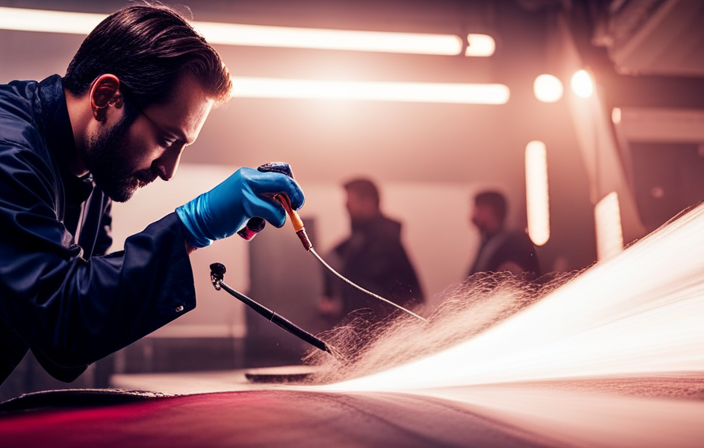
Automotive painting demands careful control of surface preparation, cleanliness, material compatibility, spray quality, ventilation, and personal protection. Expectations are also different from those of house painting: a finish that appears uniform on a fence may not satisfy someone evaluating reflective body panels at close range.
The guide to airless paint sprayers for automotive painting covers this specialized category. Before proceeding, verify that the equipment, coating system, workspace, and protective measures are appropriate for the exact automotive material being applied.
Features That Matter When Comparing Sprayers
Pressure Control
Adjustable pressure helps you find a level that atomizes the coating without creating more overspray than necessary. Higher pressure is not automatically better. A sensible approach is to begin low, test the pattern, and increase only until the spray becomes even and free of obvious tails.
Supported Tip Sizes
Every sprayer has limits on the tips it can support, and every coating has an appropriate application range. Tip markings generally communicate fan width and opening size, but you should follow the manufacturer’s charts rather than relying on a universal setting. Worn tips may produce an enlarged or uneven pattern and can increase material use.
Hose Length and Reach
A longer hose can reduce how often the pump must be moved, especially around building exteriors or across large rooms. However, maximum supported hose length varies. Consider where the sprayer will sit, how you will reach the work area, and whether the hose will create a trip or handling problem.
Filters, Replacement Parts, and Maintenance
Filters help keep debris from reaching the tip, while accessible replacement parts can make long-term ownership easier. Look beyond the initial purchase and consider how tips, guards, filters, hoses, and gun components are obtained. Maintenance instructions should be clear enough that you can clean and store the machine correctly after each job.
Paint Delivery and Portability
Some systems draw directly from a paint container, while compact units may use an attached cup. Container-fed setups can be convenient for large projects; smaller reservoirs may suit short jobs or frequent movement. Weight matters not only when carrying the machine but also when loading it, storing it, and moving it around an active worksite.
Preparation: The Foundation of a Better Finish
Spraying cannot hide damaged substrates, peeling paint, grease, dust, or moisture problems. Repair defects, clean the surface, allow it to dry, sand where appropriate, and remove residue before opening the coating. Follow applicable guidance for older finishes or hazardous materials rather than disturbing them without a plan.
Mask generously. Airless spray can travel beyond the visible center of the fan, especially at excessive pressure or in moving air. Protect everything that should remain unpainted, including floors, hardware, outlets, windows, vehicles, tools, and adjacent surfaces. Establish a safe route for the hose so it does not drag through wet paint or snag masking materials.
Strain and mix the coating if its instructions call for those steps. Install a compatible filter and tip, prime the system according to the sprayer manual, and test on cardboard or scrap. The test pattern should guide pressure and technique adjustments before you approach the actual surface.
Basic Spraying Technique
- Hold the gun at a consistent distance recommended for the equipment and coating.
- Keep the gun perpendicular to the surface instead of swinging it in an arc.
- Begin moving before triggering and release the trigger before stopping the pass.
- Overlap adjacent passes consistently to avoid gaps and heavy bands.
- Work in a logical sequence that preserves a wet edge where the coating requires it.
- Pause and correct an uneven pattern instead of compensating with slower, heavier passes.
Practice matters. A few controlled passes on scrap can reveal wrist movement, inconsistent distance, poor overlap, or excessive pressure. If the finish begins to sag, do not continue adding material. Review the coating instructions and adjust the setup or application rate before proceeding.
Safety, Cleanup, and Storage
Airless sprayers operate at high pressure. Never point the gun at yourself or another person, and never use a hand to check for leaks. A high-pressure injection injury can appear minor while requiring urgent medical treatment. Engage the trigger lock when appropriate, relieve pressure before servicing the system, and follow the manufacturer’s complete safety procedure.
Use personal protective equipment suitable for the coating and environment. Ventilation, respiratory protection, eye protection, gloves, protective clothing, and control of ignition sources may be necessary. The coating’s safety data and label instructions should determine the precautions rather than guesswork.
Clean the sprayer promptly using a flushing material compatible with both the coating and the equipment. Flush the hose and gun, clean the filters and tip, inspect components, and store the system as directed. Never mix or dispose of leftover coatings and solvents casually; follow local rules and the material manufacturer’s instructions.
Building the Right Airless Spraying Setup
The best setup is the one aligned with your actual workload. Begin with the coating and surface, estimate the scale of your projects, and then compare pressure control, tip support, hose reach, paint delivery, maintenance, and portability. Budget should refine that shortlist rather than replace compatibility checks.
For general residential work, start with the homeowner guide. For cost-sensitive shopping, use the under-$200 and under-$300 collections. When the material or surface is specialized, move directly to the latex, oil-based, roof-coating, metal, or automotive guide. This project-first approach makes it easier to choose equipment that fits the work and to avoid paying for capacity you are unlikely to use.
Fall yard work Picks
leaf blowers
As an affiliate, we earn on qualifying purchases.