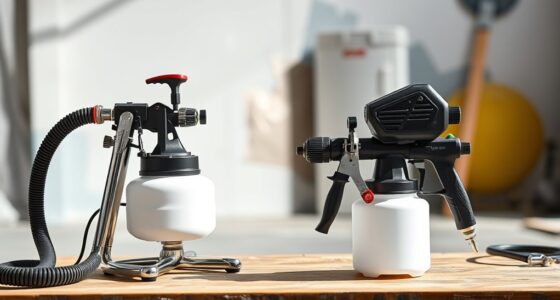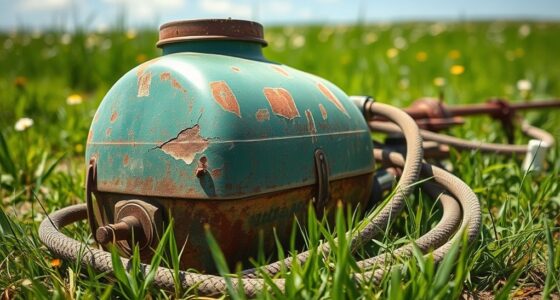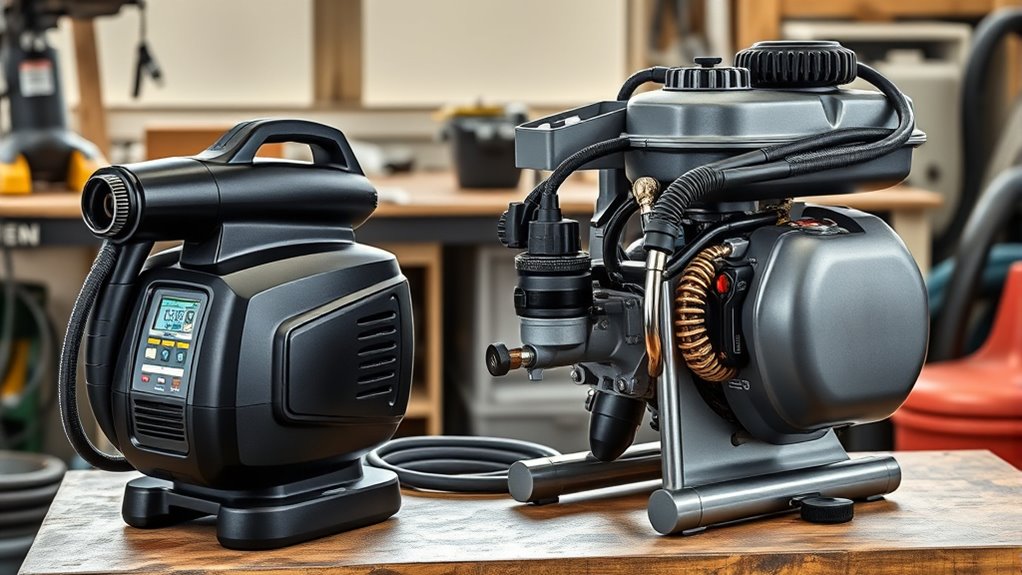

When comparing electric and gas-powered airless sprayers, you’ll find electric models are quieter, easier to maintain, and safer, making them ideal for regular, small to medium tasks. Gas-powered units offer more portability and power for large projects but require more upkeep, generate more noise, and pose safety concerns. To choose the best for your needs, consider how often you’ll use it, your work environment, and your maintenance capacity—more details await to help you decide.
Key Takeaways
- Electric sprayers have lower maintenance costs due to fewer moving parts and no fuel handling requirements.
- Gas-powered models offer greater portability but require engine maintenance and produce higher noise levels.
- Electric units operate quietly, making them suitable for sensitive environments, while gas models generate significant noise.
- Electric sprayers eliminate safety risks associated with fuel leaks, spills, and engine fumes.
- Overall, electric sprayers support higher efficiency with less downtime and ongoing upkeep.
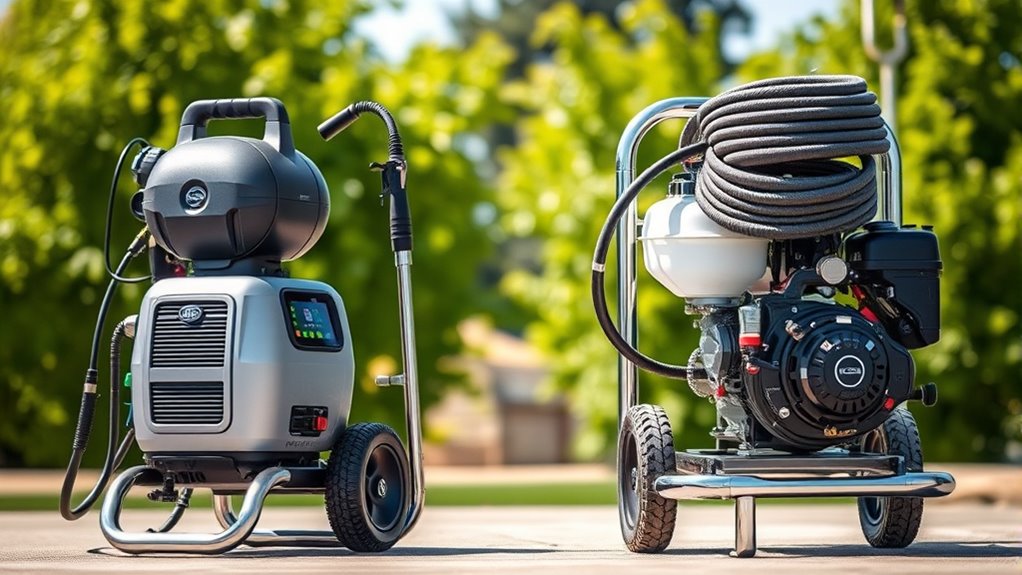
When choosing an airless sprayer, understanding the differences between electric and gas-powered models is essential. Your decision impacts how much you’ll spend on maintenance and how the machine will affect your work environment. Electric sprayers tend to have lower maintenance costs because they have fewer moving parts and don’t require regular oil changes, spark plug replacements, or fuel handling. You simply plug them in and go, which means less hassle and fewer expenses over time. Gas-powered models, on the other hand, often demand more frequent upkeep. You’ll need to check and replace spark plugs, change oil, and perform other engine maintenance tasks. These costs can add up, especially if you plan to use the sprayer frequently. Additionally, considering safety is crucial, as electric models eliminate the risks associated with fuel leaks or spills, making them safer for your work environment.
Electric sprayers offer lower maintenance costs, while gas models require more frequent upkeep and engine care.
Noise levels are another critical factor to weigh. Electric sprayers operate quietly, allowing you to work in more sensitive environments or in areas where noise restrictions apply. The quiet operation not only makes for a more comfortable working experience but also minimizes disturbance to clients or neighbors if you’re working in residential areas. Gas-powered models, however, generate considerably more noise due to their internal combustion engines. The loud engine can be disruptive, especially during long projects or in enclosed spaces. This increased noise level might require you to wear hearing protection or schedule work during quieter hours, which could slow down your project timelines.
Furthermore, the noise levels influence your overall productivity and safety. Electric sprayers’ silent operation means you can focus solely on your work without the distraction of engine noise. Conversely, the loud operation of gas-powered models might necessitate taking breaks more often to reduce fatigue or protect your hearing.
When weighing maintenance costs, think about how often you’ll need to service the machine. Electric sprayers generally require less frequent and less intensive maintenance, making them more cost-efficient over time. Gas models, while more powerful and portable, come with ongoing maintenance costs that can add up, especially if you work on multiple projects or have a tight schedule.
Frequently Asked Questions
Which Sprayer Type Is Better for Residential Projects?
For residential projects, electric sprayers are your best choice because they offer better sprayer portability and are easier to handle in tight spaces. They also have a lower environmental impact, producing no emissions and requiring less maintenance. Gas-powered sprayers might be more powerful, but their size and noise can be drawbacks for home use. Overall, electric sprayers provide convenience and eco-friendliness for your residential projects.
How Do Maintenance Requirements Differ Between Electric and Gas Sprayers?
You’ll find that electric sprayers generally need less maintenance because their power source is simpler, with fewer moving parts that wear out. You should perform maintenance less frequently, mainly just cleaning filters and nozzles after use. Gas sprayers, however, require more upkeep, including oil changes and engine checks, and need more frequent maintenance due to their complex power source. This makes electric models more convenient for regular use.
Are Electric Sprayers Suitable for Outdoor Use?
Imagine tackling a large outdoor project where noise is your enemy and portability matters. Electric sprayers are perfect for this, as their battery-powered design makes them easy to carry around without cords, and they operate quietly, minimizing disruption. While gas-powered units might be more robust, electric sprayers excel outdoors when you need portability and lower noise levels. So, yes, electric sprayers are highly suitable for outdoor use.
What Safety Precautions Are Necessary for Gas-Powered Sprayers?
When using gas-powered sprayers, you need to prioritize fuel safety by storing fuel properly and avoiding spills. Make certain there is adequate ventilation to prevent dangerous fumes from accumulating indoors or in confined spaces. Always check for leaks before operation, keep open flames away, and wear protective gear. Following these precautions helps keep you safe, reduces fire risk, and ensures the sprayer functions efficiently during outdoor or well-ventilated use.
Can Both Sprayer Types Handle Thick or Textured Paints?
You can absolutely handle thick coatings and textured paint with both sprayer types! Electric sprayers might seem delicate, but they’re surprisingly powerful for tackling paint texture and thick coatings, making your job smooth as butter. Gas-powered sprayers, with their brute strength, handle even the heaviest textures effortlessly. No matter which you choose, both are capable of covering textured surfaces, so you won’t miss a beat when it comes to thick coatings!
Conclusion
So, whether you choose electric or gas-powered airless sprayers, it’s funny how both promise ease and power—yet only one truly delivers without a hitch. You might think gas offers endless mobility, but the noise and fumes might remind you of a nightmare. Electric feels cleaner, but maybe it’s just a fancy plug-in toy. In the end, maybe all sprayers are just a reminder that the perfect tool doesn’t exist—only compromises.