Using an extension cord with the wrong gauge for your sprayer can cause breaker trips and damage. If the cord is too thin, it struggles to handle the wattage, leading to overheating and voltage drops that impair sprayer performance. Heavier-duty cords with a proper gauge—like 12 or 14 gauge—are essential for safe, efficient operation. Choosing the right cord size helps prevent overloads; keep this guide nearby to learn more about selecting the proper extension cord for your sprayer.
Key Takeaways
- Using a cord with too small a gauge (e.g., 16 or 18 AWG) for high wattage sprayers causes overheating and breaker trips.
- Longer cords require thicker gauges (12 or 14 AWG) to prevent voltage drops and overloading.
- Selecting the wrong gauge increases the risk of electrical shorts and safety hazards during spraying.
- Proper gauge selection ensures consistent power flow, reducing breaker trips and equipment damage.
- Always match cord gauge to sprayer wattage and length to maintain safe, efficient operation.
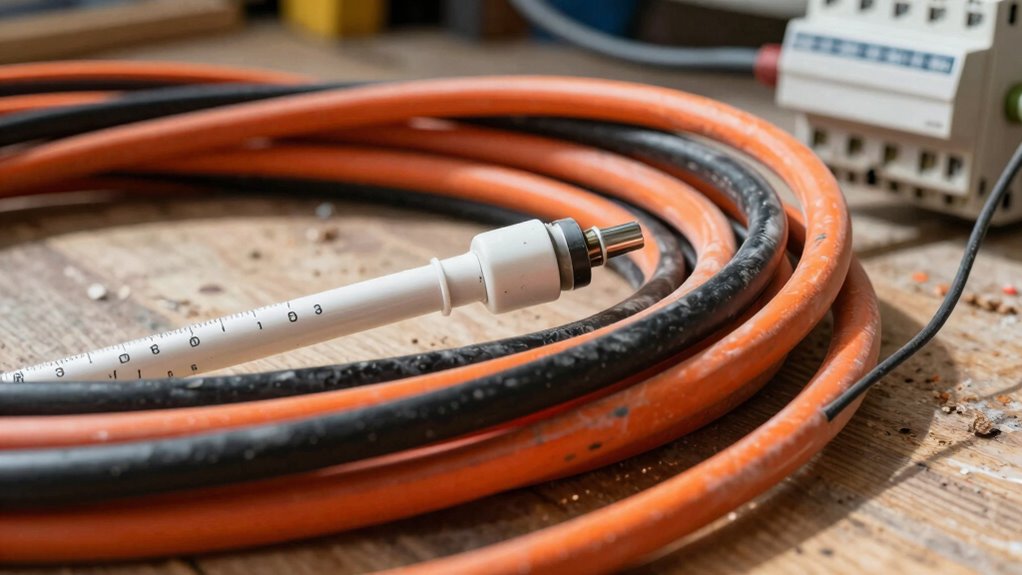
When using sprayers outdoors or in large spaces, having the right extension cord can make all the difference. The key to safe and efficient operation lies in understanding power safety and choosing the correct cord length. If your extension cord is too short, you’ll be forced to work in awkward positions, which can cause strain and increase the risk of accidents. Conversely, an excessively long cord might seem convenient but can lead to voltage drops that reduce your sprayer’s performance and create safety hazards. Knowing the proper cord length ensures you stay within safe operating parameters and avoid unnecessary power issues.
Power safety is critical when working with sprayers, especially since these devices rely on consistent electricity flow to avoid malfunction or damage. Using a cord that’s too thin in gauge can result in overheating, risking electrical fires or damage to your equipment. It’s essential to select a cord with the appropriate gauge, typically 12-gauge or 14-gauge for outdoor sprayers, depending on the length and wattage. This ensures your sprayer receives adequate power without overloading the cord, reducing the chance of breaker trips or electrical hazards.
Using a properly gauged extension cord prevents overheating and electrical hazards during outdoor spraying tasks.
The gauge of your extension cord directly impacts power safety, but so does cord length. When the cord is too long, voltage drops occur, meaning your sprayer might not operate at full capacity. This can cause uneven spraying, longer working times, or equipment strain. On the other hand, a cord that’s too short might tempt you to stretch or overload it, which can be dangerous. Measure your working distance carefully before purchasing, and always opt for the shortest cord that comfortably reaches your work area. This minimizes voltage loss and maintains a safer, more reliable power supply.
Another aspect to consider is the quality of the extension cord. A heavy-duty cord with proper insulation and grounding features offers better power safety, especially in outdoor environments where moisture and debris are common. Avoid cheap, thin cords that can easily get damaged or cause electrical shorts. Also, check that your cord has a grounded plug, which provides an extra layer of safety by preventing electrical shocks. Additionally, choosing a cord with proper insulation can help prevent damage from environmental factors and prolong the cord’s lifespan.
Frequently Asked Questions
Can Using a Longer Extension Cord Increase Power Delivery Issues?
Yes, using a longer extension cord can increase power delivery issues if the wire gauge isn’t suitable. As the cord length grows, the resistance increases, which can cause voltage drops and trip breakers. To avoid this, choose a cord with a thicker wire gauge for longer distances, ensuring enough power reaches your sprayer. Always check the recommended gauge and length to prevent overloads and maintain maximum performance.
What Are the Safety Precautions When Using Extension Cords With Sprayers?
When using extension cords with sprayers, prioritize grounding safety by ensuring the cord has a proper grounding pin. Always store cords properly to prevent damage and tripping hazards. Check the cord’s gauge to handle the sprayer’s current needs safely. Avoid overloading the cord, and keep it out of water or wet areas. Regularly inspect for frays or cuts, and unplug when not in use to maintain safety.
How Do I Identify the Correct Gauge for My Sprayer?
Did you know that using the wrong gauge size can cause breakers to trip? To identify the correct gauge for your sprayer, check the sprayer’s power requirements and match them with the extension cord’s gauge size. Generally, for longer extension lengths, you need a thicker gauge (lower number). For example, a 14-gauge cord is suitable for up to 50 feet, ensuring safe operation without breaker trips.
Are There Specific Extension Cord Brands Recommended for Sprayers?
You should look for trusted brands like Southwire, Coleman Cable, or Iron Forge Cable, known for their durable cords. These brands offer extension cords with high-quality insulation and robust construction, ideal for sprayers. Always choose a cord with the right gauge and enough length to avoid strain. Investing in a reliable brand guarantees better cord durability, reduces safety hazards, and prevents breaker trips during your spraying tasks.
What Signs Indicate My Extension Cord Is Causing Breaker Trips?
You notice frequent breaker trips and suspect your extension cord. Power fluctuations and inconsistent voltage often signal the cord’s gauge is too thin, causing it to overheat or deliver insufficient power. Signs include your sprayer shutting off unexpectedly, the cord feeling hot, or sparks near the plug. If you see these, it’s time to replace the extension cord with one that has a thicker gauge, ensuring safe, steady power delivery.
Conclusion
Don’t let a small mistake make a massive mess. Choosing the correct gauge for your sprayer extension cord isn’t just a technical detail—it’s a crucial victory against voltage violations. By paying close attention and avoiding the gauge gaffe, you protect your tools, prevent power problems, and promote safety. Stay smart, select the sturdy, suitable gauge, and safeguard your sprayer session from sudden shutdowns. Remember, a little caution keeps chaos at bay—keep your cords correct, and your projects prosper.