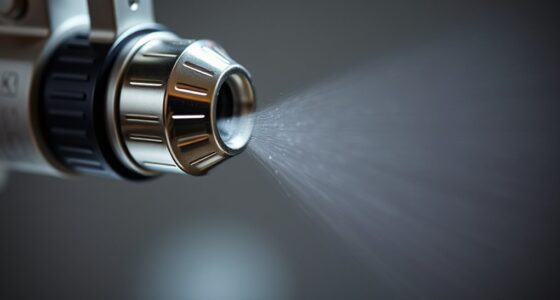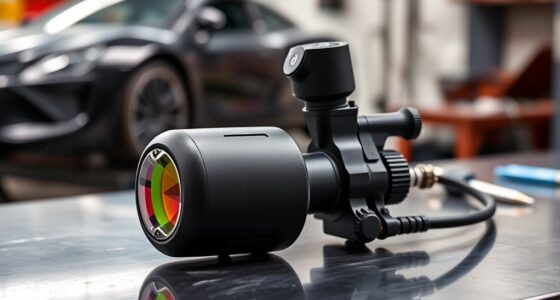
High-volume sprayers cover large areas quickly with an wide, consistent spray pattern, ideal for big projects like exteriors. Low-volume sprayers are better for detailed work, offering precision and less overspray. High-volume units are more durable but heavier and less maneuverable, while low-volume models are lighter and easier to handle for small tasks. To choose the right tool, you’ll want to contemplate your project size, complexity, and equipment needs—more details await your discovery.
Key Takeaways
- High-volume sprayers cover large areas quickly with wide spray patterns, ideal for big projects and exterior surfaces.
- Low-volume sprayers offer precision with narrower spray patterns, suitable for detailed, indoor, or small-scale work.
- High-volume units are heavier and more durable, designed for heavy-duty, continuous use; low-volume sprayers are lighter and easier to handle.
- Maintenance for high-volume sprayers involves cleaning reinforced parts after extensive use; low-volume units are simpler but may wear faster with heavy use.
- Choose high-volume sprayers for speed and large coverage; opt for low-volume sprayers for accuracy and detailed projects.
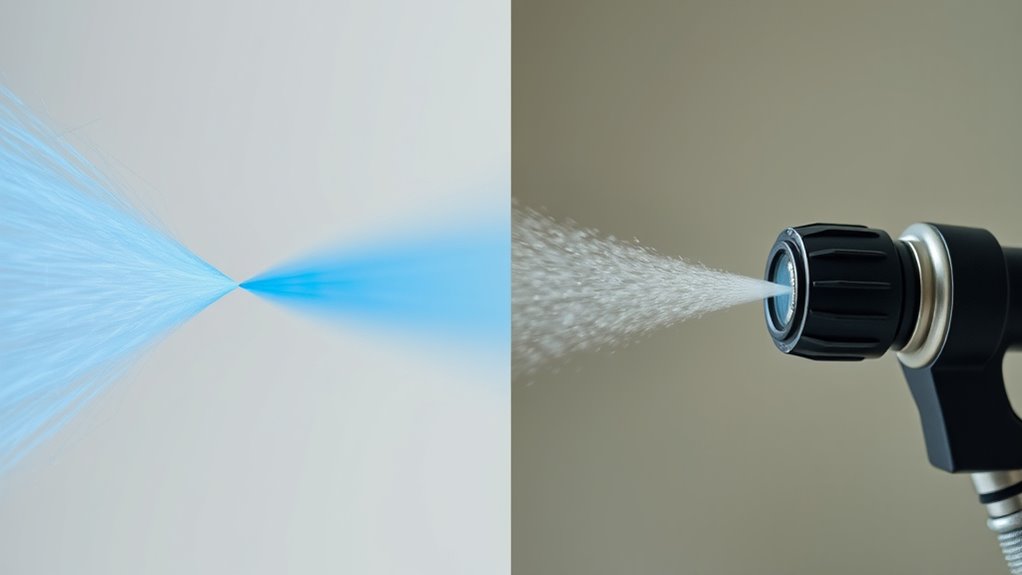
Are you trying to decide between high-volume and low-volume airless sprayers for your painting projects? This choice hinges on understanding how each type’s spray pattern and equipment durability can impact your work. High-volume sprayers deliver a larger amount of material quickly, creating a wide, consistent spray pattern that covers surfaces efficiently. If you’re tackling big projects like exterior walls or large furniture, this broad spray pattern can save you time and produce smooth, even finishes. However, keep in mind that with increased volume, the equipment tends to be more robust, designed to withstand longer use and higher pressure. This durability means fewer breakdowns during intensive jobs, but it also makes the equipment heavier and potentially more difficult to maneuver for detailed work.
High-volume sprayers cover large areas quickly but are heavier and less maneuverable for detailed work.
On the other hand, low-volume airless sprayers are more suited for smaller, detailed projects or when you need greater control. They produce a narrower spray pattern, allowing you to target specific areas with precision. This precise spray pattern helps prevent overspray and material wastage, making low-volume sprayers ideal for touch-ups, furniture refinishing, or indoor work. Since these sprayers operate at lower pressure, they are generally lighter and easier to handle, giving you better control over your application. Although their equipment durability may not match that of high-volume sprayers, many models are designed for moderate use, making them suitable for both occasional and ongoing projects. It’s a good idea to weigh how often you’ll be using the sprayer and the type of projects you undertake most frequently.
Another factor to weigh is the maintenance and longevity of the equipment. High-volume sprayers, built for continuous, heavy-duty use, tend to be more rugged and durable, which can translate into a longer lifespan if maintained properly. They often feature reinforced components and larger motors that stand up to extended use, but they might require more frequent cleaning and upkeep due to their increased workload. Conversely, low-volume sprayers, while easier to maintain, may be more vulnerable to wear and tear if used extensively or improperly. They typically have simpler components and smaller motors, which can make repairs easier but also limit their lifespan under demanding conditions. Additionally, understanding the familiarity with equipment can help you better maintain and operate your sprayer effectively.
In essence, choosing between high-volume and low-volume airless sprayers boils down to your project size, desired spray pattern, and equipment durability. If you need to cover large areas quickly and want a sturdy, long-lasting machine, high-volume sprayers are the way to go. But if you prefer precision for smaller jobs and easier handling, a low-volume sprayer might serve you better. Consider how each option aligns with your specific needs to make an informed decision that ensures your painting projects come out perfect.
Frequently Asked Questions
Which Sprayer Type Is More Eco-Friendly?
You’ll find low-volume airless sprayers more eco-friendly because they reduce paint waste and use less energy, minimizing their eco impact. Their precision allows for better coverage with less material, supporting sustainability benefits. By choosing low-volume sprayers, you help conserve resources and lower emissions, making them a smarter, greener option for environmentally conscious projects. Overall, they promote a more sustainable approach without sacrificing quality or efficiency.
Can Both Sprayer Types Be Used Indoors Safely?
Can both sprayer types be used indoors safely? Absolutely, but with caution. Think of indoor ventilation as your shield—adequate airflow minimizes the environmental impact and keeps fumes at bay. High-volume sprayers may produce more overspray and fumes, so guarantee proper ventilation and protective gear. Low-volume sprayers generate less mist, making them more suitable indoors. Always follow manufacturer safety guidelines to protect yourself and the environment.
How Do Maintenance Costs Compare Between High and Low-Volume Sprayers?
Your maintenance costs vary depending on the sprayer type. High-volume sprayers tend to have higher repair frequency due to their complex components, which can increase ongoing expenses. Low-volume sprayers generally offer better cost efficiency because they’re simpler and require less frequent repairs. If you prioritize lower maintenance costs, a low-volume sprayer might be the smarter choice, saving you money over the long term.
Are There Specific Brands Recommended for Each Sprayer Type?
A bird in the hand is worth two in the bush, so choose brands known for sprayer durability. For high-volume sprayers, consider Graco or Titan, both trusted for their robust build and reliable performance. For low-volume units, Wagner and Apollo stand out for their precision and longevity. These brands come highly recommended for their quality, ensuring you get the most out of your equipment and reducing long-term maintenance costs.
What Safety Precautions Are Necessary for High-Volume Sprayers?
You should always wear protective gear like goggles, gloves, and a mask to prevent exposure to harmful fumes and splatters. Guarantee proper ventilation by working in open or well-ventilated areas to disperse fumes effectively. Regularly inspect equipment for leaks or damage, and follow manufacturer instructions. By taking these precautions, you minimize health risks and maintain safe operation during high-volume spraying.
Conclusion
Now that you’ve explored high-volume and low-volume airless sprayers, it’s clear each has its own strengths. Think of choosing one like picking between a trusty steed or a sleek chariot—depends on your needs. If you want speed and power, go high-volume. For precision and control, low-volume is your best bet. So, gear up, and don’t be afraid to channel your inner Renaissance painter—modern tools just make the masterpiece easier to create.