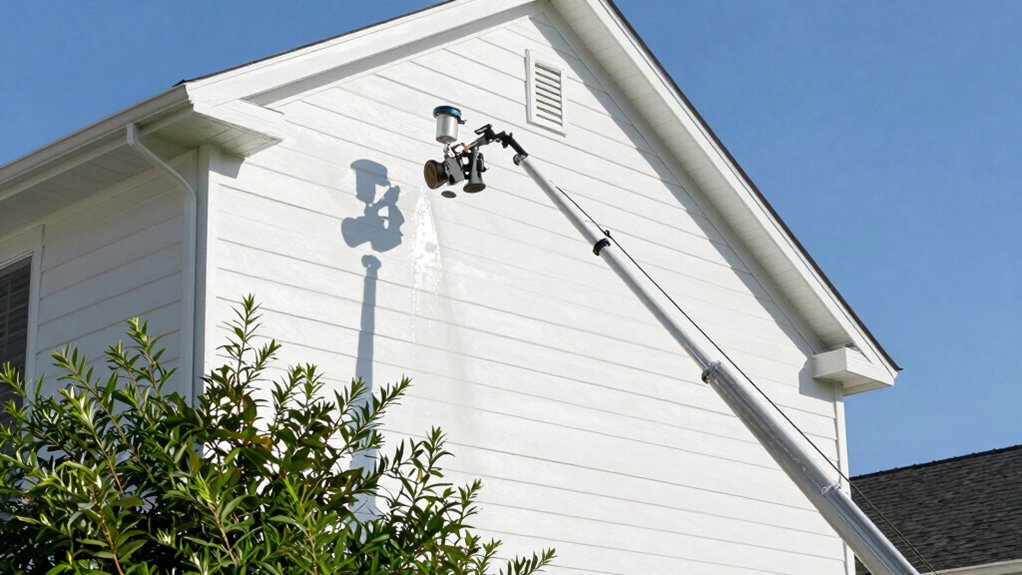
When spray painting your home’s exterior, always start from the top and work downward to prevent drips, runs, and dirt from settling on fresh paint. This “top-down” rule guarantees a smooth, professional finish by avoiding common mistakes like overspray and uneven patches. Many forget this essential step, which can ruin the final look. To achieve the best results, consider mastering this technique—more helpful tips await to guide you through the process.

Get business pricing on tools and workshop supplies
- Business-only prices and quantity discounts
- Tax-exempt purchasing
- Multiple users, one account, clear invoices
Key Takeaways
- Always start spraying from the top of the house and work downward to prevent drips and uneven finishes.
- Following the top-down rule minimizes dirt and debris settling on fresh paint and maintains a clean appearance.
- Use masking tape to protect trim and fixtures before beginning the top-down spraying process.
- Proper surface preparation, including cleaning and sanding, enhances the effectiveness of the top-down spraying method.
- Rushing or skipping steps can lead to mistakes; systematic top-down spraying ensures a professional, durable finish.
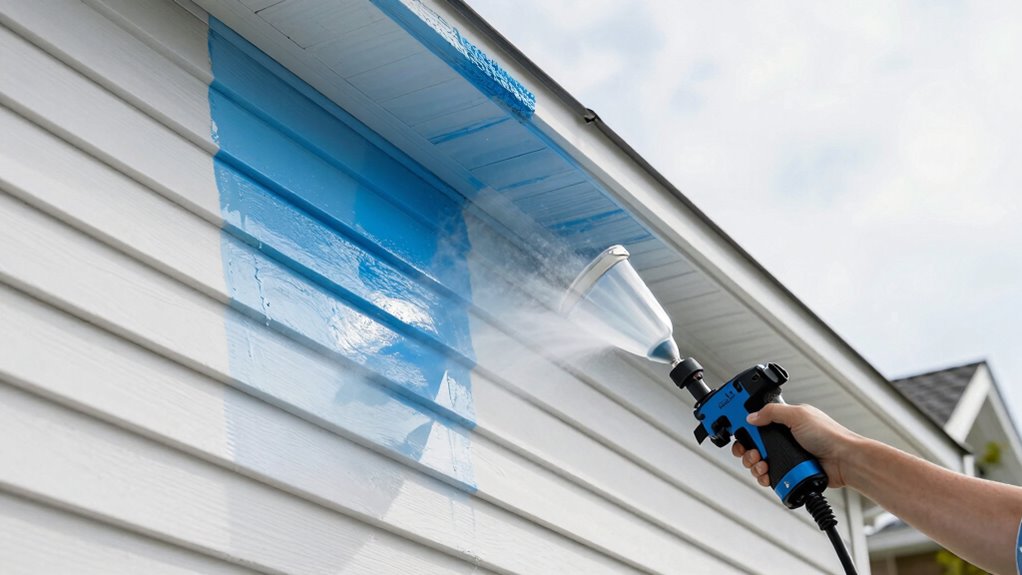
Exterior house spraying is an efficient way to refresh your home’s appearance and protect its surfaces. Before you start, it’s essential to focus on proper paint preparation. This means thoroughly cleaning the exterior walls to remove dirt, grime, and loose paint that could interfere with adhesion. You might need to power wash the surface or scrub stubborn areas by hand. Once the surface is clean and dry, you should sand rough spots and repair any damaged areas to guarantee a smooth, even finish. Proper paint preparation not only enhances the final look but also extends the lifespan of your new coat, saving you time and money in the long run.
Proper paint prep with cleaning, sanding, and repairs ensures a smooth, durable finish for your home’s exterior.
As you gear up for spraying, don’t overlook safety equipment. Wearing appropriate gear is indispensable to protect yourself from paint fumes, overspray, and potential hazards. A high-quality respirator or mask helps prevent inhaling harmful particles, especially if you’re working with solvent-based paints. Safety goggles shield your eyes from splashes and airborne debris, while gloves protect your skin from chemicals. Long-sleeved clothing and coveralls can prevent paint from coming into contact with your skin. Using safety equipment isn’t just about following regulations; it’s about safeguarding your health and ensuring a smooth, frustration-free project.
Equally important is understanding the “top-down” rule in exterior house spraying. Many overlook this critical principle, but it can make or break your results. Always start spraying from the top of the house and work your way down. This approach prevents drips and runs from settling on already painted surfaces and ensures even coverage. If you begin at the bottom, gravity will cause excess paint to flow downward, creating streaks and uneven patches. By following the top-down method, you also reduce the chances of dirt and debris settling on fresh paint, keeping the surface cleaner and the finish more uniform. Additionally, understanding the proper spraying technique can significantly improve your overall results. Pay close attention to the order in which you spray different areas, especially around windows, doors, and corners. Use masking tape to protect trim and fixtures, and work systematically to avoid overspray. Remember, rushing the process or ignoring the “top-down” rule often leads to mistakes that are tough to fix afterward. Proper planning, combined with meticulous paint preparation and the right safety equipment, will help you achieve a professional-looking finish. Keep in mind, taking your time and respecting these fundamental principles makes all the difference between a good job and a great one.
exterior house spray paint sprayer
As an affiliate, we earn on qualifying purchases.
As an affiliate, we earn on qualifying purchases.
Frequently Asked Questions
What Types of Paint Are Best for Exterior Spraying?
You should choose high-quality acrylic latex or elastomeric paints for exterior spraying. Before you start, make certain proper paint preparation to get the best results. Use appropriate spray techniques, starting from the top and working down, to avoid streaks and drips. These paint types adhere well, resist weathering, and provide a durable finish. Remember, proper preparation and technique are key to achieving a smooth, long-lasting exterior coat.
How Long Does Exterior House Spraying Typically Last?
Your exterior spray job can last an astonishing 7 to 10 years if you choose high-quality paint. The durability of the paint and its resistance to staining directly influence how long your home looks fresh and vibrant. Proper prep, weather conditions, and maintenance can extend this lifespan even further. So, expect a stunning, long-lasting finish that keeps your home beautiful and protected for years to come.
Can I Spray Over Existing Paint or Stain?
You can spray over existing paint or stain, but proper surface preparation is vital. Start with paint removal if the surface is peeling or damaged to guarantee good adhesion. Clean the surface thoroughly to remove dirt, mold, and loose paint. Skipping surface prep can cause bubbling or peeling later. Always sand or prime if needed, and follow manufacturer instructions, so your new coat lasts longer and looks fresh.
What Safety Precautions Should I Take During Spraying?
Think of spraying like stepping into a storm—you need proper gear. Always wear protective gear, including goggles, masks, and gloves, to shield yourself from fumes and splatters. Make certain good ventilation by opening windows and doors, and consider using fans to direct fumes outside. Keep a safe distance, avoid inhaling fumes, and work in well-lit areas. Safety precautions protect you while achieving a smooth, professional finish.
How Do Weather Conditions Affect Exterior Spraying Schedules?
Weather impact profoundly influences your exterior spraying schedule. You should avoid spraying on windy, rainy, or overly humid days, as these conditions can cause uneven coverage and paint issues. Temperature considerations are also vital; if it’s too hot or cold, the paint may not adhere properly or dry correctly. Check local weather forecasts and plan your spraying for clear, mild days to guarantee essential results and safety.
Conclusion
Remember, when spraying your house exterior, following the “top-down” rule guarantees even coverage and safety. Neglecting this simple step can lead to missed spots and messy drips. Did you know that over 60% of home exterior paint failures are due to improper application techniques? By sticking to the correct order, you not only save time but also boost your home’s curb appeal and longevity. So, always start at the top—your house will thank you!
Fall Picks
fall essentials
As an affiliate, we earn on qualifying purchases.