
Many people skip using moisture meters before painting, but it’s a costly mistake. Moisture levels can be invisible, even if surfaces look dry to the eye. Applying paint over damp surfaces can cause peeling, bubbling, or early failure, wasting your time and money. Using a moisture meter objectively guarantees surfaces are dry enough, leading to better adhesion and longer-lasting results. Keep going to discover why this simple step can make all the difference in your project’s success.

Get business pricing on tools and workshop supplies
- Business-only prices and quantity discounts
- Tax-exempt purchasing
- Multiple users, one account, clear invoices
Key Takeaways
- Many skip moisture testing, risking paint failure due to unseen dampness on surfaces.
- Using moisture meters ensures surfaces are properly dry for optimal paint adhesion.
- Surface moisture levels can vary with weather and age, making regular testing essential.
- Skipping moisture measurement can lead to peeling, bubbling, and costly rework later.
- Accurate moisture assessment extends paint durability and prevents long-term damage.

Before you start painting, verifying the moisture level of the surface is crucial to guarantee a quality finish. Many people overlook this step, but it’s a vital part of proper paint preparation. Without an accurate surface assessment, you risk applying paint over damp surfaces, which can lead to peeling, bubbling, or uneven color. Moisture meters help you determine whether the surface is dry enough for paint, saving you time, money, and frustration in the long run. Skipping this step might seem minor, but it can compromise the durability and appearance of your finished project.
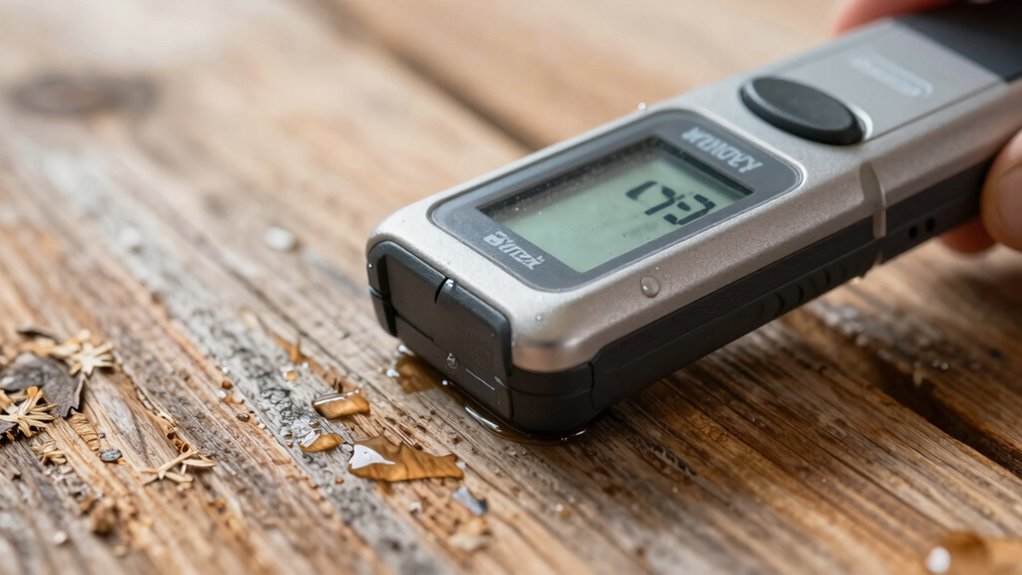
When you use a moisture meter, you’re performing a crucial surface assessment that tells you exactly how much moisture is present. Different materials, like drywall, wood, or concrete, have specific moisture thresholds for optimal paint application. For instance, drywall should typically have moisture levels below 1.5%, while wood’s acceptable range varies depending on the type and environment. By measuring moisture content accurately, you avoid the common mistake of painting over surfaces still holding excess water, which can trap moisture beneath the paint layer. This trapped moisture can cause paint failure over time, leading to costly repairs and rework.
Many don’t realize that moisture levels vary significantly based on weather, humidity, and surface age. A surface that appears dry to the eye may still contain enough moisture to interfere with paint adhesion. That’s why relying solely on visual inspection isn’t enough. A moisture meter provides an objective reading, giving you confidence in your surface assessment. It’s a small investment that can prevent big problems later. Proper paint preparation isn’t just about cleaning or priming; it starts with making sure the surface is suitable for painting. Moisture levels can change over time, so regular testing ensures ongoing surface readiness. Additionally, understanding how environmental factors influence surface moisture can help you plan better for painting projects in different conditions. Recognizing the importance of moisture measurement as part of your prep routine ensures a more durable and professional-looking finish. Properly monitoring surface moisture content can also help extend the lifespan of your paint job by preventing premature deterioration.
digital moisture meter for drywall
As an affiliate, we earn on qualifying purchases.
As an affiliate, we earn on qualifying purchases.
Frequently Asked Questions
How Accurate Are Moisture Meters Compared to Professional Assessments?
Moisture meters can be quite accurate if they’re properly calibrated and maintained. You need to check calibration accuracy regularly to guarantee reliable readings. While they’re useful, professional assessments often consider factors like sensor durability and environmental conditions that simple meters might miss. So, for critical projects, relying solely on a moisture meter isn’t enough; a professional evaluation provides a more thorough and precise moisture analysis.
Can Moisture Meters Be Used on All Types of Surfaces?
Think of moisture meters as versatile tools, but they don’t fit all surfaces like a glove. You can’t rely on them for every material without considering surface compatibility. Some surfaces, like metal or textured materials, may give inaccurate readings. Proper calibration techniques are essential to guarantee accuracy across different surfaces. Always check your device’s specifications, and adjust calibration accordingly, to get true moisture readings before painting.
How Often Should I Check Moisture Levels During Painting Projects?
You should check moisture levels regularly throughout your paint preparation and project. Aim to take a moisture reading before applying primer and again after surface preparation, especially if conditions change. During painting, monitor moisture every few coats to ensure the surface stays dry, which helps prevent peeling or cracking. Consistent moisture checks guarantee your surface is properly prepared, leading to a smoother, longer-lasting finish.
Are There Specific Moisture Meters Recommended for DIYERS?
Think of DIY moisture testing like a treasure hunt—you need the right tools to find the hidden moisture. For beginners, handheld moisture meters are your trusty map, easy to use, and reliable. Look for models with digital readings and adjustable settings, like the Wagner MMC220 or General Tools MMD4E. These meters give you accurate readings, so you avoid painting over dampness and guarantee your project stands the test of time.
What Are the Common Errors When Using Moisture Meters?
You might make errors like neglecting calibration issues, which affects accuracy, or testing surfaces that aren’t compatible with your moisture meter. Always calibrate your device according to the manufacturer’s instructions and verify it’s suitable for the material you’re testing. Failing to do so can give false readings, leading to poor paint adhesion or hidden moisture problems. Double-check calibration and surface compatibility before testing to get reliable, actionable results.
Conclusion
Skipping a moisture meter before painting is like trying to paint a sinking ship—you’re just asking for trouble. By taking this small step, you guarantee your paint adheres perfectly and lasts longer, saving you time and money in the long run. Think of the moisture meter as your silent guardian, quietly checking the waters beneath the surface. Don’t let hidden dampness sabotage your project; a simple test now keeps your walls solid and beautiful tomorrow.
Halloween Picks
halloween
As an affiliate, we earn on qualifying purchases.