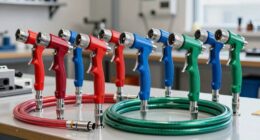
To effectively paint commercial buildings with high spray volume, start with thorough surface preparation—clean the surface, repair damage, and sand rough patches for better adhesion. Regularly maintain your equipment by inspecting nozzles, filters, and hoses, ensuring they’re clean and properly calibrated. Using quality tools and following best practices will help achieve a smooth, even finish quickly and professionally. Keep a close eye on your process; there’s more to learn for flawless results.
Key Takeaways
- Ensure thorough surface cleaning and repairs to promote optimal adhesion and prevent defects when using high spray volume.
- Regularly maintain and calibrate spray equipment to achieve consistent, even coverage on large commercial surfaces.
- Use appropriate nozzles and pressure settings to control spray volume and reduce overspray or drips during high-volume application.
- Protect surrounding areas and employ safety measures to manage the increased spray and prevent environmental or safety hazards.
- Monitor equipment performance throughout the project, pausing for cleaning and adjustments to maintain quality and efficiency.
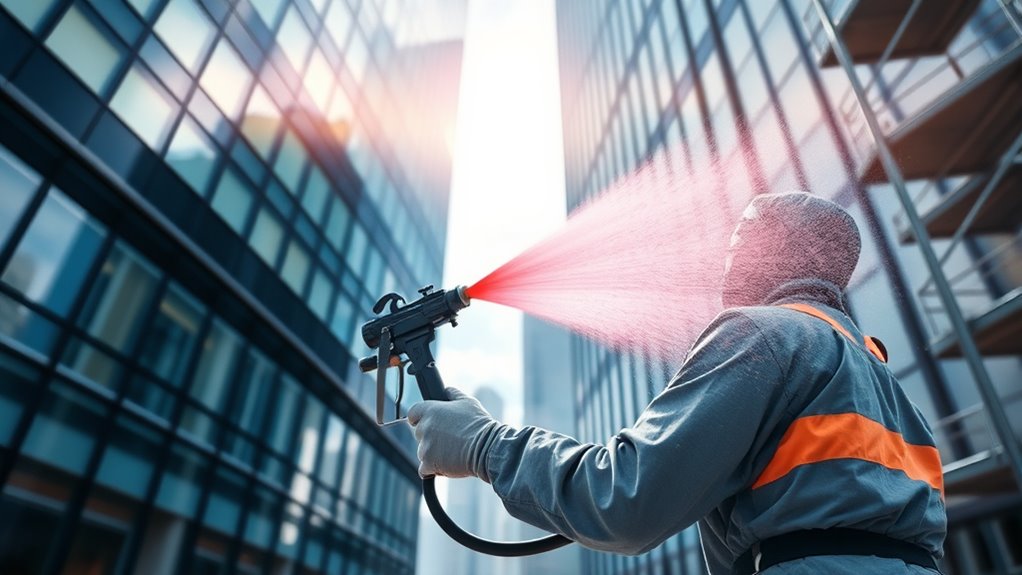
Painting commercial buildings is a essential step in maintaining their appearance and protecting them from the elements. When you opt for high spray volume techniques, you need to pay close attention to surface preparation and equipment maintenance to achieve a flawless finish. Surface preparation is your foundation; neglecting it can lead to uneven coverage, drips, or premature paint failure. Before you start, thoroughly clean the surface to remove dirt, grease, and loose paint. Power washing often proves effective, especially for large commercial structures, ensuring the surface is clean and ready for paint adhesion. Once cleaned, repair any cracks, holes, or peeling sections. Sanding rough patches smooths the surface, promoting better paint bonding and a sleek finish. Proper surface prep minimizes the risk of imperfections that become more noticeable when using high spray volumes, which tend to deposit more paint quickly and evenly when done correctly.
Equally important is equipment maintenance. High-volume spray systems demand consistent performance, so you must inspect and maintain your equipment regularly. Check filters, nozzles, and hoses for clogs or damage before each use. Clogged nozzles can cause uneven spray patterns, leading to drips or thin spots. Regularly calibrate your sprayer to ensure the right pressure and flow rate—this guarantees even coverage and maximum paint transfer. Proper maintenance also extends your equipment’s lifespan, reducing downtime and costly repairs. When you’re handling large projects, a well-maintained sprayer helps you work efficiently and achieve professional results. Remember, the quality of your equipment directly influences the quality of your finish, especially when applying high spray volume.
During the actual painting process, keep an eye on your equipment, and don’t hesitate to pause for cleaning or adjustments. Consistent maintenance ensures your spray pattern remains uniform, which is essential for commercial buildings where appearance matters. Additionally, using the right protective gear and adhering to safety protocols safeguard your health during high-volume spraying. Proper surface preparation combined with meticulous equipment maintenance allows you to maximize the benefits of high spray volume techniques—speeding up the job without sacrificing quality. When you focus on these foundational steps, your project will not only look great but also last longer, providing a durable coating that withstands weather, pollution, and wear. Ultimately, investing time in surface prep and equipment upkeep ensures that your commercial painting efforts are efficient, professional, and visually impactful.
Frequently Asked Questions
What Safety Precautions Are Necessary During High-Volume Spray Painting?
During high-volume spray painting, you need to prioritize safety by wearing appropriate personal protective equipment like masks, goggles, and coveralls to prevent inhalation of fumes and skin contact. Make certain your ventilation systems are properly functioning to remove airborne particles and fumes. Always follow manufacturer safety guidelines, work in well-ventilated areas, and take regular breaks to minimize health risks. Staying vigilant and prepared helps keep you safe during intensive spray painting projects.
How Does High Spray Volume Impact Paint Waste and Cleanup?
Think of high spray volume as a river rushing through your project, carrying more paint waste downstream than you’d like. It increases paint waste, making cleanup more challenging and time-consuming. To keep things flowing smoothly, you need to prioritize cleanup efficiency—using proper protective gear, covering surfaces, and managing overspray promptly. This way, you control the water, minimize waste, and restore the site quickly, like calming a wild stream.
Can Existing Building Surfaces Handle High Spray Volume Painting?
Your existing building surfaces can handle high spray volume painting if you properly prepare them and ensure coating compatibility. Start with thorough surface preparation to remove dirt, rust, and old paint, creating a smooth, clean base. Check that the new coating is compatible with the existing surface. This approach helps achieve maximum adhesion, reduces waste, and guarantees a durable finish, making high spray volume painting effective and efficient.
What Are the Environmental Considerations for High-Volume Spray Painting?
You need to keep an eye on air quality and VOC emissions when you’re using high-volume spray painting. Think of it as walking a tightrope—you want efficient coverage without harming the environment. Use proper ventilation and environmentally friendly paints to minimize VOCs. Also, guarantee waste is disposed of responsibly. By balancing these factors, you protect both the environment and your reputation.
How Long Does a High-Volume Spray Paint Job Typically Take?
A high-volume spray paint job usually takes several days, depending on the building’s size and complexity. You should consider drying time between coats, which can range from a few hours to a full day, and the paint thickness applied. Thicker layers may extend drying time, so plan accordingly to guarantee proper curing. Efficiently managing these factors helps you complete the job promptly without sacrificing quality.
Conclusion
Painting commercial buildings with high spray volume not only speeds up the job but also guarantees a smooth, even finish. Did you know that using high spray volume can increase productivity by up to 30% compared to traditional methods? This efficiency means you can complete projects faster, saving both time and labor costs. So, next time you plan a commercial paint job, consider high spray volume for a quicker, flawless result that impresses clients and boosts your business.