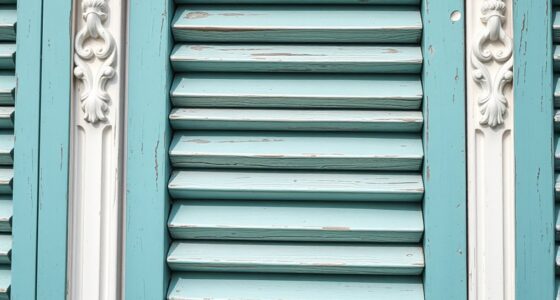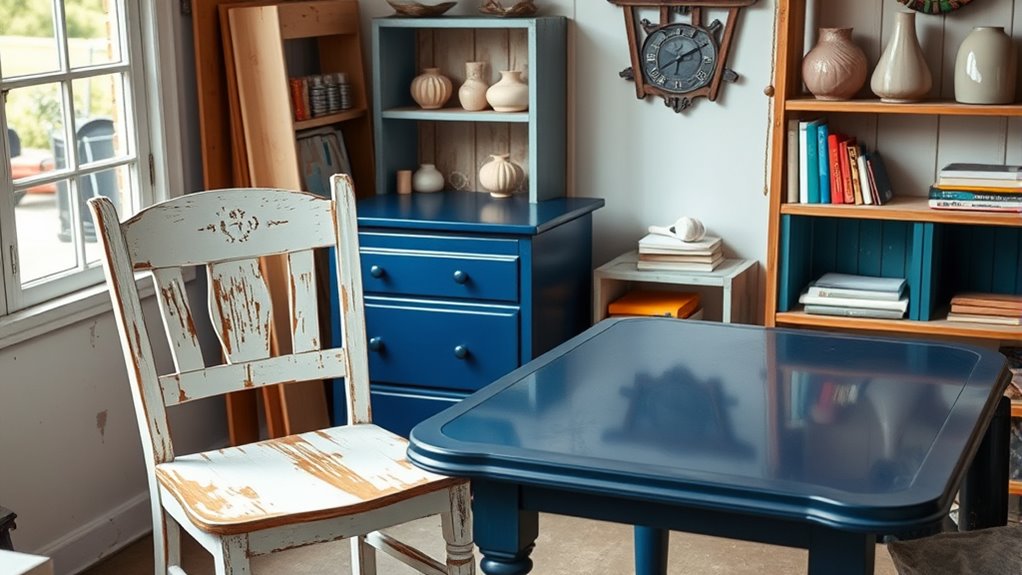

Painting furniture like chairs, tables, and shelves is a great way to refresh their look and add personality to your space. You can choose bold colors for a statement or match shades to your decor for a seamless effect. Techniques like distressing give vintage charm, while proper prep and sealing guarantee durability. Mastering these methods lets you create unique, stylish pieces that reflect your personal touch—keep exploring to discover more tips and tricks for perfect results.
Key Takeaways
- Prepare furniture surfaces thoroughly with cleaning, sanding, and priming for smooth, durable paint application.
- Choose colors that complement your decor or create focal points to enhance visual interest.
- Use techniques like distressing to add vintage charm and personalized character to chairs, tables, and shelves.
- Apply paint in thin, even coats, allowing proper drying time between layers for a professional finish.
- Seal with a protective topcoat to ensure longevity and resistance to everyday wear and tear.

Have you ever wondered how to give your old furniture a fresh, new look? Painting is a fantastic way to breathe new life into chairs, tables, and shelves, but it’s more than just slapping on a coat of paint. To truly transform your pieces, you need to consider details like color matching and furniture distressing. These techniques help you create a cohesive and stylish look that suits your space perfectly. When choosing colors, think about the existing decor and the atmosphere you want to evoke. If your room features neutral tones, a bold color on a chair or shelf can serve as a statement piece. Conversely, matching shades closely to your wall color or other furniture creates a seamless, sophisticated appearance. This process, known as color matching, ensures your painted furniture complements rather than clashes with your decor, making your space feel harmonious and well-thought-out.
Furniture distressing adds character and charm to your painted pieces. It’s a technique where you intentionally age or wear down certain areas, revealing glimpses of the underlying wood or previous paint layers. This process can give your furniture a vintage or shabby chic look, adding depth and personality. You can distress furniture by lightly sanding edges, corners, or raised details, or by using specific distressing tools to create textured effects. The goal isn’t to make your furniture look battered but to add subtle signs of wear that enhance its aesthetic appeal. Combining furniture distressing with carefully chosen paint colors can produce a piece that looks both timeless and uniquely yours. Whether you prefer a subtle, weathered appearance or a more pronounced vintage style, distressing helps you achieve that personalized look.
When painting your furniture, start by preparing the surface properly—cleaning, sanding, and priming as needed. Then, apply your chosen paint in thin, even coats, allowing ample drying time between layers. If you’re aiming for a distressed finish, lightly sand certain areas after the paint dries to reveal the layers beneath. This creates a natural, aged effect that’s visually appealing and adds texture. Remember, the key to successful furniture painting is patience and attention to detail. Take your time to select the right colors, practice distressing techniques on scrap pieces if you’re unsure, and always seal your work with a protective topcoat. This will ensure your furniture not only looks great but also lasts through everyday use.
Ultimately, painting furniture isn’t just about covering up old surfaces; it’s about personalizing and elevating your space creatively. By mastering color matching and furniture distressing, you have the power to turn simple chairs, tables, and shelves into stunning focal points that reflect your style.
Frequently Asked Questions
What Types of Paint Are Best for Outdoor Furniture?
For outdoor furniture, you should choose weatherproof finishes like acrylic or latex paint, which are known for their paint durability. These types of paint resist fading, cracking, and peeling caused by exposure to sun, rain, and temperature changes. Make sure to apply a high-quality primer first, then finish with a protective sealant. This combo guarantees your furniture stays vibrant and protected for years to come.
How Can I Prevent Paint Chipping Over Time?
To prevent paint chipping over time, focus on enhancing paint durability by properly prepping your surface. Clean and sand the furniture thoroughly before applying paint, and use a high-quality primer to ensure better adhesion. Choose a durable, weather-resistant paint suited for outdoor use. Applying multiple thin coats and sealing with a clear topcoat also helps safeguard your furniture from chips and wear, extending its beauty and longevity.
Is Primer Necessary for Painting Furniture?
Yes, primer necessity depends on your furniture and paint type. Using primer improves paint adhesion, ensuring your finish lasts longer and looks smooth. It helps cover stains, uneven surfaces, and previous colors, making your paint job more durable. Skipping primer might save time initially, but it can lead to chipping and peeling over time. So, for a professional-looking, long-lasting finish, always consider applying a suitable primer before painting your furniture.
How Do I Fix Uneven Paint Surfaces?
Did you know uneven paint surfaces are a common issue, affecting over 60% of DIY projects? To fix this, start with proper paint preparation, ensuring your surface is smooth and clean. Use smooth brush techniques, like long, even strokes, to apply paint. Sand lightly between coats if needed. These steps help create a flawless finish, making your furniture look professionally done and perfectly even.
Can I Paint Furniture Directly Over Old Paint?
Yes, you can paint furniture directly over old paint, but for the best results, guarantee proper prep. Clean the surface thoroughly, sand lightly to improve adhesion, and consider using a primer if the old paint is glossy or peeling. This helps with color matching and enhances paint durability. Using high-quality paint and proper prep steps guarantees a smooth finish that lasts longer and looks great over the existing finish.
Conclusion
Painting furniture transforms your space, refreshes your style, and revives your furniture. It allows you to express your personality, update your decor, and enjoy the satisfaction of a DIY project. Whether you’re painting chairs, tables, or shelves, you’re creating something unique, something beautiful, something meaningful. So pick up your brush, embrace the process, and enjoy the journey of turning old into new, dull into vibrant, plain into extraordinary. Your furniture, your creativity, your success.