
To protect your windows, cars, and neighbors from overspray, you should set up barriers like plastic sheeting and painter’s tape around non-target areas. Cover delicate surfaces thoroughly and work in calm weather to avoid wind drift. Use steady strokes and maintain proper distance with spray tools. Cleanup promptly with gentle cleaners, and always wear safety gear. Want to discover more tips to achieve a clean, safe paint job? Keep exploring to learn how!

Get business pricing on tools and workshop supplies
- Business-only prices and quantity discounts
- Tax-exempt purchasing
- Multiple users, one account, clear invoices
Key Takeaways
- Cover windows and vehicles with plastic sheeting or painter’s tape before starting to prevent overspray contact.
- Set up physical shields or drop cloths around non-target areas to contain overspray.
- Work during calm weather conditions to minimize wind-driven overspray dispersal.
- Use steady, controlled spray techniques at recommended distances to reduce airborne paint.
- Act quickly with gentle cleaning methods and protective gear to remove overspray from unintended surfaces.

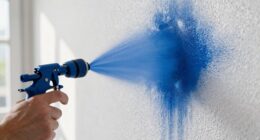
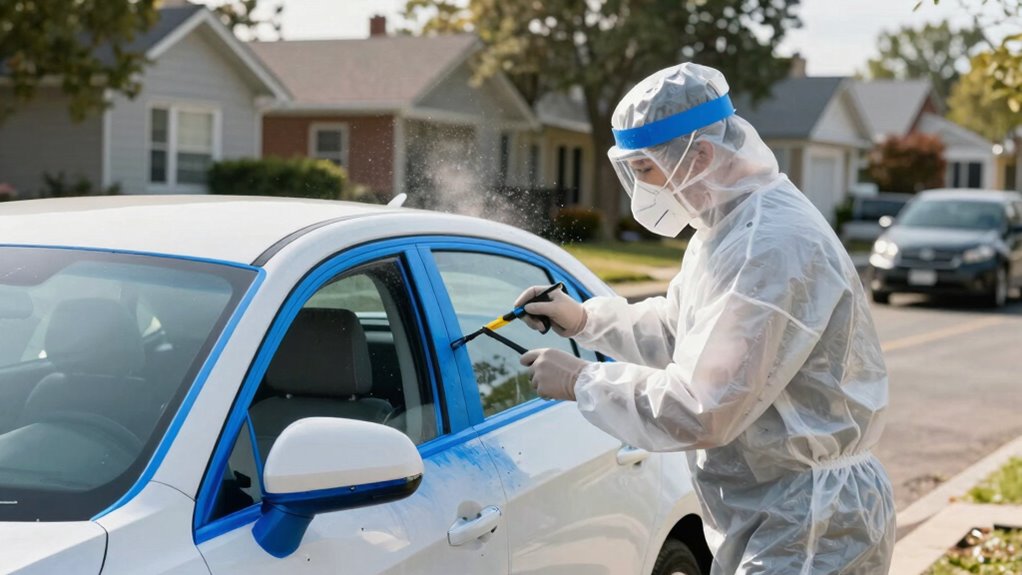
When painting outdoors, overspray can easily drift onto windows, cars, and neighboring properties, causing unwanted stains and damage. To prevent this, you need to prioritize spray paint safety by taking proactive measures. Start by setting up a protective barrier, such as plastic sheeting or painter’s tape, around areas you don’t want painted. This creates a physical shield that catches overspray and keeps it from reaching unintended surfaces. Also, consider working during calm weather conditions; wind can carry spray paint further than you expect, making overspray cleanup more difficult.
Using the right spray paint techniques is essential. Hold the spray can or gun at the recommended distance from the surface—usually about 6 to 12 inches—and use steady, even strokes. This minimizes the amount of paint that becomes airborne and reduces the risk of overspray. If you’re working near delicate surfaces like glass or parked vehicles, tape them off thoroughly beforehand. Covering these surfaces with drop cloths or plastic sheets is a simple yet effective way to protect them from accidental overspray.
During your project, keep a close eye on wind speed and direction. If the wind picks up, pause your work until conditions improve. This not only ensures spray paint safety but also minimizes overspray that could drift onto neighboring properties. Remember, controlling the environment is key to a clean job site and avoiding future overspray cleanup. After finishing, inspect the area for any paint that may have settled outside your intended zone. If you find any overspray on windows, cars, or other surfaces, act quickly with appropriate cleanup methods—using a gentle solvent or a specialized overspray remover—before the paint sets. Being aware of how overspray drifts and disperses in the environment can help you better plan your painting project to minimize collateral damage.
Proper cleanup is just as important as prevention. When dealing with overspray cleanup, use soft cloths and mild cleaning agents to avoid scratching surfaces. For windows and glass, a mixture of water and vinegar often works well to remove stubborn paint. For vehicles, always follow the manufacturer’s recommendations to avoid damage. Wearing protective gear, like gloves and masks, during cleanup prevents unnecessary contact with chemicals and paint fumes. Additionally, understanding how overspray disperses in the environment can help you better plan your painting project to minimize collateral damage.
plastic sheeting for painting protection
As an affiliate, we earn on qualifying purchases.
As an affiliate, we earn on qualifying purchases.
Frequently Asked Questions
What Are the Best Materials for Overspray Protection?
The best materials for overspray protection are paint-resistant drop cloths and plastic sheeting. You should prioritize surface preparation to guarantee these materials adhere properly and block paint effectively. Use painter’s tape along edges for a secure seal, and choose high-quality, durable coverings that resist splatters. Proper surface preparation and selecting the right paint-resistant materials help prevent overspray from reaching unintended surfaces, keeping your project neat and protected.
How Long Should Protective Coverings Stay in Place?
You should keep protective coverings in place until surface prep is complete and all overspray is dry, usually 24 hours. Did you know overspray can cause up to 30% of paint waste? To prevent damage, make sure protective gear stays on during application and removal. Leaving coverings too long may risk damage or dirt accumulation, so remove them promptly once the surface prep is finished and the paint is fully cured.
Can Overspray Be Removed From Delicate Surfaces?
Yes, overspray can be removed from delicate surfaces if you act quickly. Use gentle cleaning methods, like a soft cloth with mild soap and water, to avoid damaging the paint adhesion. Surface preparation is key—test a small area first to guarantee no harm. For stubborn overspray, consider specialized removers designed for delicate surfaces, but always follow manufacturer instructions to prevent any damage.
What Are Common Mistakes to Avoid When Protecting Neighbors?
You’d think neighbor considerations would be obvious, but many overlook proper barrier placement. Don’t assume a quick spray won’t drift—mistakes like ignoring wind direction or skipping protective barriers can cause overspray issues. Always communicate with neighbors, and set up barriers thoughtfully. Avoiding these common mistakes shows respect and prevents conflicts. Proper planning on your part guarantees you protect neighbors from overspray, instead of becoming the unintended source of their frustration.
Are There Eco-Friendly Options for Overspray Barriers?
Yes, there are eco-friendly options for overspray barriers. You can use biodegradable barriers made from natural materials like paper or plant-based films that break down easily without harming the environment. Additionally, eco-friendly coatings are available to create temporary protective layers on surfaces, reducing waste. These options help you prevent overspray while minimizing environmental impact, making your project more sustainable and responsible.
Conclusion
By taking these simple steps, you not only shield your windows, cars, and neighbors from overspray, but you also create a safer, more considerate environment. It’s funny how a little extra effort can prevent costly mistakes and strengthen community bonds. When you protect your surroundings, you’re surprised how often kindness and responsibility come back to you in unexpected ways. In the end, it’s these small acts of care that truly make a difference.
Halloween Picks
halloween
As an affiliate, we earn on qualifying purchases.