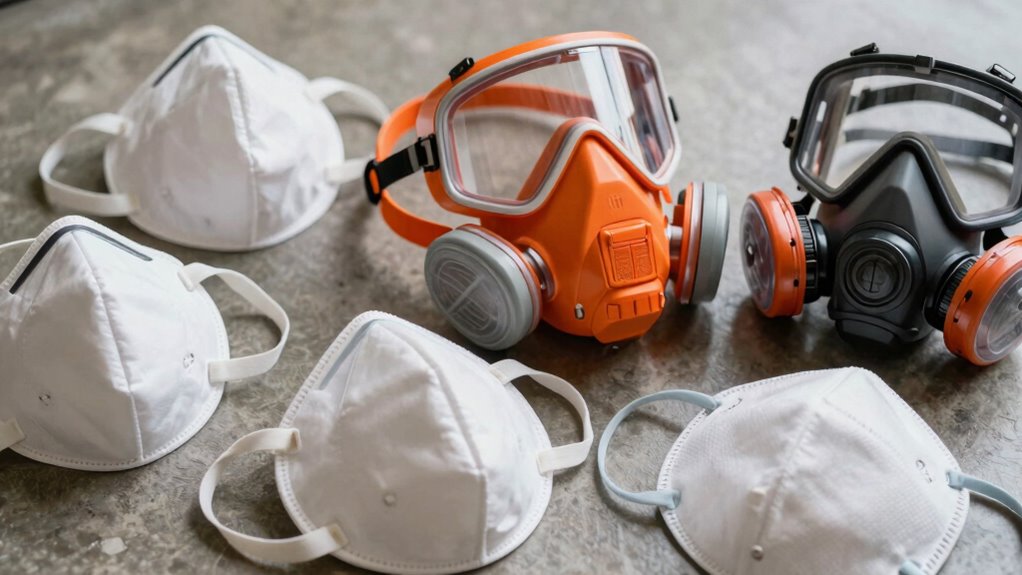
Choosing the right respirator is simpler when you focus on your environment and hazards. If you’re dealing with dust or non-oil particles, a standard mask like an N95 works well. For oil-based fumes, look for filters labeled R95 or P100. Full-face models protect your eyes too, especially in chemical vapors. Fit and comfort matter, so make certain the mask seals properly and is easy to maintain. Understanding these basics helps you pick what’s best—keep going to learn even more.

Get business pricing on tools and workshop supplies
- Business-only prices and quantity discounts
- Tax-exempt purchasing
- Multiple users, one account, clear invoices
Key Takeaways
- Choose masks based on the type of hazard, like dust, fumes, or biological agents.
- Use simpler masks for dust and basic particles; select specialized filters for oil-based fumes.
- Ensure a proper fit and seal to prevent contaminants from bypassing the filter.
- Regularly replace filters and maintain your respirator for consistent protection.
- Consult safety guidelines or professionals to select the right respirator for your specific needs.
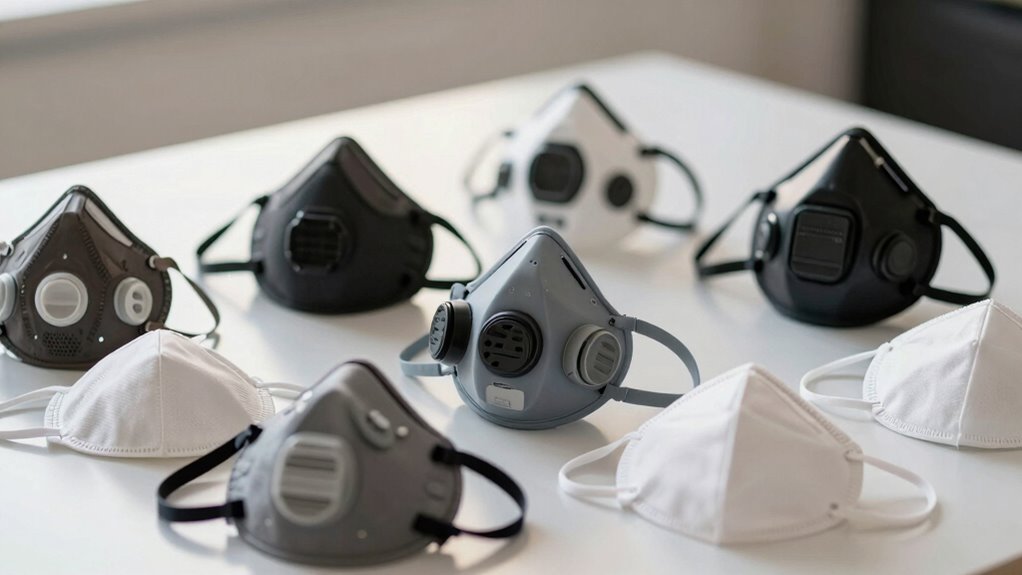
Are you unsure which respirator best suits your needs? Choosing the right respirator can feel overwhelming, especially with so many options available. But understanding a few key points can make the decision much simpler. When it comes to industrial safety, your primary goal is to protect your lungs from harmful particles, fumes, or gases. That’s where mask filtration comes into play: the better the filtration, the safer you are in hazardous environments. Different respirators offer varying levels of protection, so it’s vital to match your specific risks with the right type.
First, consider the environment you’ll be working in. Are you exposed to dust, chemical vapors, or biological agents? For dust and non-oil-based particles, a disposable mask or filtering facepiece (like an N95) often suffices. These masks are lightweight, easy to wear, and provide effective filtration for many airborne particles. However, if you’re working around oil-based aerosols or fumes, you’ll need a respirator with oil-resistant filters, such as an R95 or P100. These filters are designed to handle more challenging contaminants, making sure your lungs stay protected during long shifts. Additionally, filtering efficiency plays a critical role in ensuring your chosen respirator provides the protection you need. Proper filter selection is essential to ensure your respirator performs optimally. To maximize safety, it’s also important to consider the filtering material used in the respirator, as some materials provide better protection against specific hazards.
Choose masks suited for dust and non-oil particles like N95s; opt for oil-resistant filters like R95 or P100 for fumes and aerosols.
Next, think about the level of protection you need. Some respirators are designed for short-term use, while others are meant for extended periods. Half-mask respirators cover your nose and mouth, offering a good balance between comfort and protection, especially if you’re doing tasks that require some mobility. Full-face respirators add eye protection and are ideal for environments with dangerous vapors or chemicals. Remember, a tight seal is vital for maximum protection; a poorly fitting mask can allow contaminants to bypass the filter and enter your respiratory system. Additionally, understanding the filtration efficiency of a respirator helps ensure it meets your safety requirements. It’s also helpful to recognize that proper fit testing plays a crucial role in ensuring optimal protection.
Comfort and usability are also important. If you’re wearing a respirator for hours, you want something that fits well without causing discomfort or fatigue. Look for adjustable straps and soft sealing edges. Additionally, consider the ease of replacing filters, which affects your overall safety and convenience. Proper maintenance, including regular filter changes and cleaning, keeps your respirator effective over time. Being aware of regulatory standards can further guide you in selecting a compliant and reliable model. Staying informed about these standards ensures your respirator is both safe and compliant with industry regulations.
Ultimately, choosing the right respirator boils down to understanding your specific needs and matching them with the right mask filtration level. Prioritize industrial safety by selecting a respirator that offers reliable protection against the hazards you face. If you’re ever unsure, consulting safety guidelines or speaking with a safety professional can help you make an informed decision. With the right choice, you can breathe easier knowing your lungs are safeguarded in even the most challenging environments.
As an affiliate, we earn on qualifying purchases.
Frequently Asked Questions
How Long Can I Wear a Respirator Safely?
You can wear a respirator safely as long as it fits well and the filters remain effective. Typically, you should replace respirator filters when breathing becomes difficult or after a designated period, usually every 8 hours or as specified. Regular fit testing ensures your respirator seals properly, maintaining protection. Always follow manufacturer guidelines and inspect your respirator before each use to guarantee safety and effectiveness during extended wear.
Are Reusable Respirators More Cost-Effective Than Disposable Ones?
Reusable respirators are generally more cost-effective than disposable ones over time because of their durability and long-term use. Material comparison shows they’re made from sturdy, washable materials, reducing waste. Plus, they have a lower environmental impact since you replace filters instead of the entire unit. Although the upfront cost is higher, reusables save you money and help reduce landfill waste, making them a smarter investment for ongoing protection.
Can Respirators Be Used for Multiple Types of Hazards?
Imagine slipping on a versatile respirator that shields you from smoke, dust, and chemical fumes alike. Yes, respirators can be used for multiple hazard types, thanks to their design flexibility. Respirator versatility allows them to protect against various hazards, but make certain you choose the right filters or cartridges for each specific threat. Always check manufacturer guidelines to confirm suitability, so you stay safe no matter the hazard you face.
What Maintenance Is Required for Washable Respirators?
You need to regularly clean your washable respirator following the manufacturer’s cleaning procedures, which usually involve washing with soap and water or a mild disinfectant. Make certain to rinse thoroughly and let it dry completely before storage. Store it in a clean, dry place away from sunlight and chemicals to prevent damage. Proper maintenance ensures your respirator stays effective and comfortable for repeated use.
How Do I Ensure a Proper Fit Each Time?
Did you know that a proper fit is essential for 95% of respirator effectiveness? To guarantee a proper fit each time, always perform a seal check before use. Conduct fit testing regularly to confirm your respirator maintains a proper seal, and check for any signs of seal integrity issues like leaks or discomfort. Adjust the straps and nosepiece as needed until you feel confident the respirator fits securely and comfortably.
Conclusion
So, after all this talk about filters, masks, and ratings, you might think choosing a respirator is rocket science. But ironically, it’s actually simpler than deciphering a confusing jargon maze. Just pick what fits your needs, and don’t overthink it. Because in the end, the real challenge isn’t understanding the options—it’s resisting the urge to impress everyone with your newfound “expertise.” Sometimes, the best choice is just the one that keeps you breathing easy.
Halloween Picks
halloween
As an affiliate, we earn on qualifying purchases.