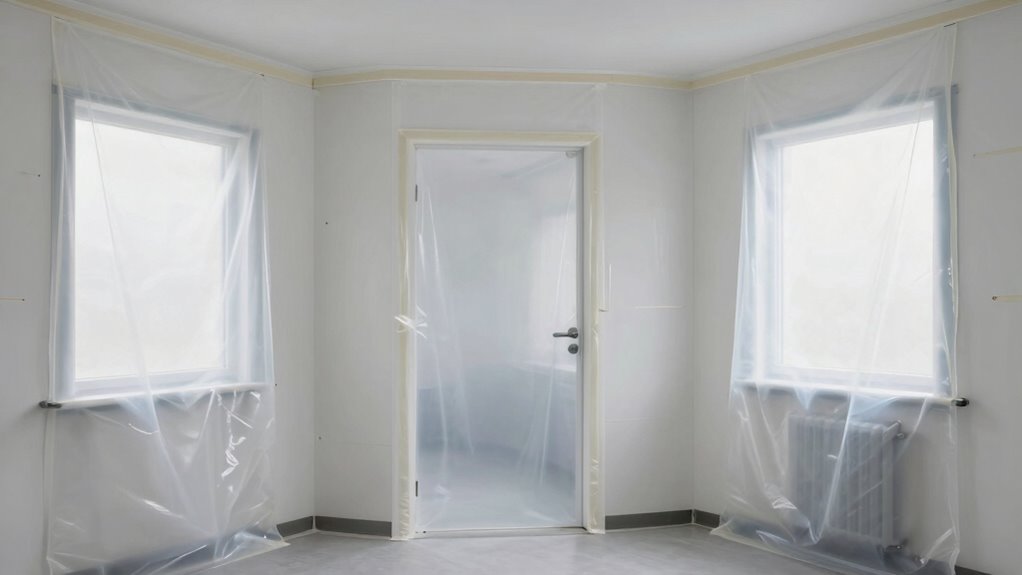

To do plastic sheeting, masking paper, and room containment right, start by thoroughly cleaning and prepping surfaces. Use plastic sheeting to seal off doorways, vents, and windows, creating a barrier that prevents dust, paint splatters, and debris from spreading. Cover furniture and floors with masking paper for added protection. Proper ventilation helps control fumes and dust, but make sure to balance containment with airflow. Keep working carefully, and you’ll achieve professional results—if you want to master the details, keep exploring these tips.

Get tools and workshop supplies delivered free — and shop member deals
- Fast, free delivery on millions of items
- Access to Prime Big Deal Days deals on October 6–7
- Prime Video, Amazon Music and more included
Key Takeaways
- Seal all doorways, vents, and windows with plastic sheeting to create an effective containment barrier.
- Use masking paper to precisely cover edges and surfaces, preventing paint splatters and overspray.
- Properly secure plastic and masking materials with painter’s tape to ensure they stay in place during work.
- Balance ventilation with containment by using exhaust fans and sealed plastic to control fumes without spreading dust.
- Prepare surfaces thoroughly before masking to ensure clean lines and a professional finish.
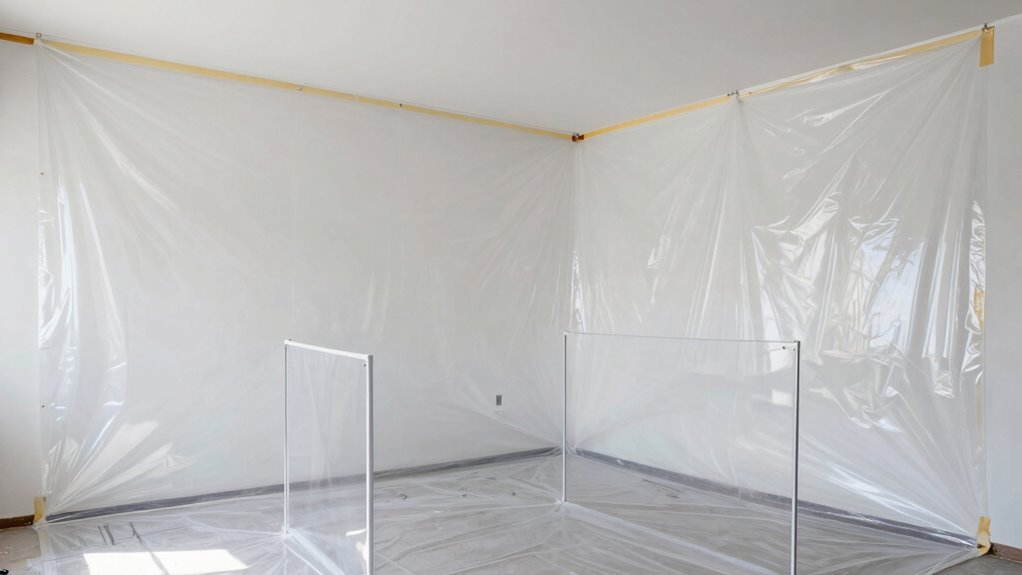
When it comes to painting or renovation projects, properly using plastic sheeting, masking paper, and room containment is essential for a clean, professional finish. The foundation of a successful project starts with good surface preparation. Before you apply any paint or finish, you want to ensure surfaces are clean, smooth, and free of dust, grease, or old paint. This step prevents imperfections from showing through and guarantees better adhesion. As part of surface preparation, you might sand rough spots and wipe down surfaces with a damp cloth. Once the surfaces are ready, you can focus on containment to keep dust, paint splatters, and debris from spreading to areas you want to keep untouched. Plastic sheeting is your best friend here, sealing off doorways, vents, and windows to create a barrier. Proper room containment minimizes cleanup time and ensures the rest of the space remains pristine. Incorporating effective ventilation strategies also helps manage fumes and dust, creating a safer environment during the project.
Ventilation strategies play a crucial role in maintaining safety and quality during your project. Good airflow not only helps eliminate fumes and dust but also speeds up drying times. When setting up containment, consider how you’ll manage ventilation—using exhaust fans or opening windows strategically. If you’re working in a space with poor airflow, you might need to bring in portable fans to direct fumes outside or ensure fresh air circulation. It’s important to balance ventilation with containment; you want to vent out hazardous fumes without letting dust or paint overspray escape. Sealing vents with plastic sheeting or filtering exhaust fans can help control airflow while maintaining safety standards. Proper ventilation strategies also prevent the buildup of paint fumes, which can be harmful if inhaled over long periods. To further enhance safety, using air filtration systems can significantly improve air quality during the project.
Throughout your project, keep in mind that these steps aren’t just about aesthetics—they’re about ensuring safety and efficiency. When you invest time in preparing your surfaces correctly, setting up effective room containment, and planning ventilation, you reduce the risk of mistakes and rework. Your work area remains tidy, and the final results look flawless. Properly managing these elements also protects your health by controlling dust and fumes, making the entire process safer for you. Ultimately, the key to a professional finish lies in careful surface preparation, a well-thought-out containment plan, and smart ventilation strategies. When you do these right, your project will run smoother, look better, and deliver a long-lasting, high-quality outcome.
plastic sheeting for painting projects
As an affiliate, we earn on qualifying purchases.
As an affiliate, we earn on qualifying purchases.
Frequently Asked Questions
What Are the Best Practices for Disposing of Contaminated Plastic Sheeting?
You should follow strict disposal guidelines for contaminated plastic sheeting, treating it as hazardous waste. Seal it in designated, labeled disposal bags or containers to prevent leaks. Contact your local hazardous waste facility for proper disposal procedures, ensuring compliance with regulations. Never dispose of contaminated plastic sheeting with regular trash, as improper disposal can harm the environment and pose health risks. Always prioritize safety and adhere to waste management protocols.
How Do Temperature and Humidity Affect Masking Paper Performance?
You might think temperature and humidity don’t matter much for masking paper, but studies show they substantially influence performance. Temperature regulation helps prevent paper from curling or tearing, while humidity control reduces warping and adhesion issues. High humidity can weaken the paper’s adhesive qualities, and extreme temperatures cause brittleness or softness. Maintaining consistent, moderate conditions ensures masking paper adheres properly, stays intact, and provides a clean, professional finish.
Can Room Containment Be Used for Outdoor Painting Projects?
Room containment isn’t ideal for outdoor painting projects because you can’t fully control outdoor weather conditions. Instead, use outdoor ventilation and weatherproof barriers like tarps or plastic sheeting to safeguard your workspace. These barriers help shield your paint from wind, rain, and debris, while proper outdoor ventilation ensures fumes escape safely. Focus on creating a controlled environment outdoors by using barriers and ventilation, rather than relying on indoor room containment techniques.
Are There Eco-Friendly Alternatives to Traditional Plastic Sheeting?
Yes, eco-friendly alternatives like biodegradable plastics and recyclable sheeting exist. You can choose biodegradable plastics that break down naturally, reducing environmental impact. Recyclable sheeting can be reused or properly recycled after your project, minimizing waste. These options help you maintain effective containment while being environmentally conscious. Switching to eco-friendly materials supports sustainability, reduces plastic pollution, and aligns with greener building practices.
How Often Should Containment Barriers Be Inspected During a Project?
You should inspect containment barriers daily during your project. Regular inspection guarantees barrier durability, catching tears or breaches early. Check for any damage caused by ongoing work or environmental factors to maintain effective containment. The inspection frequency depends on the project’s scope and activity level; more active sites require closer monitoring. Staying vigilant helps prevent contamination, keeps your project on track, and ensures safety for everyone involved.
Conclusion
By mastering the art of plastic sheeting, masking paper, and room containment, you’re channeling the meticulous spirit of Da Vinci’s precision. When you plan and execute with care, you guarantee a flawless finish—transforming chaos into calm, like a master artist. Remember, every detail counts, and with the right tools and techniques, you can achieve perfection. In this dance of protection and precision, you hold the brush that shapes the masterpiece of your project.
Fall Picks
fall essentials
As an affiliate, we earn on qualifying purchases.