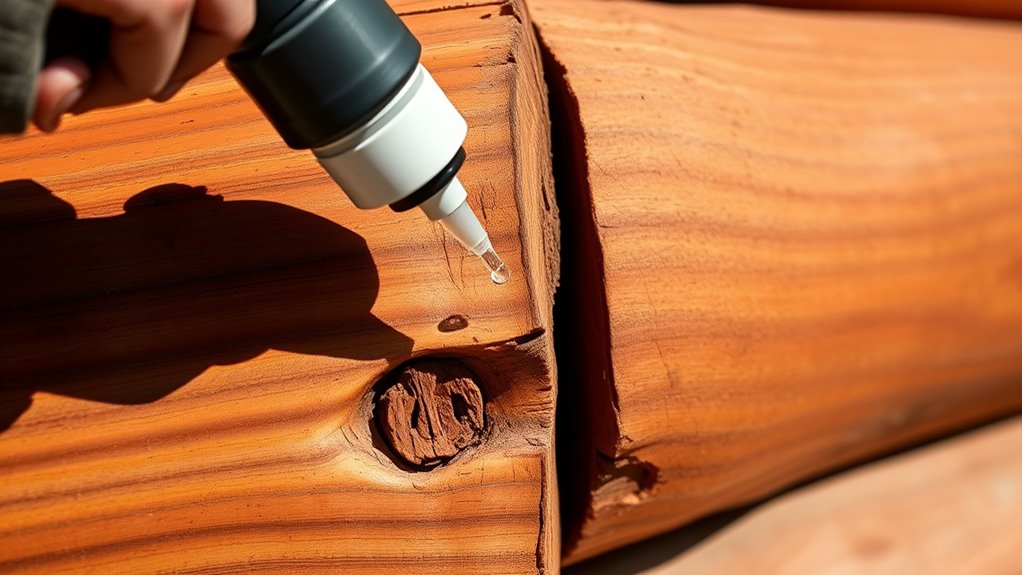

To effectively apply sealant to your log cabin or timber structure, start by cleaning and sanding the surface thoroughly. Choose the right tools, such as brushes, rollers, or sprayers, and work in dry, moderate weather. Apply the sealant evenly, working from one end to the other, and pay attention to cracks or edges. Proper preparation and technique will help protect your wood from moisture and decay, and you’ll discover more tips to guarantee long-lasting results.
Key Takeaways
- Thoroughly clean and sand the timber surface to ensure optimal sealant adhesion and remove debris or old coatings.
- Choose a weatherproof, wood-specific sealant and apply in dry, moderate temperatures with low wind for best results.
- Use brushes for detailed areas and rollers or sprayers for large surfaces to achieve even coverage.
- Fill cracks and gaps with appropriate wood filler before sealing to prevent water infiltration.
- Work systematically from one end to the other, maintaining a steady hand and checking for uniform application.

Applying sealant to log cabins and timber structures is a critical step in protecting your wood from moisture, decay, and weather damage. Proper sealant application forms a barrier that prevents water infiltration, which can lead to rotting, warping, and structural issues over time. To achieve the best results, you need to understand weatherproofing techniques that guarantee your wood remains durable and long-lasting. Using the right sealant application tools is essential in creating an even, thorough coating that adheres well to the wood surface. These tools include brushes, rollers, and sprayers, each suited for different areas and types of sealant. A brush allows for detailed work around corners and edges, while rollers cover large, flat surfaces quickly. Sprayers are excellent for large areas and when you need a smooth, uniform coat, but they require careful handling to avoid overspray and waste.
Before applying sealant, you should prepare the surface properly. Clean the timber thoroughly to remove dirt, mold, or old paint that can hinder adhesion. If the wood is rough or splintered, sanding it smooth will help the sealant bond better. Once the surface is clean and dry, inspect for cracks or gaps. Filling these with a suitable wood filler ensures a seamless, protective layer. When it comes to weatherproofing techniques, applying the sealant in dry weather with minimal wind is ideal, as moisture and rapid weather changes can compromise the sealant’s effectiveness. Always follow the manufacturer’s instructions regarding temperature and drying times. Applying sealant in an ideal condition guarantees a longer-lasting, effective barrier against the elements.
When using sealant application tools, take your time to guarantee even coverage. Start at one end and work systematically across the surface. For detailed areas, a brush allows you to reach tight spots and corners, ensuring no part is missed. For larger surfaces like walls or roofs, a roller or sprayer speeds up the process and provides a consistent coat. Keep a steady hand and avoid over-application, which can lead to drips or pooling, reducing the sealant’s effectiveness. After applying, check for uniformity and touch up any thin spots. Proper technique and the right tools make a significant difference in how well your timber withstands weather conditions. Additionally, selecting a waterproof sealant formulated specifically for wood enhances the longevity of your protection.
Frequently Asked Questions
How Often Should Sealant Be Reapplied to Log Cabins?
You should reapply sealant to your log cabin every 3 to 5 years, depending on your maintenance schedule and sealant longevity. Regular inspections help identify areas needing touch-ups, especially after harsh weather. Using high-quality sealant and sticking to a consistent maintenance schedule guarantees your logs stay protected. Keep an eye on the condition of the sealant, and don’t wait too long to reapply to maintain ideal protection and preserve your cabin’s beauty.
Can Sealant Be Applied in Rainy or Humid Weather Conditions?
Sealing your log cabin during the rainy season isn’t ideal, especially since humidity can hinder proper adhesion. Studies show that moisture levels above 70% can reduce sealant effectiveness by nearly 50%. You should avoid applying sealant in rainy or humid weather because it won’t bond well and may trap moisture. Wait for dry, sunny days with low humidity to guarantee the sealant cures properly and offers maximum protection.
Which Sealant Types Are Safest for Environmentally Sensitive Areas?
You should choose eco-friendly options and chemical-free solutions for environmentally sensitive areas. Look for sealants labeled as biodegradable, non-toxic, and free from hazardous chemicals like VOCs and solvents. These options safeguard the environment and your structure without harmful impacts. Always check product labels and certifications to guarantee the sealant is safe for nature, wildlife, and future generations, providing peace of mind while maintaining your log cabin or timber structure.
Is It Necessary to Sand Logs Before Applying the Sealant?
Did you know that properly preparing your logs can extend the lifespan of your cabin by up to 50%? You should sand logs before applying sealant to guarantee maximum adhesion. Proper log preparation involves surface smoothing, which removes roughness and any old finish. This step helps the sealant penetrate better and creates a more uniform, durable barrier. Skipping sanding can lead to uneven coverage and reduced protection over time.
How Long Does Sealant Typically Take to Fully Cure?
Sealant typically takes about 24 to 72 hours to fully cure, but curing time varies depending on environmental factors like temperature and humidity. You should guarantee good ventilation and avoid rain or excessive moisture during this period. Keep in mind that the Sealant curing time may be longer if conditions are cooler or more humid, so always follow the manufacturer’s instructions for the best results.
Conclusion
By sealing your log cabin or timber structure, you’re wrapping it in a protective shield, like a knight’s armor guarding against nature’s relentless assault. With each careful application, you’re sealing in the warmth and beauty, ensuring your home stands firm as a resilient fortress against time and elements. Think of it as nurturing a living canvas—each stroke preserving its character and charm, turning your timber haven into a timeless masterpiece that endures through seasons and years.