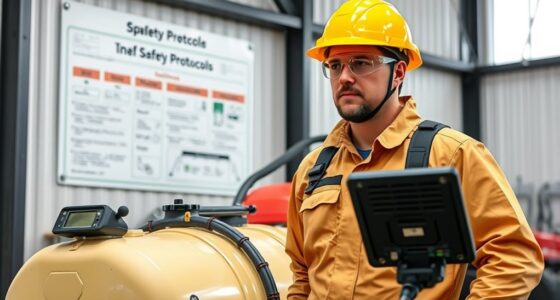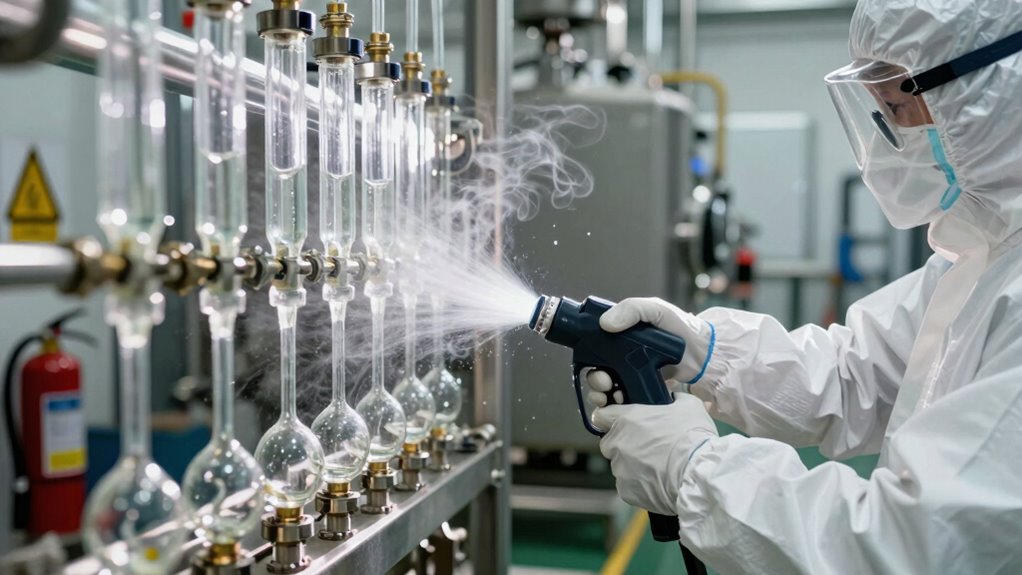

When you perform solvent flushing, proper ventilation is often overlooked but is vital to prevent dangerous vapor buildup. Without good airflow, flammable vapors can accumulate and ignite from static sparks or minor ignition sources, creating a serious fire risk. Guarantee you’re working in well-ventilated areas with exhaust fans, ground yourself, and use rated equipment. Neglecting ventilation leaves you vulnerable to unseen hazards—stay with us to discover how to keep your workspace truly safe.
Key Takeaways
- Proper ventilation is critical to disperse flammable vapors and prevent ignition during and after solvent flushing.
- Static electricity buildup can ignite vapors; grounding and anti-static measures are essential safety practices.
- Vapors may linger after flushing, creating a hidden fire risk; ensure complete dissipation before entry or maintenance.
- Using incompatible solvents or overfilling containers increases vapor production and fire hazards.
- Adequate training, emergency preparedness, and proper equipment inspection are vital to mitigate hidden fire risks.
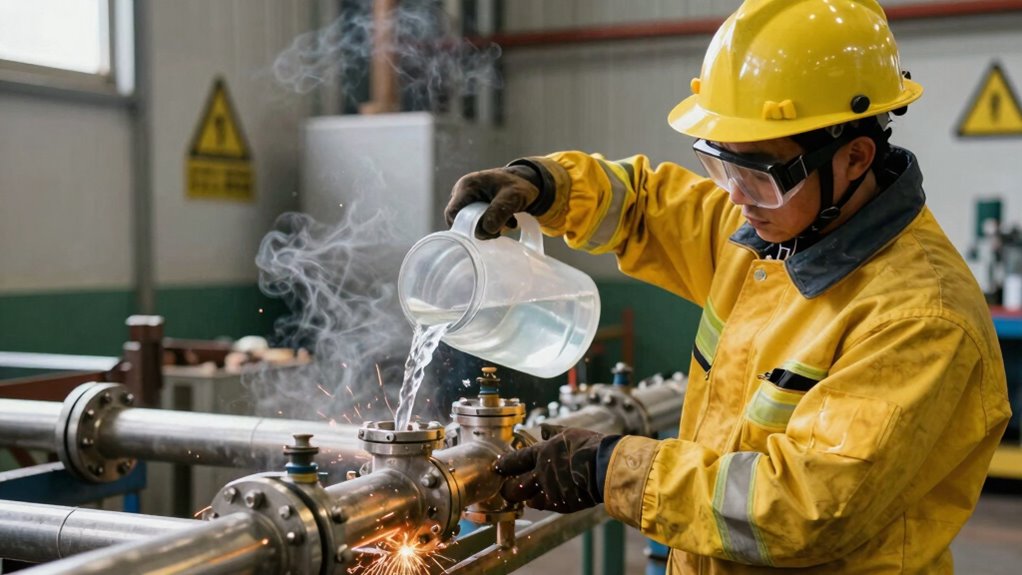
Solvent flushing is a common method used to clean and maintain equipment, but it can pose substantial safety risks if not handled properly. One of the biggest dangers is the buildup of flammable vapors that can ignite unexpectedly. When you’re working with solvents, these vapors can escape into the air, creating a highly combustible environment. If you don’t take proper precautions, a small spark or static discharge could lead to a dangerous fire or explosion. That’s why guaranteeing proper ventilation during and after solvent flushing is essential. Good airflow helps disperse the vapors quickly, reducing their concentration and the risk of ignition. You should always work in well-ventilated areas, ideally with exhaust systems designed to remove vapors safely outside the building. Never underestimate the power of proper ventilation; it’s your first line of defense against fire hazards associated with solvent use.
Proper ventilation during solvent flushing is crucial to prevent flammable vapor buildup and fire hazards.
In addition to ventilation, it’s indispensable to eliminate sources of ignition in the workspace. This means turning off any electrical equipment not rated for hazardous environments and avoiding static buildup by grounding yourself and equipment. Static electricity can ignite flammable vapors even without open flames, so wearing anti-static clothing and using anti-static mats can be lifesavers. Regularly inspecting equipment for leaks or cracks is also indispensable, as these issues can increase vapor release. Always keep a fire extinguisher nearby that is rated for chemical fires, and make sure you and your team are trained to respond quickly in case of an emergency.
Handling solvents with care is key. Use only approved containers and tools designed for chemical use, and never overfill or mix incompatible substances. When you’re flushing equipment, follow manufacturer guidelines precisely, including recommended dwell times and disposal procedures. Be aware that some solvents produce more flammable vapors than others, so adjust your safety measures accordingly. For example, volatile solvents evaporate quickly and contribute heavily to vapor buildup, demanding even more rigorous ventilation.
Additionally, understanding the importance of color accuracy in projectors can help you choose equipment that provides consistent and safe operation, especially in environments where precise visual presentation is critical. Finally, don’t rush the process. Guarantee that all vapors have dissipated before entering the area for inspection or maintenance. It’s tempting to cut corners, but rushing increases the risk of accidents. Remember, the fire risk nobody talks about isn’t just about the solvent itself—it’s about the vapors that escape and linger. Proper ventilation isn’t just a recommendation; it’s an essential safety step. By maintaining good airflow, eliminating ignition sources, and handling solvents responsibly, you substantially reduce the chances of a fire erupting during solvent flushing. Taking these precautions protects you, your team, and your facility from preventable tragedies.
Frequently Asked Questions
What Are the Most Common Signs of a Solvent Flushing Fire Hazard?
You should watch for fire alarm triggers and chemical odors, which are common signs of a solvent flushing fire hazard. If your fire alarm goes off unexpectedly or you notice a strong chemical smell, it could indicate a fire risk. Stay alert to unusual odors or smoke, and make certain proper ventilation. Recognizing these signs early helps prevent potential fires and keeps everyone safe during solvent flushing processes.
How Can Proper Ventilation Reduce Solvent Flushing Fire Risks?
Did you know that proper ventilation can cut fire risks by up to 60%? By using effective ventilation systems, you guarantee continuous air exchange, which dilutes flammable vapors. This prevents their buildup and reduces the chance of ignition. Regularly maintaining and monitoring your ventilation setup keeps hazardous fumes at safe levels, creating a safer workspace. So, prioritize good airflow to protect yourself and your team from potential fire hazards during solvent flushing.
Are There Specific Protective Gear Recommendations for Solvent Flushing?
You should wear protective clothing, like flame-resistant coveralls, to shield your skin during solvent flushing. Respiratory protection is essential; use a properly fitted respirator to avoid inhaling harmful vapors. Always choose gear rated for chemical exposure, ensuring it fits well and is in good condition. This gear minimizes fire risks and health hazards, keeping you safe while handling flammable solvents.
What Emergency Procedures Should Be Followed if a Fire Occurs?
Did you know that improper fire response causes over 50% of industrial fires to spread? If a fire occurs, immediately activate fire extinguishing methods like foam or dry chemical extinguishers suited for flammable solvents. Follow evacuation protocols by alerting everyone, guiding them to safe exits, and avoiding elevators. Call emergency services, and don’t attempt to fight large fires alone. Staying calm and acting swiftly can save lives and minimize damage.
How Often Should Solvent Flushing Equipment Be Inspected for Safety?
You should inspect solvent flushing equipment regularly, ideally monthly, to guarantee safety compliance. Frequent inspections help identify potential hazards like leaks, corrosion, or faulty components that could increase fire risk. By adhering to a consistent inspection schedule, you can prevent accidents and maintain a safe working environment. Always document inspections and address issues promptly to stay compliant with safety standards and reduce the risk of fire-related incidents.
Conclusion
Remember, prioritizing safety during solvent flushing isn’t just about avoiding fines; it’s about protecting yourself and others from fire hazards. Some might think proper precautions slow things down, but skipping them increases the risk of fire and injury. Taking a few extra moments to follow safety protocols can prevent disaster. Don’t let complacency be your downfall—be proactive, stay vigilant, and make certain everyone around you stays safe from the overlooked fire risks of solvent flushing.