To optimize your spray booth layout, focus on proper airflow design to remove fumes efficiently and prevent contamination. Arrange tools, materials, and work surfaces for ergonomic ease, reducing fatigue and speeding up your workflow. Guarantee a clear progression from prep to finishing, with dedicated areas for cleaning and maintenance. Good lighting, both natural and artificial, enhances visibility and quality. Combining these elements creates a safe, productive environment—explore further to perfect your spray booth setup.
Key Takeaways
- Design proper ventilation to ensure efficient airflow, fume removal, and contamination prevention.
- Arrange tools and materials ergonomically to reduce fatigue and improve precision during spraying.
- Plan a logical workflow that moves from prep to spraying, drying, and finishing areas seamlessly.
- Incorporate even, well-placed lighting to enhance visibility and reveal imperfections early.
- Integrate layout elements for safety, productivity, and quality, balancing ventilation, ergonomics, and organization.

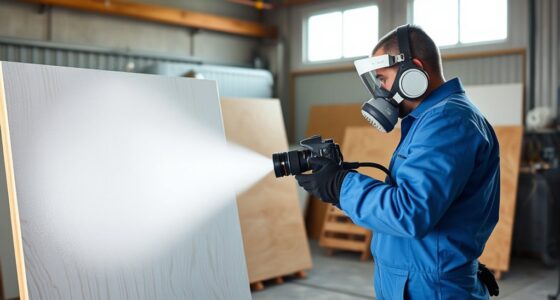
Designing an efficient spray booth layout is essential for maximizing productivity and guaranteeing quality results. When planning your space, pay close attention to paint booth ventilation. Proper ventilation not only removes overspray and fumes but also maintains a clean environment that prevents contamination. Good airflow patterns help pull fumes away from the painter and direct them safely outside, reducing health hazards and ensuring compliance with safety standards. An effective ventilation system also contributes to a consistent finish by controlling temperature and humidity levels within the booth. Take time to evaluate your airflow design, making certain that incoming air flows smoothly across the workspace and exits efficiently without creating turbulence or dead zones where overspray can settle.
Equally important is establishing an ergonomic spray setup. Your workflow should minimize unnecessary movements and reduce fatigue, which directly impacts the quality of your work. Position your tools, materials, and spray guns within easy reach, so you don’t have to stretch or bend awkwardly during the process. An ergonomic setup can include adjustable-height work surfaces, proper lighting, and well-organized storage for paints and supplies. This arrangement helps you work more efficiently, decreases the risk of repetitive strain injuries, and enhances overall precision. When your workspace is designed with ergonomics in mind, you’ll find it easier to maintain consistency and achieve a flawless finish on every project.
In addition to ventilation and ergonomics, consider the overall flow of your booth. The layout should facilitate a smooth movement from the entry point, through the spray process, to the drying and curing areas. Keep raw materials and prep stations positioned upstream, so you can easily access them without crossing over completed work. This minimizes contamination and accidental damage. Also, plan for a dedicated area for cleaning and maintenance to keep your equipment in prime condition, which boosts efficiency and prolongs the lifespan of your tools.
Lighting is another critical factor. Proper, even lighting ensures you can see every detail and spot imperfections early. Combine natural light with high-quality artificial lighting that mimics daylight, reducing shadows and glare. When your workspace is well-lit and air is properly ventilated, your workflow becomes more predictable, and the quality of your finishes improves. Remember, a thoughtful layout that integrates ventilation, ergonomic design, and efficient workflow isn’t just about aesthetics—it’s about creating a safe, productive environment that helps you deliver excellent results every time.
Frequently Asked Questions
How Often Should Spray Booth Filters Be Replaced?
You should replace spray booth filters during your regular filter maintenance, typically every 1 to 3 months, depending on usage and environment. Keep an eye on the replacement schedule to guarantee ideal airflow and paint quality. Regular filter replacement prevents buildup that can hinder airflow and compromise safety. Monitoring filter condition and adhering to a consistent replacement schedule helps maintain a clean, efficient spray booth and extends equipment life.
What Safety Precautions Are Essential in Spray Booth Design?
Think of your spray booth as a fortress guarding your health. You must wear proper Personal Protective Equipment like masks, gloves, and goggles to shield yourself from harmful fumes. Fire safety measures are your castle’s moat—install fire extinguishers and proper ventilation to prevent fires. Regularly check electrical systems and keep the area clean. These precautions are your armor, ensuring safety while you craft your masterpiece.
Can I Customize a Spray Booth for Specific Projects?
Yes, you can customize a spray booth for your specific projects. Many manufacturers offer customization options that allow you to tailor the booth’s size, airflow, filtration, and lighting to meet your needs. You can also incorporate project-specific modifications like specialized exhaust systems or adjustable workspaces. Just discuss your requirements with the supplier, and they’ll help you design a spray booth that fits your workflow and project demands perfectly.
How Does Ventilation Impact Painting Quality?
Ventilation directly impacts your painting quality by ensuring airflow efficiency, removing overspray, and controlling fumes. When your ventilation design promotes steady, even airflow, it prevents dust and debris from settling, reduces paint defects, and improves finish consistency. Good ventilation also maintains proper humidity and temperature levels, which helps paint cure smoothly. By prioritizing airflow efficiency and thoughtful ventilation design, you create an ideal environment that results in a flawless, professional finish every time.
What Are Cost-Effective Tips for Spray Booth Setup?
To set up a spray booth cost-effectively, focus on budget-friendly design choices like using affordable materials and optimizing airflow for energy efficiency. Implement cost-saving measures such as DIY installation where possible, and prioritize essential equipment over extras. Regular maintenance prevents costly repairs, and recycling filters can save money long-term. Planning your layout carefully guarantees smooth workflow, reducing waste and labor costs, helping you maximize quality without overspending.
Conclusion
Designing your spray booth carefully balances efficiency with safety, speed with precision. While a streamlined layout accelerates your workflow, neglecting proper airflow can compromise quality and health. Remember, it’s not just about working faster but working smarter—creating a space that protects your workspace and enhances your craft. In this delicate dance between productivity and safety, your booth’s layout becomes the silent partner guiding you toward consistent, first-rate results.