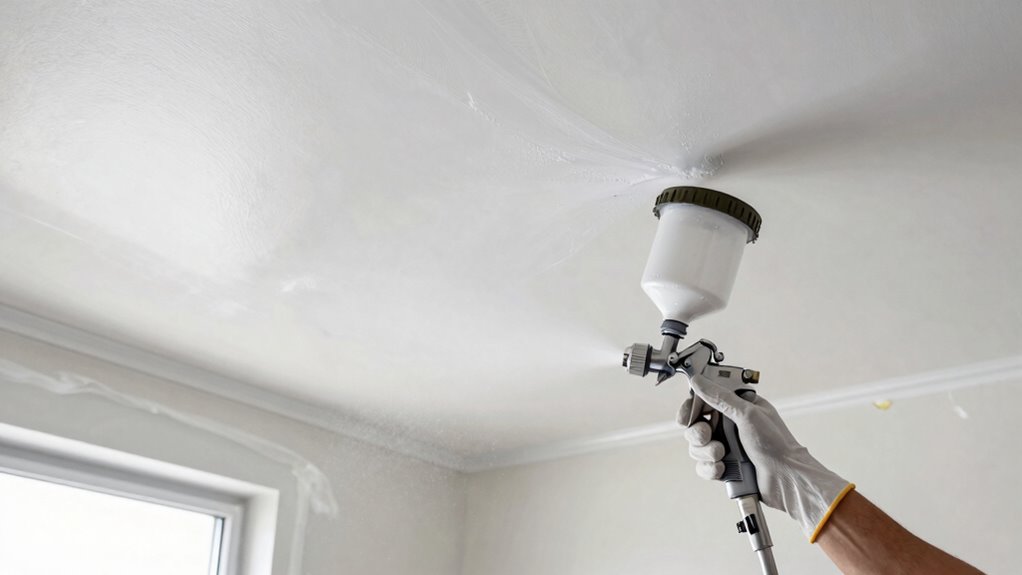

To spray ceilings and walls efficiently, start with the ceilings to prevent overspray on walls. Maintain a steady, overlapping spray pattern and keep a consistent pace to avoid streaks. Plan your route to minimize backtracking, and use the spray gun for large areas while brushing edges and tricky spots. Proper equipment setup, including adjusting pressure and cleaning your tools, guarantees smooth flow. Keep practicing your technique, and you’ll find ways to work faster and get a flawless finish—continue to discover more tips.

Get business pricing on tools and workshop supplies
- Business-only prices and quantity discounts
- Tax-exempt purchasing
- Multiple users, one account, clear invoices
Key Takeaways
- Plan your spraying route to start with ceilings, then proceed to walls to prevent overspray on finished surfaces.
- Maintain consistent spray speed and overlap to ensure even coverage, reducing the need for touch-ups.
- Use quick-drying spray formulas and ensure proper ventilation to minimize waiting times between surfaces.
- Switch between spray and brush techniques for detailed areas, avoiding delays caused by re-adjusting equipment.
- Regularly clean and adjust equipment to maintain steady flow and spray quality, avoiding slowdowns during the job.
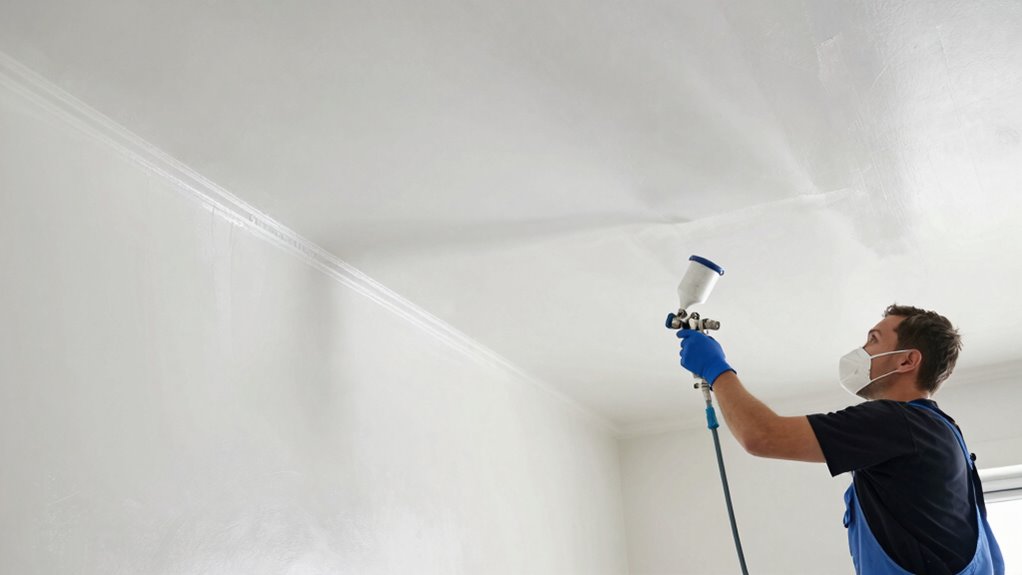
Spraying ceilings and walls can be an efficient way to achieve a smooth, even finish, especially when you want to cover large areas quickly. To do this effectively, you need to coordinate your spray techniques and make certain your equipment is in top shape. Consistent spray techniques are essential for a uniform appearance, so practice maintaining a steady hand and even motion. Keep your arm relaxed, and move at a consistent speed to avoid uneven coverage or drips. When changing between ceilings and walls, adjust your spray distance and angle to prevent overspray and achieve a seamless blend. Remember, overlapping each pass by about 50% helps to avoid streaks and missed spots.
While spray application speeds up the job, brush techniques still play a role, especially for touching up edges, corners, or tricky spots. Use a brush for detailed work and areas where spray might not reach well. This combination allows you to work efficiently without sacrificing quality. It’s also important to keep your spray equipment well-maintained. Regularly clean your spray gun, nozzle, and filters to prevent clogs that could disrupt your spray pattern. Proper maintenance ensures consistent spray flow and reduces downtime. Before starting, check all connections and pressure settings, and test on a scrap surface to fine-tune your spray pattern and flow rate. Well-maintained equipment saves time and prevents frustrating interruptions during your project.
Additionally, practicing your spray technique on a test surface can help you refine your approach and ensure even coverage. Timing your work is vital to avoid slowing down either ceilings or walls. Plan your spraying route to minimize backtracking. Start with ceilings first, since overspray can fall onto walls, and then move to walls once the ceiling coats are dry. Keep a steady pace to maintain a wet edge, which helps blend coats seamlessly. If you need to pause, cover your spray gun and nozzle to prevent dust or debris from entering, and clean the nozzle thoroughly before resuming. Proper equipment maintenance is crucial for consistent results and efficiency. Also, making sure your work area is well-ventilated can speed up drying times, so you don’t have to wait long between coats. Incorporating proper planning into your workflow can further streamline the process and improve overall results. Additionally, controlling your spray pressure can help achieve a more uniform finish and reduce overspray.
HVLP spray gun for walls and ceilings
As an affiliate, we earn on qualifying purchases.
As an affiliate, we earn on qualifying purchases.
Frequently Asked Questions
What Type of Spray Gun Is Best for Ceilings and Walls?
For ceilings and walls, you’ll want a high-quality, HVLP (High Volume Low Pressure) spray gun. These spray gun types deliver smooth finishes with minimal overspray, making them ideal for ceiling painting techniques. They’re easy to control and help you achieve even coats quickly. Consider using an airless spray gun if you’re covering large areas fast, but for detailed work, HVLP models are your best choice.
How Do I Prevent Overspray on Floors and Furniture?
Prevent overspray like a shield protecting a fortress by using painter’s tape and drop cloths. Before you start, wear protective clothing to avoid getting paint on yourself, and guarantee proper paint preparation to minimize splattering. Cover floors and furniture thoroughly, taping edges carefully. Keep your spray gun at the right distance and move steadily to control spray dispersion. This way, you keep your space clean and your work efficient.
What Safety Gear Should I Wear When Spraying?
When spraying, you should wear protective clothing to shield your skin from overspray and fumes. A respirator mask is essential to protect your lungs from airborne particles and fumes, especially in enclosed spaces. Make certain your protective clothing covers your entire body, including gloves and goggles for added safety. This gear helps prevent health issues and keeps your workspace safe, allowing you to work efficiently without worrying about inhaling or coming into contact with hazardous materials.
How Long Should I Wait Between Coats?
You should wait at least 2-4 hours between coats, depending on the paint type and room temperature. During this time, make sure proper surface preparation and paint mixing to achieve a smooth finish. Inspect the surface for dryness and avoid rushing the process. Waiting this period allows the previous coat to cure properly, preventing issues like peeling or uneven texture, and guarantees your wall or ceiling looks flawless after each coat.
Can I Use the Same Paint for Ceilings and Walls?
Yes, you can use the same paint for ceilings and walls, but focus on color matching and proper paint preparation. Choose a suitable finish, such as flat for ceilings and eggshell or satin for walls, to achieve the best results. Make sure the paint is well-mixed and free of impurities. This approach helps you maintain consistency and makes your job easier, saving time and ensuring a seamless look.
Conclusion
To spray ceilings and walls efficiently, stay organized and use separate tools for each surface. Keep a steady hand and maintain consistent pressure to avoid drips and uneven coverage. Some believe that spraying both simultaneously speeds up the job, but in reality, it can cause mistakes and rework. Instead, tackling one at a time with proper technique guarantees a smooth finish and saves time in the long run. Remember, quality beats speed when it comes to painting.
Fall yard work Picks
leaf blowers
As an affiliate, we earn on qualifying purchases.