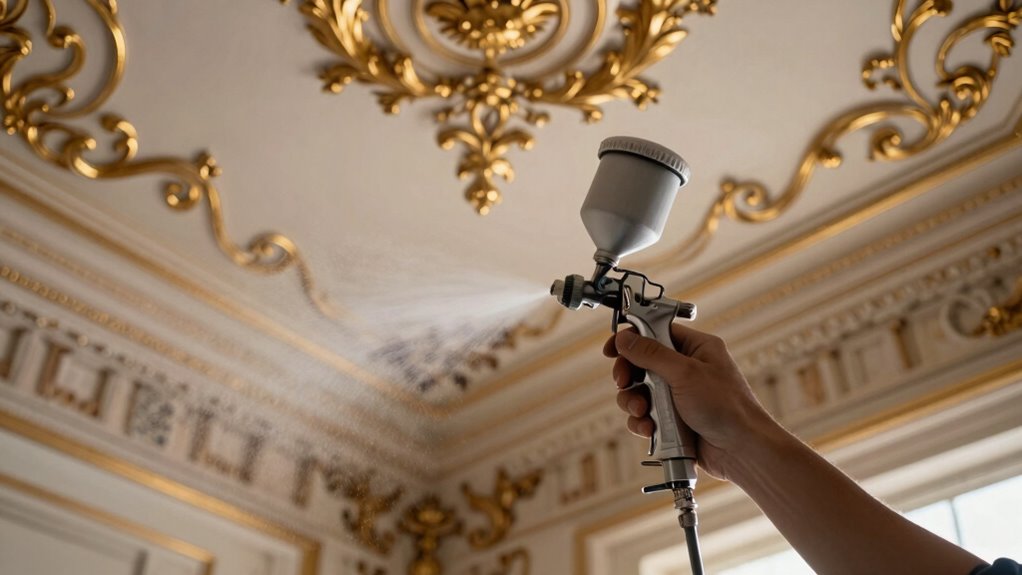

To avoid a rainstorm of overspray when spraying ceilings, make certain your equipment is clean and properly adjusted, and always hold the spray gun about 12 inches from the surface. Use steady, overlapping strokes and maintain a consistent speed. Cover furniture and floors, and work in a well-ventilated room with minimal airflow. Controlling your spray angle and practicing on scrap can improve results. Keep control of your technique, and you’ll achieve a smooth finish with less mess—explore more tips to perfect your approach.

Get business pricing on tools and workshop supplies
- Business-only prices and quantity discounts
- Tax-exempt purchasing
- Multiple users, one account, clear invoices
Key Takeaways
- Maintain a consistent spray distance of 12 inches from the ceiling for even coverage.
- Use steady, overlapping strokes and control your spray angle to minimize overspray.
- Cover surrounding surfaces with masking tape and plastic sheeting to protect from overspray.
- Adjust spray settings and practice on scrap to achieve a controlled, smooth application.
- Ensure proper ventilation and minimal airflow to prevent overspray from spreading.
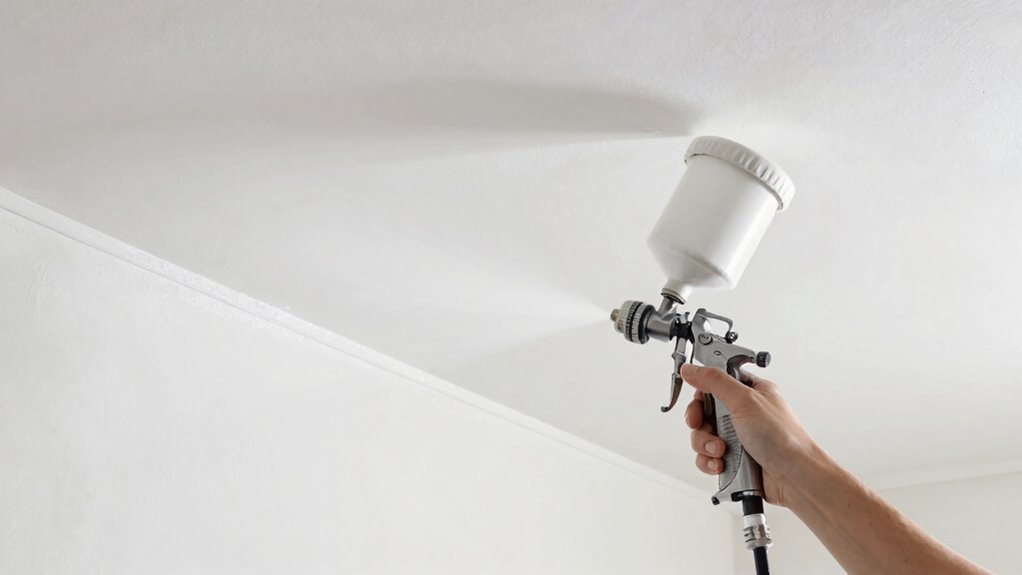
Spraying ceilings can quickly turn messy if you’re not careful, with overspray spreading everywhere and creating a rainstorm of paint. To prevent this, you need to be methodical about your approach and pay close attention to safety precautions. Before you start, verify your equipment is in top shape—clean the spray gun thoroughly, check for clogs, and verify that all parts are functioning correctly. Proper equipment maintenance not only guarantees a smooth spray but also reduces the chances of accidental overspray or uneven application.
Proper equipment maintenance ensures smooth spraying and prevents messes during ceiling projects.
When it comes to safety precautions, always wear protective gear. A mask or respirator will keep paint fumes out of your lungs, while goggles shield your eyes from splatters. Cover nearby furniture and floors with drop cloths, and consider taping off walls and light fixtures to create a barrier that prevents paint from landing where it shouldn’t. Ventilate the room well to disperse fumes and reduce buildup of overspray in the air. Adequate ventilation is especially important to minimize overspray and ensure a safer working environment. Additionally, working in a controlled environment helps maintain consistent results and reduces paint waste. Proper ventilation also helps control paint fumes, making the space safer to work in.
Holding the spray gun correctly is essential. Keep it at a consistent distance—usually about 12 inches from the ceiling—and move it in steady, overlapping strokes. This technique helps maintain an even coat and minimizes excess paint in one spot, which can cause drips and overspray. Be mindful of your spray angle; spraying at too steep an angle can cause paint to bounce back or drift away from the target area, increasing overspray. Practice on a scrap piece or a small section first to get a feel for the spray pattern and flow rate.
Controlling your environment also makes a big difference. Work in a room with minimal airflow—turn off fans and close windows—to prevent wind from pushing paint beyond your intended area. Use masking tape and plastic sheeting to cover edges, trim, and other surfaces you want to keep clean. As you spray, keep your movements smooth and consistent. Avoid rushing, as quick, jerky motions tend to create uneven coverage and increase overspray. Additionally, proper technique can significantly reduce mess and ensure a clean finish. Practicing your technique beforehand can help you develop a steady hand and improve your overall control.
Furthermore, choosing the right type of paint and spray equipment for ceilings can impact overspray control and application quality. Proper technique, combined with the right equipment, allows for more precise application, reducing the chances of excess paint. Regularly inspecting and adjusting your spray settings can also help achieve better control and finish. Finally, after finishing, clean your equipment properly. Proper equipment maintenance extends the lifespan of your tools and keeps them ready for future projects. Regularly cleaning the spray gun and replacing worn parts ensures you’ll always have a precise, controlled spray. When you follow these safety precautions, maintain your equipment diligently, and work with attention to detail, you’ll master ceiling spraying without the mess of a rainstorm of overspray.
airless paint sprayer for ceilings
As an affiliate, we earn on qualifying purchases.
As an affiliate, we earn on qualifying purchases.
Frequently Asked Questions
What Safety Gear Is Essential When Spraying Ceilings?
You should wear protective gear like a mask or respirator to avoid inhaling fumes, goggles to protect your eyes, and gloves for skin safety. Make certain proper ventilation tips are followed by opening windows and using fans to disperse airborne particles. This safety gear helps prevent health risks from overspray and fumes, keeping you safe during ceiling spraying. Always double-check your protective equipment before starting the job.
How Do Temperature and Humidity Affect Spray Ceiling Application?
Temperature and humidity greatly influence your spray ceiling application. High humidity elevates the humidity impact, causing paint to dry slower and risking runs or uneven coverage. Too low humidity can lead to rapid drying, making it hard to achieve a smooth finish. Maintaining proper temperature regulation, ideally around 65-75°F, guarantees ideal paint flow and adhesion. Keep an eye on weather conditions to avoid issues like overspray or inconsistent paint layers.
Can I Use a Regular Paint Sprayer for Ceilings?
You can use a regular paint sprayer for ceilings, but it’s vital to take into account paint consistency and nozzle selection. Imagine the spray like a gentle rain—if the paint is too thick, it’ll clog or produce overspray; too thin, and coverage suffers. Choose a nozzle designed for ceilings, and adjust the paint’s consistency to guarantee smooth, even application. A proper setup helps you avoid a mess and achieve a professional finish.
How Long Does It Take for Spray-Painted Ceilings to Dry?
Spray-painted ceilings typically take about 2 to 4 hours to dry to the touch, but full curing can take up to 24 hours. Drying time depends on factors like humidity, temperature, and paint absorption. To guarantee a smooth finish, avoid touching or cleaning the surface during this period. For best results, wait until the paint is fully dry before applying a second coat or hanging fixtures.
What Are Common Mistakes to Avoid During Ceiling Spraying?
You should avoid common mistakes like applying paint too thick, which causes drips and uneven coverage. Always guarantee your equipment is properly calibrated to control spray pattern and pressure, preventing overspray and mess. Rushing the job can lead to uneven layers, so take your time for consistent application. Also, don’t forget to keep a steady hand, maintain proper distance from the ceiling, and use masking tape to protect walls and fixtures.
Conclusion
Now that you’ve mastered the art of spraying ceilings without a rainstorm of overspray, you’re like a skilled painter wielding a steady brush amid a storm. Remember, patience and technique turn chaos into calm, much like a maestro conducting a symphony. With each careful stroke, you’re creating a masterpiece, transforming your space with finesse. So go forth boldly, knowing you hold the power to tame the spray and bring serenity to your ceilings—your very own mythic feat of craftsmanship.
Halloween Picks
halloween
As an affiliate, we earn on qualifying purchases.