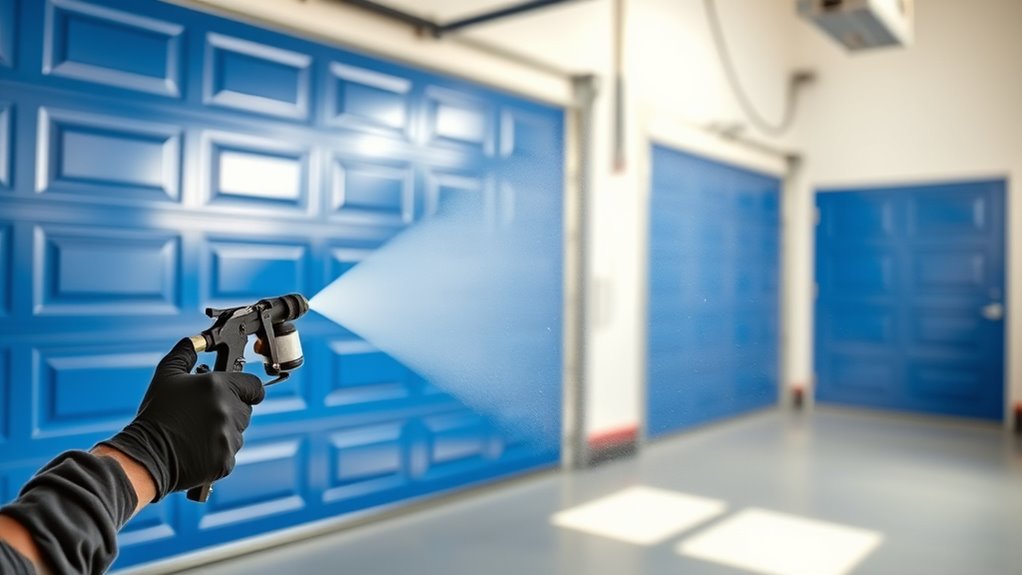

To spray your garage door for a smooth finish, start by prepping the surface thoroughly—clean, sand, and mask off surrounding areas. Use a quality sprayer and test it on a scrap piece first. Work in a well-ventilated space, wear safety gear like a respirator and goggles, and adjust the spray pressure for even coverage. Maintaining consistent speed and overlapping each pass helps prevent streaks. Keep these tips in mind, and you’ll get professional results every time. If you want to refine your technique further, there’s more to learn.
Key Takeaways
- Thoroughly clean and sand the garage door surface to ensure smooth paint adhesion.
- Mask surrounding areas with painter’s tape and plastic to prevent overspray and achieve clean lines.
- Use proper protective gear, including a respirator mask and goggles, to ensure safety during spraying.
- Adjust spray pressure and test on a scrap surface for an even, consistent spray pattern.
- Work in a well-ventilated area with optimal environmental conditions to promote drying and reduce fumes.

Spraying garage doors is an efficient way to achieve a smooth, even finish that enhances your home’s curb appeal. When you choose to spray garage doors, you’re opting for a method that provides a professional-looking result with minimal streaks or brush marks. However, before you start, it’s essential to understand the importance of safety precautions to protect yourself and ensure the job goes smoothly. Proper safety measures aren’t just recommendations—they’re necessary steps to prevent accidents and health issues.
First, make sure to work in a well-ventilated area. If you’re spraying outdoors, choose a day with light wind to avoid overspray, and avoid work during high heat or humidity, which can affect paint adhesion and drying. If you’re working inside a garage, open all doors and windows to maximize airflow, and consider setting up fans to direct fumes away from you. Wearing protective gear is non-negotiable. A quality respirator mask will shield you from inhaling harmful fumes and particles. Safety goggles are necessary to protect your eyes from splashes and spray mist, while gloves will keep your skin safe from chemicals. Long sleeves and pants further add a layer of protection, preventing skin contact with paint or solvents.
When spraying garage doors, it’s essential to prepare the surface thoroughly. Clean the door with a mild detergent to remove dirt, grease, and loose paint, then sand any rough patches for a smooth base. Mask off surrounding areas with painter’s tape and plastic sheeting to prevent overspray and make cleanup easier. Before you start spraying, test your equipment on a scrap piece or an inconspicuous area to ensure the spray pattern and flow are even. Adjust the pressure on your sprayer to match the manufacturer’s recommendations for your specific paint or primer. Additionally, understanding the contrast ratio of your project can help you achieve a more uniform and visually appealing finish, especially in areas with varying light conditions.
Frequently Asked Questions
What Types of Paint Are Best for Spraying Garage Doors?
You should use high-quality, exterior-grade acrylic or latex paints for spraying garage doors, as they offer excellent paint compatibility and durability. These paints adhere well and resist weathering. When spraying, use smooth, even spraying techniques to avoid drips and achieve a flawless finish. Always prep the surface properly and follow manufacturer guidelines to guarantee the paint bonds correctly and lasts longer, giving your garage door a sleek, professional look.
How Long Does a Sprayed Finish Typically Last?
Your sprayed finish typically lasts 5 to 10 years, depending on paint durability and climate conditions. To prolong its lifespan, follow maintenance tips like regular cleaning and inspecting for chips or cracks. Proper preparation before spraying and choosing high-quality paint also help guarantee a longer-lasting, smooth finish. Keep up with touch-ups as needed to maintain your garage door’s appearance and protect it from weather-related wear.
Can I Spray My Garage Door Myself or Should I Hire a Professional?
Deciding whether to spray your garage door yourself or hire a pro depends on your DIY skills and desire for a flawless finish. If you’re confident, follow DIY tips like preparing surfaces properly and using quality spray equipment. However, professional benefits include a smoother, more durable finish and saving time. If you lack experience or want perfect results, hiring a professional guarantees a polished, pristine appearance, making the investment worthwhile.
What Safety Precautions Are Necessary When Spraying Garage Doors?
When spraying your garage door, you should wear personal protective gear like gloves, goggles, and a respirator to protect your skin and lungs. Make certain of proper ventilation by working outdoors or in a well-ventilated area to avoid inhaling fumes. Keep the spray nozzle at the correct distance, and follow manufacturer instructions. Taking these safety precautions helps prevent health risks and achieves the best finish safely.
How Do Weather Conditions Affect the Spraying Process?
Weather conditions are vital to your spraying process. High humidity can cause the paint to dry slowly, leading to runs or uneven finishes, while low humidity helps achieve a smooth coat. Wind influence is also essential; strong winds can blow debris onto your wet surface or cause overspray, wasting paint and creating imperfections. For the best results, spray on a clear, calm day with moderate humidity to guarantee a smooth, flawless finish.
Conclusion
Now that you’ve learned how to spray garage doors for a smooth finish, you’re ready to transform your space effortlessly. Imagine the sleek, flawless surface you’ll achieve—something that stands out just as much as the effort you put in. The contrast between a rough, dull door and a shiny, perfected one is striking. With a little patience and the right technique, you’ll enjoy professional-looking results that make your garage feel brand new.