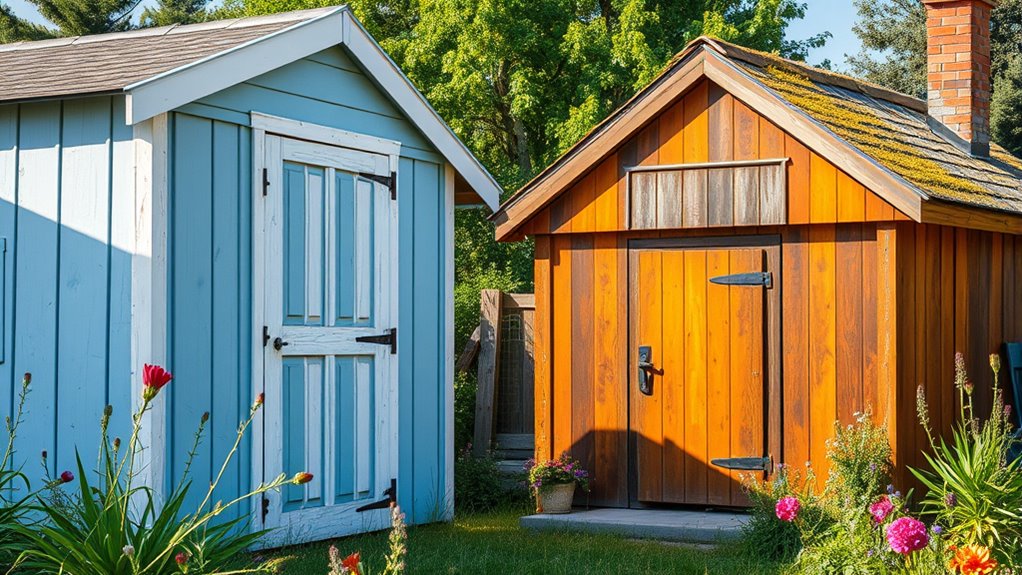

Painting or staining your shed or outbuilding enhances its appearance, boosts protection against weather, and prolongs its lifespan. Choose paint for vibrant, uniform colors that block moisture and UV rays, or opt for stain to highlight wood grain with deep protection. Proper surface prep, weatherproofing products, and regular maintenance are key to lasting results. If you want to discover tips on selecting the best finish and application techniques, keep exploring further.
Key Takeaways
- Choose high-quality, exterior-grade paint or stain with UV inhibitors for durability and weather resistance.
- Properly clean, sand, and dry the shed surface before applying to ensure proper adhesion.
- Apply multiple coats of paint or stain for enhanced protection and vibrant, lasting color.
- Consider climate-specific products and sealants to withstand heavy rain, snow, or intense sunlight.
- Regularly inspect and reapply finishes or sealants to maintain appearance and extend longevity.

Whether you’re protecting a new shed or revitalizing an aging outbuilding, choosing between painting and staining is an important decision. The right choice depends on your goals, the look you want, and how much maintenance you’re willing to do. When considering paint, you get a wide range of color options, which makes it easy to match your shed to your home or landscape. Bright hues, bold contrasts, or subtle shades—paint allows you to customize your outbuilding’s appearance to suit your style. Stains, on the other hand, tend to offer a more natural look, highlighting the wood’s texture and grain. They come in transparent, semi-transparent, or solid finishes, giving you flexibility in how much of the wood’s character shows through. If you prefer a more vibrant or uniform color, paint might be the better choice, but if you want to preserve the natural appeal of the wood, staining is often preferred.
Beyond aesthetics, weatherproofing tips are essential for extending the life of your shed. Both paint and stain provide some level of weatherproofing, but their effectiveness varies. Paint generally forms a solid barrier on the surface, sealing out moisture and protecting against UV rays. Regularly applying a fresh coat can keep your shed looking vibrant and shielded from the elements. Stains penetrate the wood, offering deep protection while allowing the grain to show through. To maximize their weatherproofing capabilities, it’s fundamental to prepare the surface properly—cleaning, sanding, and ensuring it’s dry before application. For added weatherproofing, consider applying a clear sealant or topcoat after staining or painting, especially if your shed is exposed to harsh weather conditions. Additionally, understanding signs of spoilage in materials can help you maintain the integrity of your finish over time.
When choosing between paint and stain, think about your climate. If you live in a region with heavy rain, snow, or intense sun, selecting a product with proven weatherproofing properties is essential. Look for high-quality, exterior-grade paints or stains with UV inhibitors and water-resistant formulas. Proper application is equally important; apply in dry conditions, follow manufacturer instructions, and consider multiple coats for enhanced protection. Maintaining your shed with periodic inspections and touch-ups will ensure your chosen finish continues to protect your structure over time. Whether you lean toward vibrant colors or natural wood tones, combining the right product with good weatherproofing practices will keep your shed looking great and functioning well for years to come.
Frequently Asked Questions
How Often Should I Re-Stain or Repaint My Shed?
You should re-stain or repaint your shed every 2 to 3 years, depending on your maintenance schedule. Weather considerations play a big role—if your area experiences harsh sun, rain, or snow, you might need to do it more often. Regular inspections help you catch peeling or fading early. Keep the surface clean and protected to extend the lifespan of your paint or stain, ensuring your shed stays durable and attractive.
Can I Paint or Stain a Damp or Wet Shed?
No, you shouldn’t paint or stain a damp or wet shed because moisture absorption can cause poor adhesion and uneven drying. You need to wait until the surface is thoroughly dry before applying paint or stain. Proper surface preparation is essential; clean and allow the shed to dry completely to prevent issues like peeling or mold growth. This ensures your finish lasts longer and looks better.
What Are Eco-Friendly Options for Shed Paints and Stains?
Looking for eco-friendly options? You can choose shed paints and stains with biodegradable formulations that break down safely in the environment. Don’t forget to explore natural pigment options—these provide vibrant colors without harmful chemicals. By selecting these environmentally conscious products, you protect your surroundings and create a beautiful, sustainable finish. The secret lies in proven, eco-friendly ingredients that deliver durability while keeping your outdoor space green and healthy.
How Do I Prevent Paint or Stain From Peeling Over Time?
To prevent paint or stain from peeling over time, you should focus on proper surface preparation, ensuring the wood is clean, dry, and free of old paint or debris. Additionally, consider weather conditions; avoid painting in high humidity, rain, or extreme temperatures. Applying a suitable primer and using high-quality, eco-friendly paints or stains also helps improve adhesion, making your finish last longer and resist peeling.
Are There Specific Colors Recommended for Outdoor Sheds?
Think of your shed as a canvas for your personality—bright blues, cheerful yellows, or classic greens can breathe life into your yard. When selecting colors, consider your aesthetic preferences and how they blend with your landscape. Neutral shades like grays and browns offer timeless appeal and hide dirt, while bold hues make a statement. Choose colors that evoke the mood you want and complement your outdoor space, making your shed a true focal point.
Conclusion
Ultimately, whether you choose paint or stain, your shed or outbuilding will become a fortress of beauty and resilience, standing proud against the relentless forces of nature. With the right choice, you’ll transform a simple structure into a masterpiece that could outlast the ages, defying decay and deterioration. So, pick wisely, and watch your shed not just survive, but thrive as a timeless declaration to your craftsmanship and vision.