To spray textured walls without holidays, start by thoroughly cleaning and prepping the surface, then mask off adjacent areas. Select the right spray gun and adjust pressure and tip size for even application, maintaining a steady distance and overlapping passes to avoid streaks. Practice on scrap material first. Keep a consistent technique, and apply multiple thin coats rather than one thick layer. Properly cleaning your tools and inspecting your work regularly guarantees a smooth, professional finish—you’ll discover all the essential tips ahead.
Key Takeaways
- Maintain consistent spray gun distance (12-18 inches) to ensure even texture coverage.
- Overlap spray passes slightly to prevent gaps and holiday marks.
- Adjust pressure and tip size for uniform texture application across the wall.
- Practice on scrap surfaces to perfect your technique before working on the main wall.
- Regularly inspect and touch up any missed spots or imperfections after drying.
Spraying textured walls can transform a plain surface into a visually interesting feature, but it requires proper preparation and technique. If you’re tackling this project as a DIY, using the right techniques and professional tools will make all the difference. Start by thoroughly cleaning the wall to remove dust, grease, or any loose debris. This step ensures that the texture adheres properly and prevents imperfections. Next, protect your floors and adjacent surfaces with drop cloths and painter’s tape, especially around edges and trim. Masking off areas you don’t want textured helps you achieve a clean, professional look without accidental splatters.
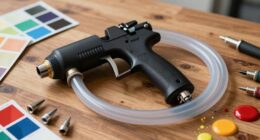
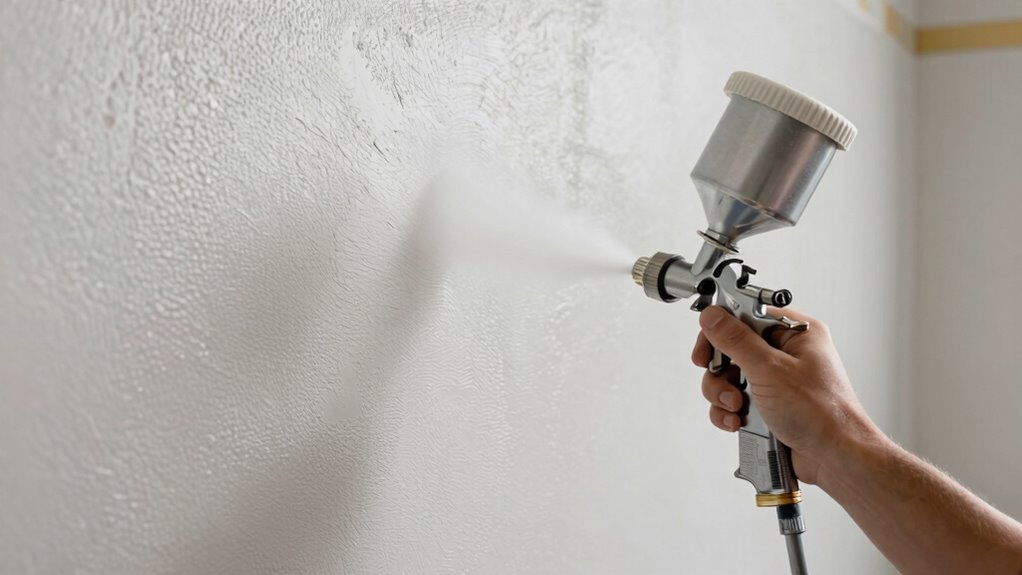
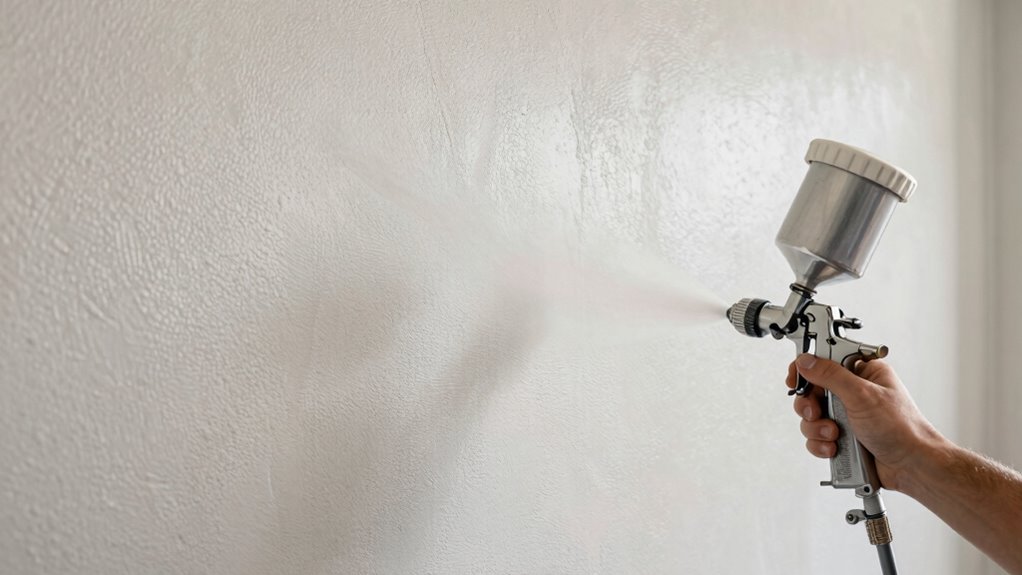
When it comes to applying texture, investing in professional tools can considerably improve your results. A high-quality spray gun designed for textured finishes helps you distribute material evenly, reducing the chances of holidays—those unwanted patches or streaks. If you’re new to spraying textured walls, consider practicing on a scrap piece or a hidden section first. This allows you to get a feel for the spray pattern, pressure settings, and distance from the wall. Maintaining a consistent distance—usually about 12 to 18 inches—is crucial to achieving uniform coverage. Keep your spray gun moving at a steady pace; stopping or lingering in one spot can create buildup or missed spots.
DIY techniques involve adjusting your technique based on the texture style you want. For a fine, subtle texture, use a lower pressure setting and a smaller tip size. For more pronounced textures, increase the pressure and opt for a larger tip. Always keep your hand steady and move in smooth, overlapping passes to prevent streaks or uneven patches. If you notice any holidays or missed areas, wait for the first coat to dry completely before applying additional layers. Several thin coats often produce a better, more natural finish than trying to build up a thick layer in one go. Additionally, understanding AI-enabled automation can help you optimize your spraying process by monitoring equipment performance and ensuring consistent application.
Cleaning your professional tools immediately after use guarantees their longevity and ideal performance for future projects. Follow the manufacturer’s instructions for cleaning your spray gun and nozzles to prevent clogging or damage. When finished, inspect your work closely and touch up any imperfections with a brush or small roller if needed. With patience, proper technique, and quality tools, you can spray textured walls that look professionally finished, all while avoiding common pitfalls like holidays or uneven coverage.
Frequently Asked Questions
Can I Spray Textured Walls Over Existing Paint?
Yes, you can spray textured walls over existing paint if it’s in good condition. First, clean the surface thoroughly and lightly sand it to help the texture techniques adhere better. Use quality spray equipment to achieve an even finish. Keep a consistent distance and speed while spraying. This method guarantees your new texture bonds well and looks professional, saving you time and effort compared to stripping old paint.
What Safety Gear Do I Need for Spraying?
You need protective masks and safety goggles to keep yourself safe when spraying textured walls. Protective masks guard your lungs from inhaling harmful particles, while safety goggles shield your eyes from splatters and debris. Wearing these essential safety gear items guarantees you breathe easily and see clearly throughout the process. Always prioritize your safety by wearing protective masks and safety goggles, making your spraying project safer and more effective.
How Long Does It Take for Textured Walls to Dry?
Textured walls typically take 24 to 48 hours to dry completely, but drying time can vary depending on environmental factors like humidity and temperature. If it’s humid or cold, expect longer drying periods. To speed up the process, guarantee good ventilation and maintain consistent indoor temperatures. Avoid touching or decorating the wall until it’s fully dry to prevent damage or imperfections.
What’s the Best Way to Clean Spray Equipment?
You should clean your spray equipment immediately after use with appropriate cleaning solvents to prevent clogging. Disassemble the spray gun and nozzle, then soak or rinse parts thoroughly. Regular equipment maintenance, like checking for wear and lubricating moving parts, helps guarantee peak performance. Always follow the manufacturer’s instructions for cleaning and maintenance, and avoid using harsh chemicals that could damage your equipment or affect future finishes.
Can I Customize the Texture Pattern Easily?
Think of your wall as a blank canvas, ready for your custom texture. Yes, you can easily customize the pattern with different spray tips and techniques, giving you a variety of pattern options. I once experimented with a swirling design, which transformed a plain wall into a stunning feature. With the right tools and practice, creating your desired texture pattern becomes an enjoyable project that reflects your personal style.
Conclusion
Now that you know the secrets to spraying textured walls without leaving holidays, you’re armed with a paintbrush’s best friend. Think of your sprayer as a magic wand, turning dull walls into textured masterpieces without a single flaw. With patience and steady hands, your walls will transform into a work of art, smooth and flawless as a calm lake. Remember, every perfect finish starts with careful technique—your walls are counting on you to make them shine.