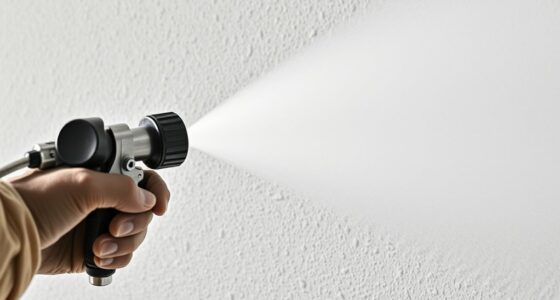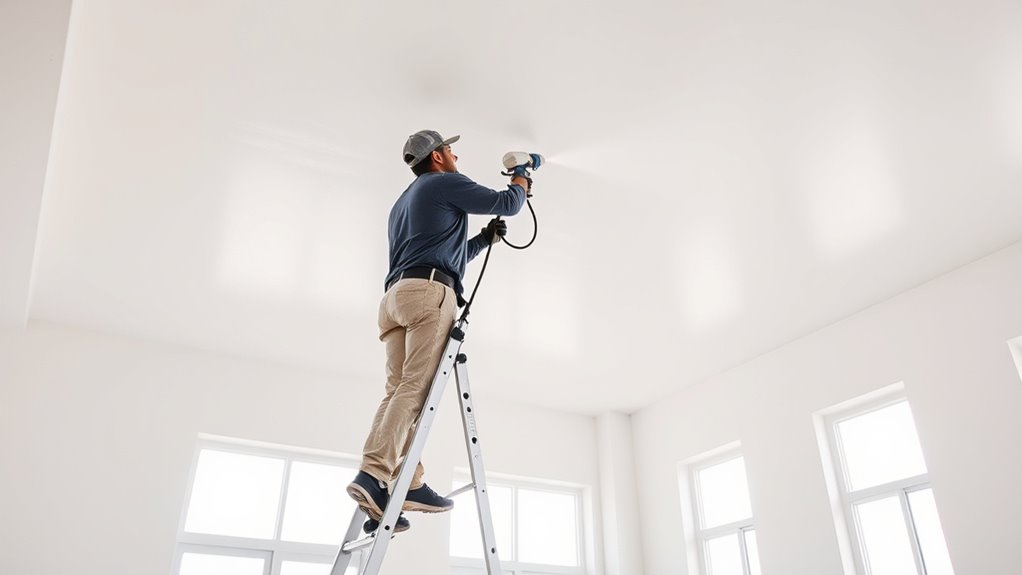

Using tip extensions for spraying ceilings and high walls makes your job easier by giving you extra reach and better control. Choose a lightweight, sturdy extension pole with adjustable sections to suit your needs. This allows you to cover large areas quickly without constantly repositioning ladders or scaffolding. With the right tools and technique, you’ll achieve smooth, professional finishes. Keep exploring how to optimize your setup for even better results in your painting projects.
Key Takeaways
- Choose a lightweight, adjustable extension pole for comfortable, customizable reach during ceiling and high wall spraying.
- Attach tip extensions securely to your sprayer for seamless access to high or awkward areas.
- Test different pole lengths beforehand to balance control and maximum reach for precise application.
- Use smooth, controlled spray techniques combined with extension poles for even coverage and minimal streaks.
- Maintain proper positioning and technique to prevent overspray, ensure safety, and achieve professional-quality results.
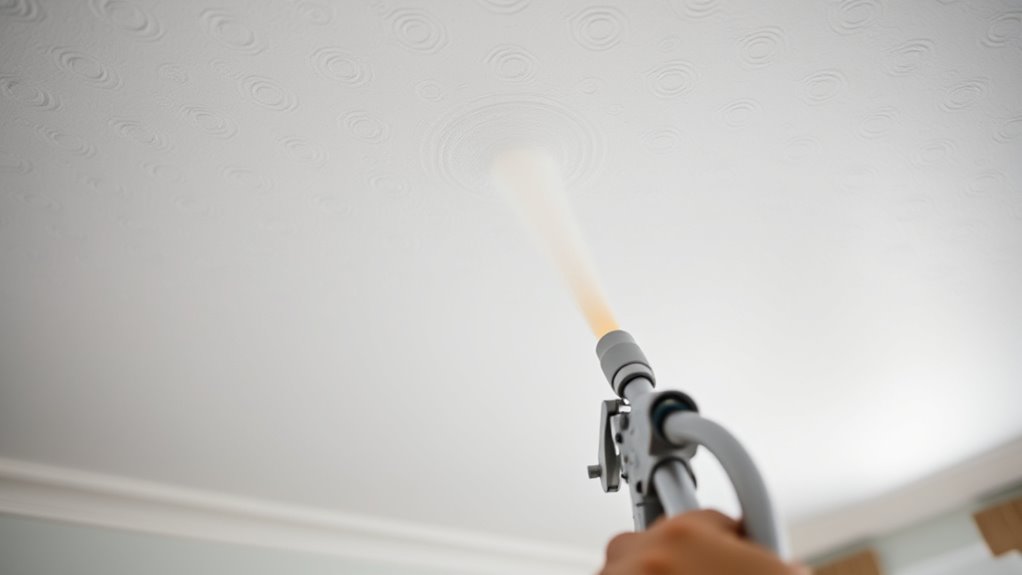
When working on ceilings and walls, sometimes the area you need to reach is just out of your grasp. That’s where tip extensions come into play, allowing you to spray high or hard-to-access spots without the need for ladders or scaffolding. The key to getting a smooth, professional finish lies in choosing the right extension pole and mastering effective brush techniques. With the right tools and approach, you can complete your project efficiently and with high-quality results.
Start by selecting an extension pole that’s suited for your task. You want something lightweight enough to handle comfortably over extended periods, yet sturdy enough to prevent wobbling or flexing, which can mess up your spray pattern. Many extension poles come with adjustable sections, so you can customize the length according to the height you need to reach. For ceilings or tall walls, a longer pole provides better reach, but keep in mind that longer poles can be a bit more unwieldy. Test different lengths beforehand to find a balance between reach and control. A good extension pole will also have a comfortable grip and a secure locking mechanism to keep it stable during your work.
Once you’ve chosen your extension pole, focus on your brush techniques for the edges and areas where spray may be uneven. If you’re switching between spray and brush work, use smooth, controlled strokes to feather out edges and ensure seamless blending. When brushing, keep the brush at a slight angle and use long, even strokes to distribute paint or primer evenly. This helps prevent streaks and drips, especially on high walls or ceilings where gravity can cause uneven coverage. For tricky corners or tight spots, a smaller brush can help, but for broad surfaces, your extension pole equipped with a sprayer or roller will do the heavy lifting.
Frequently Asked Questions
Can Tip Extensions Be Used With All Spray Paint Types?
Yes, tip extensions can be used with most spray paint types, but you should consider paint consistency and extension compatibility first. Thicker paints may clog extensions, so thinning the paint might be necessary. Also, check if your extension is compatible with your spray gun and paint type to guarantee smooth operation. Properly prepared, tip extensions help you reach high ceilings and walls efficiently without sacrificing paint quality.
How Do I Clean and Maintain Tip Extensions After Use?
To keep your extension clean and tip maintained, start by rinsing it immediately after use with warm water or the appropriate solvent. Use a brush or cloth to gently scrub away paint residue from the extension and tip. Regular extension cleaning prevents clogs and buildup. Store your tip extensions in a dry, safe place to avoid damage. Proper maintenance guarantees longevity and peak spray performance.
Are There Size Limitations for Different Ceiling Heights?
The early bird catches the worm, so plan ahead. For ceiling height, your extension length should match the area you’re working on; longer extensions are ideal for high ceilings, but avoid going too long to prevent control issues. Most tip extensions work well within standard ceiling heights, typically up to 20 feet. For taller ceilings, consider specialized equipment or multiple extension sections to guarantee even coverage and safety.
Can Tip Extensions Improve Spraying Accuracy on Textured Surfaces?
Yes, tip extensions can improve spraying accuracy on textured surfaces by allowing you to control the extension length, giving you better reach and precision. With a longer extension, you can maintain a consistent spray pattern across uneven textures, reducing overspray and missed spots. Adjusting the extension length helps you adapt to different textures, ensuring a smoother, more even finish on ceilings and high walls.
How Do I Prevent Overspray When Using Tip Extensions?
To prevent overspray when using tip extensions, start by adjusting your spray nozzle to a lower pressure and choose an extension length that suits your project size. Keep the extension steady and maintain a consistent distance from the surface. Move smoothly and avoid sudden movements. Cover nearby areas with drop cloths, and practice on scrap material to get comfortable. This approach minimizes overspray and guarantees a clean, professional finish.
Conclusion
Using tip extensions makes spraying ceilings and high walls much easier and more efficient. They help you reach those tricky spots without needing a ladder, saving you time and effort. Did you know that painters report a 30% increase in productivity when using extension tips? Incorporating these tools not only improves your finish but also speeds up the job. So, next time you’re tackling a high wall, grab a tip extension—you’ll appreciate the difference it makes.