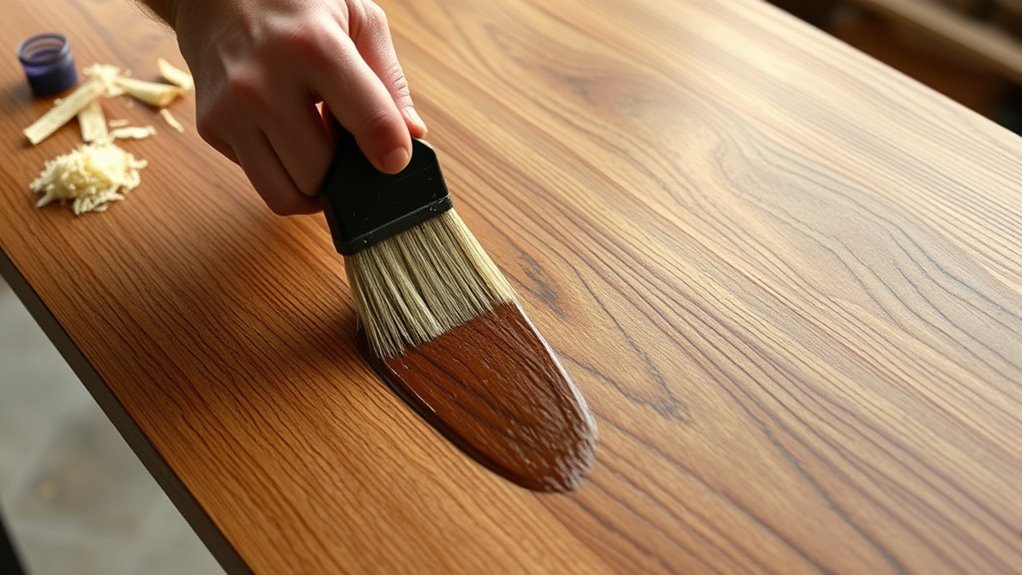

To apply stain to wooden furniture, start by choosing the right brush—synthetic for water-based or natural for oil-based stains—and load it lightly to avoid drips. Work in sections, applying long, steady strokes along the grain, and keep a wet edge to prevent lap marks. Use smaller brushes for details and corners. Practice proper technique, and if you continue, you’ll discover tips for a flawless, professional finish.
Key Takeaways
- Choose the appropriate stain type (water-based or oil-based) and select a high-quality brush suited for the finish.
- Work in manageable sections, applying stain along the wood grain with long, steady strokes for even coverage.
- Load brushes lightly, wipe off excess stain, and maintain a wet edge to prevent lap marks and streaks.
- Test stain color on a hidden area to ensure it matches your desired look before full application.
- Finish with consistent coats, blending edges, and allowing proper drying time for a smooth, professional appearance.
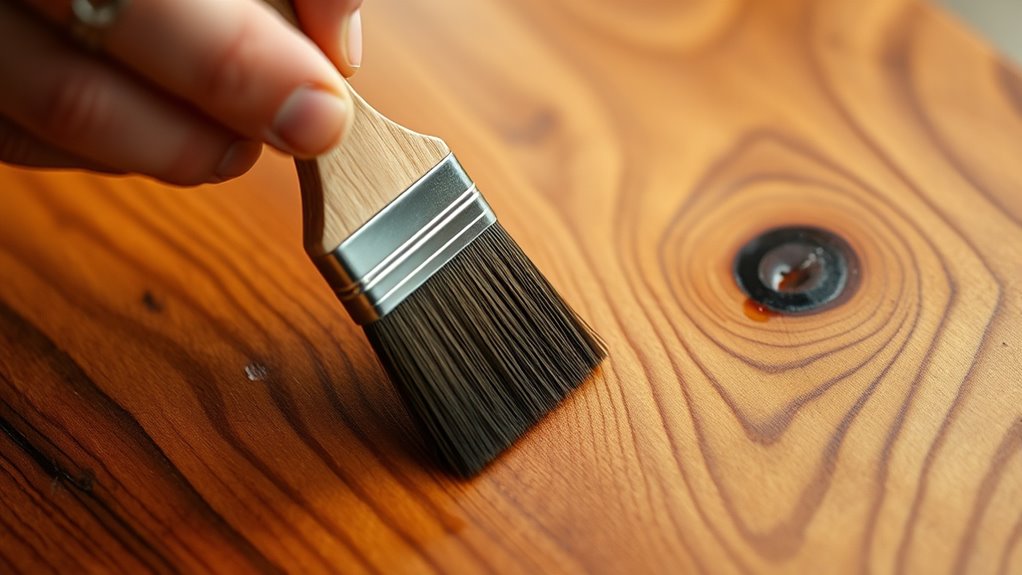
Staining wooden furniture is a rewarding way to enhance its appearance and protect the wood. When you’re ready to start, the way you use your brush can make all the difference. Brush techniques are essential to achieving a smooth, even finish. To begin, choose a high-quality brush with synthetic bristles if you’re working with water-based stains or natural bristles for oil-based stains. Always load your brush with just enough stain—dipping it lightly and wiping off excess helps prevent drips and uneven application. Use long, steady strokes along the grain of the wood, maintaining a wet edge as you work to avoid lap marks. Keep a steady hand and avoid pressing too hard, which can cause streaks or brush marks. For corners and hard-to-reach areas, a smaller brush helps you control the stain application more precisely. Remember to work in sections, blending each area before the stain dries to maintain a consistent appearance. Proper brush techniques ensure you don’t miss spots or create blotchy patches, leaving your furniture with a professional-looking finish.
Choosing the right stain color is just as important as applying it correctly. When selecting a stain color, consider the existing decor and the mood you want to create in the room. Lighter stains can brighten and highlight the natural beauty of the wood, making your furniture look fresh and modern. Darker stains, on the other hand, add richness and depth, giving your piece a more traditional or sophisticated feel. To find the perfect shade, it’s helpful to test your stain on a small, inconspicuous area first. This way, you can see how the color interacts with the wood’s grain and decide if it’s the right fit. Keep in mind that stain colors can appear differently once they dry, so patience is key. If you’re uncertain, opt for a slightly lighter or neutral tone; you can always deepen the color with additional coats, but removing excess stain once applied is more challenging. When you’re confident with your stain choice, apply it evenly using your brush techniques. Consistency in application, combined with the right stain color selection, results in a stunning transformation that highlights the natural charm of your furniture.
Ultimately, the secret to a beautiful stained finish lies in your attention to detail—from mastering brush techniques to selecting the perfect stain color. Take your time, work carefully, and enjoy the process of bringing new life to your wooden furniture.
Frequently Asked Questions
How Long Does Stained Furniture Typically Last?
Your stained furniture typically lasts around 3 to 5 years, depending on furniture durability and stain longevity. If you maintain it well—regular cleaning and reapplying stain when needed—it can stay beautiful longer. Proper care protects the stain from wear and tear, ensuring your furniture remains attractive and durable. Keep in mind that exposure to sunlight, moisture, and daily use can shorten the lifespan of the stain.
Can Stain Be Applied to Painted Wood Surfaces?
Sure, you can slap stain onto painted wood, but don’t expect miracles. Painted surfaces often resist stain adhesion, leading to patchy or uneven results—like trying to paint a zebra with polka dots. If you want a smooth, lasting finish, you’ll need to prep the surface properly—sanding and possibly stripping the paint. Otherwise, your stained masterpiece might look more like a toddler’s art project than elegant furniture.
Is It Necessary to Seal the Wood After Staining?
You should seal the wood after staining to enhance stain durability and protect the finish. Using sealing techniques like applying a clear topcoat or polyurethane creates a barrier against moisture, scratches, and UV damage. This step not only preserves the vibrant color but also prolongs the life of your stained furniture. Skipping sealing can lead to quicker wear and fading, so it’s a vital part of achieving a professional, long-lasting result.
What Are Eco-Friendly Stain Options Available?
Ever wondered if you can make your project greener? You can choose eco-friendly stains made from eco friendly dyes and natural finishes, which are safer for the environment and your health. These options offer beautiful colors without harmful chemicals, giving your furniture a sustainable touch. Using natural finishes enhances the wood’s beauty while reducing your ecological footprint. With these choices, you guarantee your craftsmanship is both stunning and environmentally responsible.
How Do I Fix Uneven Stain Application?
To fix uneven stain application, start by sanding the affected area lightly with fine-grit sandpaper to smooth out blotching. Use a clean brush and apply stain with even, overlapping brush techniques to blend the uneven spots. Wipe off excess stain gently with a cloth. If needed, repeat the process, ensuring you work quickly to avoid streaks. This helps prevent stain blotching and achieves a more consistent finish.
Conclusion
Think of staining your furniture as giving it a fresh coat of character, like painting a soul onto its surface. With patience and care, you’re not just adding color—you’re revealing the story hidden within the wood’s grains. Each stroke turns a plain piece into a masterpiece, much like a painter unveiling a vibrant scene. So, take your time, enjoy the process, and watch your furniture transform into a timeless work of art that tells your story.