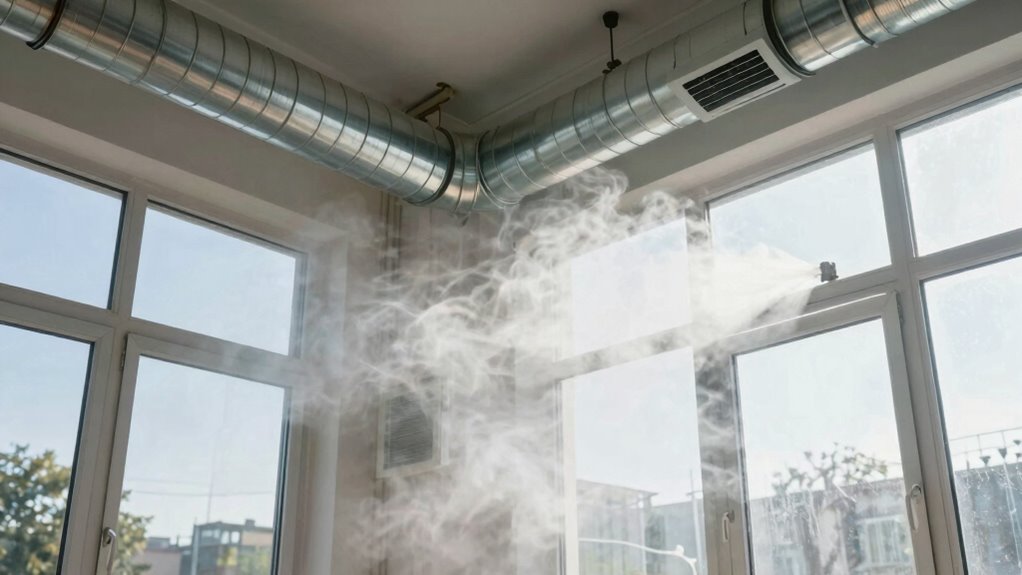
To prevent inhaling harmful fumes during indoor spraying, make certain you ventilate thoroughly. Open windows and doors wide, and use fans to direct air outside, creating strong airflow through the space. Keep ventilation going during and after spraying, especially in small or enclosed areas. Avoid sealing the room tight, as it traps fumes. Want to know more tips to keep yourself safe and odors at bay? Keep exploring to find out.
Key Takeaways
- Open windows and doors to promote continuous airflow during and after spraying.
- Use fans to direct contaminated air outside, increasing ventilation efficiency.
- Ensure proper room size assessment; use multiple fans or exhaust systems in larger spaces.
- Avoid sealing the room completely to prevent trapping fumes and airborne chemicals.
- Keep ventilation active until odors and fumes dissipate completely to minimize inhalation risks.
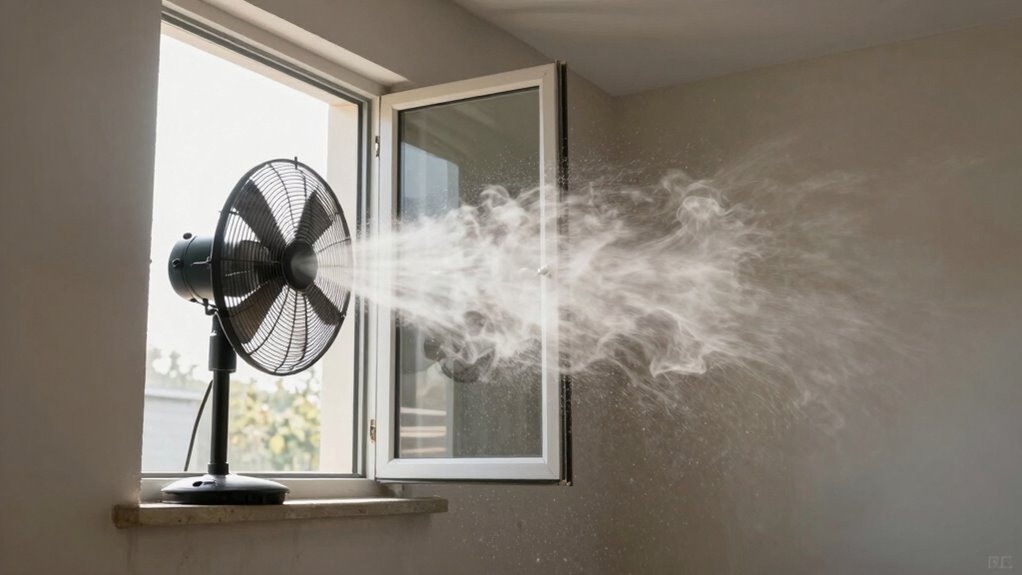
Proper ventilation is essential whenever you’re spraying indoors to guarantee your safety and the effectiveness of the application. When you’re working with chemicals, aerosols, or any substances that release fumes, ensuring good air exchange is critical. Without proper airflow, these fumes can linger in the space, increasing the risk of inhalation and potential health hazards. Opening windows and doors creates a steady flow of fresh air, diluting airborne particles and helping to clear the space more quickly. You should also consider using fans to direct contaminated air outside, which accelerates air exchange and reduces indoor concentration of harmful vapors. This not only keeps you safer but also helps prevent the buildup of odors that can be overwhelming or persistent if left unchecked.
Odor control plays a significant role in making indoor spraying safer and more tolerable. Many chemicals produce strong, unpleasant smells that can cause discomfort or even nausea if they accumulate. Proper ventilation minimizes these odors by continuously replacing stale, contaminated air with fresh air from outside. Keep in mind that the smell isn’t just a nuisance; it often indicates the presence of airborne chemicals that can be harmful if inhaled over time. By maintaining good air exchange, you’re actively reducing the concentration of odors and harmful substances, creating a safer environment for yourself and others in the space. If the odor persists despite ventilation efforts, you might need to use additional odor-neutralizing products or air purifiers equipped with HEPA filters to catch lingering particles.
You should also plan your ventilation strategy based on the size of the room and the type of substance you’re spraying. For small spaces, opening a window and using a fan to direct air outdoors might be enough. In larger rooms, consider setting up multiple fans or exhaust systems to maximize air exchange. Remember, the goal is to keep fresh air flowing continuously while the spraying occurs and for a period afterward to allow fumes to dissipate. Avoid sealing the space completely during spraying, as this traps fumes and odors inside, making ventilation ineffective. Even after spraying, keep windows and doors open for a while to ensure that residual fumes and odors are thoroughly expelled. Additionally, utilizing ventilation technology such as projector cooling fans can improve airflow and help maintain a safe environment during prolonged spraying activities.
Frequently Asked Questions
How Long Should I Wait Before Re-Entering the Room After Spraying?
You should wait at least 2 to 4 hours before re-entering the room after spraying, depending on the product used. Make certain proper ventilation during this time to improve air quality testing results and reduce exposure. Keep windows and doors open, and use fans if possible. Always follow the manufacturer’s recommended ventilation duration on the label for safety, and consider testing the air quality before re-entry to confirm it’s safe.
Can I Use Fans to Improve Ventilation During Spraying?
You absolutely can use fans to improve ventilation during spraying, but placement is key. Position fans strategically to maximize airflow and create a cross-breeze that pulls fumes out of the room. Keep fans directed toward open windows or vents for ideal airflow. Don’t just turn them on randomly—think about airflow optimization. With the right setup, you’ll clear the air faster and breathe easier, all while staying safe.
Are There Specific Ventilation Methods for Different Types of Sprays?
Yes, different types of ventilation suit various spray-specific methods. For aerosol sprays, use exhaust fans and open windows to quickly remove fumes. For liquid or paint sprays, combine localized exhaust with cross-ventilation to guarantee proper airflow. You should tailor your ventilation approach based on the spray type, ensuring adequate air exchange and minimizing inhalation risks. Always check manufacturer guidelines for recommended ventilation methods for each specific spray.
What Personal Protective Equipment Helps When Ventilating After Spraying?
You should wear a respirator mask and protective goggles when ventilating after spraying indoors. The respirator masks help filter out harmful fumes and particles, protecting your lungs, while protective goggles shield your eyes from potential splashes or airborne irritants. Always make certain the respirator is properly fitted and the goggles are secure. Combining these PPE items with good ventilation keeps you safe from inhaling toxic substances during and after spraying.
How Do I Know if the Indoor Air Is Safe After Spraying?
You wonder if the air’s safe after spraying, right? To be sure, conduct air quality testing with a reliable monitor to detect residual chemicals. Pay close attention to ventilation effectiveness—make sure windows and fans are running long enough to clear out airborne contaminants. If readings stay within safe limits and the space smells fresh, you can breathe easy. Otherwise, keep ventilating until you’re confident the air is clean.
Conclusion
Remember, proper ventilation is your best defense when spraying indoors. Think of it as opening a window to let fresh air in, just like clearing out a foggy mirror. Keep the room well-ventilated to avoid inhaling harmful fumes and protect your health. Don’t underestimate the power of fresh air—it’s your safest shield against the invisible dangers lurking in indoor sprays. Stay cautious, breathe easy, and always ventilate thoroughly.