
Even if your paint is brand new and sealed, tiny particles like dust, dried paint bits, or factory impurities can still be present. Straining helps remove these small debris, ensuring smoother application and a more professional finish. It also prevents clogged brushes and uneven coverage. By taking this simple step, you promote better control and consistent results. Keep exploring, and you’ll discover more tips to make your painting projects even easier and better looking.

Get business pricing on tools and workshop supplies
- Business-only prices and quantity discounts
- Tax-exempt purchasing
- Multiple users, one account, clear invoices
Key Takeaways
- New paint cans may contain tiny dust, dried paint particles, or manufacturing debris that need removal for smooth application.
- Straining eliminates hidden impurities that can clog brushes or rollers, ensuring easier and cleaner application.
- Factory sealing doesn’t guarantee the absence of microscopic debris or clumps in the paint.
- Properly strained paint improves consistency, reducing streaks, brush marks, and uneven coverage.
- Straining enhances paint performance regardless of its newness, promoting a professional, flawless finish.
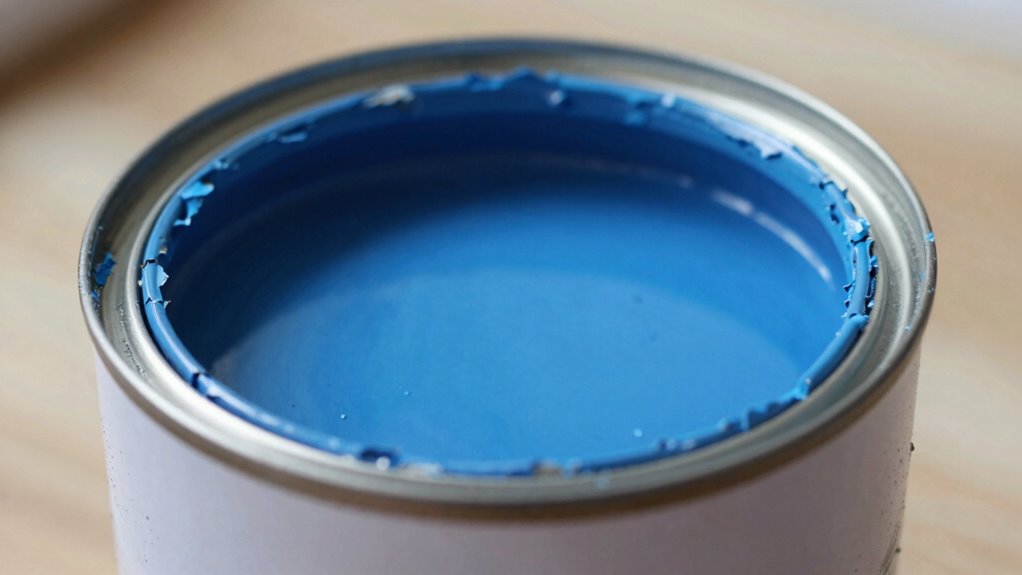
Have you ever wondered why straining paint makes such a difference, even when the can is brand new? It’s a common question, especially since new paint looks smooth and ready to go right out of the container. But despite its fresh appearance, paint can contain tiny imperfections or unwanted debris that can affect your project. Straining helps improve paint consistency, ensuring a smoother application and a more professional finish. When paint is free of lumps, dried paint particles, or other debris, it flows evenly across surfaces, reducing brush marks and uneven coverage. This is especially important if you’re working on a detailed project or a surface that requires a flawless look.
Straining new paint ensures smooth application and a flawless, professional finish.
Another crucial reason to strain paint is ensuring brush compatibility. Not all brushes are created equal, and some can be more sensitive to the quality of the paint you use. If the paint contains small clumps or dried bits, your brush may catch on these imperfections, causing streaks or uneven lines. Straining eliminates these tiny obstacles, allowing your brush to glide smoothly and evenly over the surface. This means you get better control, fewer brush strokes, and a cleaner, more consistent finish. Whether you’re using synthetic or natural bristle brushes, a smooth, debris-free paint makes your job easier and your results more professional.
You might think that since the paint is new, it’s already perfect. But even factory-sealed cans can contain tiny fragments of dried paint, dust, or other particles that aren’t visible to the naked eye. These imperfections can clog your brush or roller, making application more difficult and less uniform. Straining helps catch and remove these unwanted bits, giving you a cleaner, more manageable product. Plus, it prevents future issues like clogging or uneven drying, which can occur if debris is left in the paint. Regularly checking for paint impurities is an essential part of achieving a flawless finish, especially since the presence of contaminants can compromise the final appearance. Additionally, understanding the paint composition can help in selecting the right type of strainers for different paints and surfaces, ensuring optimal results.
Furthermore, the paint storage conditions can influence the amount of debris or impurities present in a new can, highlighting the importance of proper handling and inspection before use. In the end, straining paint is a simple step that significantly impacts your painting experience. It improves paint consistency, making it easier to work with and reducing messes. It also ensures better brush compatibility, leading to a smoother, more even application. Even with a brand-new can, taking the time to strain your paint guarantees a more professional-looking result and saves you time and frustration down the line. So, next time you open a fresh can, remember that a quick strain can make all the difference in achieving a perfect finish.
paint strainers for new paint cans
As an affiliate, we earn on qualifying purchases.
As an affiliate, we earn on qualifying purchases.
Frequently Asked Questions
Can Straining Paint Remove All Types of Impurities Effectively?
Straining paint effectively improves paint consistency and removes many impurities, but it can’t eliminate all types. Fine particles, dried paint lumps, or certain contaminants may still remain after filtering. You should recognize that some impurities are too small or stubborn for a standard filter. For best results, combine filtering with thorough mixing and proper storage. This approach guarantees smoother application and a more professional finish, even if some impurities persist.
Does the Paint’s Age Affect the Straining Process?
You might think paint’s age doesn’t matter, but it does impact the straining process. As paint ages, its consistency can change, making it thicker or prone to separation, which complicates straining. The shelf life of paint influences how well it flows through a strainer, ensuring impurities are removed effectively. So, fresh paint generally strains better, but older paint still benefits from straining to achieve a smooth, even finish.
What Tools Are Best for Straining New Paint?
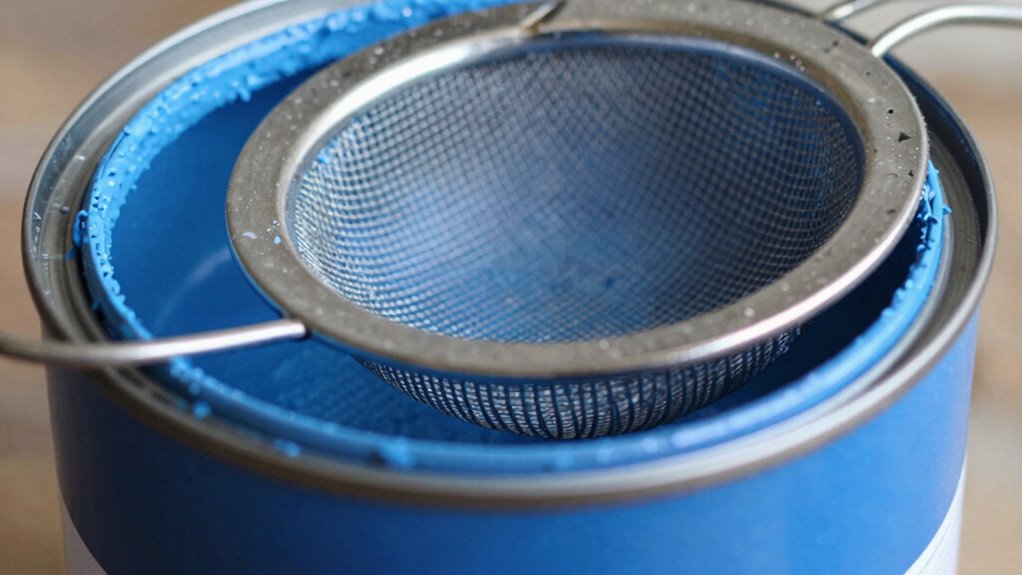
You should use a fine mesh paint strainer or a paint filter cone for straining new paint. These tools help you achieve a smooth paint consistency by catching debris and lumps, ensuring even application. When applying straining techniques, pour paint slowly through the filter, and stir gently afterward. This process prevents clogs and uneven coverage, giving you a professional finish with minimal effort.
How Often Should I Strain Paint During a Project?
You should strain your paint whenever the paint’s consistency seems uneven, lumpy, or if you notice debris or lumps settling at the bottom of the container. Regularly check and strain at least every few hours or whenever you start a new section to maintain a smooth finish. Keep your container clean and free of dried paint to prevent contamination, ensuring your paint remains free of clumps and easy to work with throughout your project.
Can Straining Improve the Paint’s Final Finish?
Straining paint is like a filter that catches the bumps and lumps, so yes, it can improve your final finish. By removing debris, you guarantee smooth brush techniques and consistent color throughout your project. This prevents unsightly bumps or streaks, giving your walls a polished look. When you strain paint, you’re smoothing the ride for your brush, resulting in a more professional, flawless finish that truly stands out.
Conclusion
Straining paint, even from a brand-new can, is like filtering a cloud before it hits the sky—removing tiny imperfections that could mar your masterpiece. As you pour through that fine mesh, you’re catching unseen debris, ensuring your brush glides smoothly over the wall. It’s a simple act that transforms fresh paint into a flawless canvas, turning potential flaws into a seamless finish. In doing so, you craft a surface that feels as smooth as silk under your hand.
Halloween Picks
halloween
As an affiliate, we earn on qualifying purchases.