
To prevent your pumps from freezing and getting damaged, thoroughly drain all water using a wet-dry vacuum or compressed air, and remove drain plugs if available. Clean and inspect your equipment, then dry it completely with a cloth or air. Store it in a cool, dry place off the ground, cover with breathable material, and organize your tools. Following these steps guarantees your pumps stay protected through winter—keep going to discover more tips for winterizing and storage.

Get business pricing on tools and workshop supplies
- Business-only prices and quantity discounts
- Tax-exempt purchasing
- Multiple users, one account, clear invoices
Key Takeaways
- Drain all water from pumps, hoses, and equipment using vacuum, compressed air, or drain plugs to prevent freezing damage.
- Thoroughly clean and inspect equipment for wear, then lubricate and apply anti-corrosion coatings before storage.
- Dry equipment completely with cloth or compressed air to prevent moisture retention and corrosion.
- Store pumps in a cool, dry, elevated location away from extreme temperatures, covered with breathable protective covers.
- Use moisture absorbers like silica gel, organize tools systematically, and create a maintenance checklist for proper winterization.
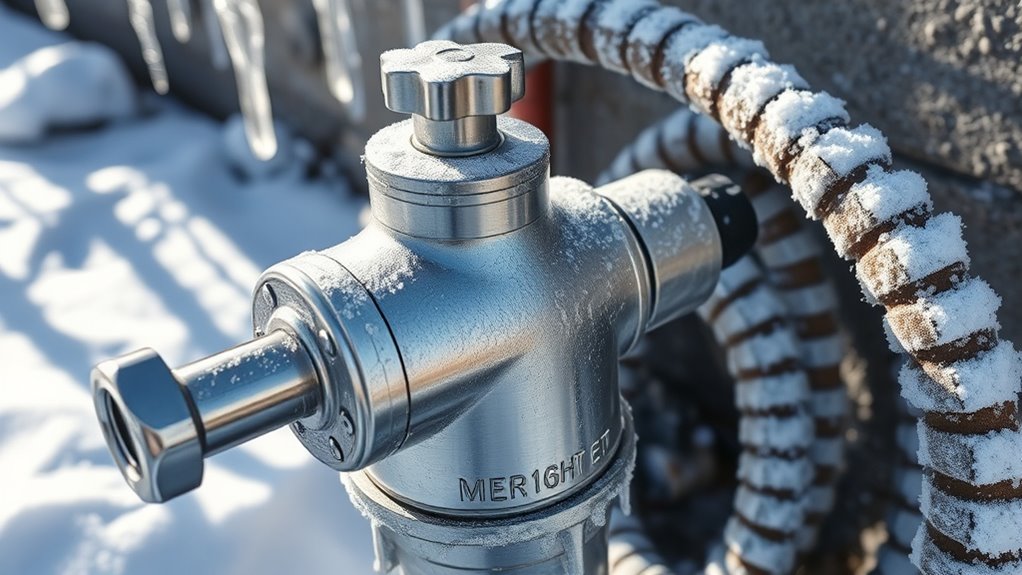
As winter approaches, preparing your equipment and belongings for the cold months ahead is essential. If you want to avoid the nightmare of frozen, damaged pumps, taking the right steps now can save you time, money, and frustration later. Start by thoroughly draining any water from your pumps, hoses, and related equipment. Water left inside can freeze, expand, and crack components, leading to costly repairs or replacements. Use a wet-dry vacuum or compressed air to blow out residual water from pipes and fittings, ensuring they’re completely dry. If your pump has a drain plug, remove it and let the water flow out; if not, disassemble parts where water could collect and drain them manually.
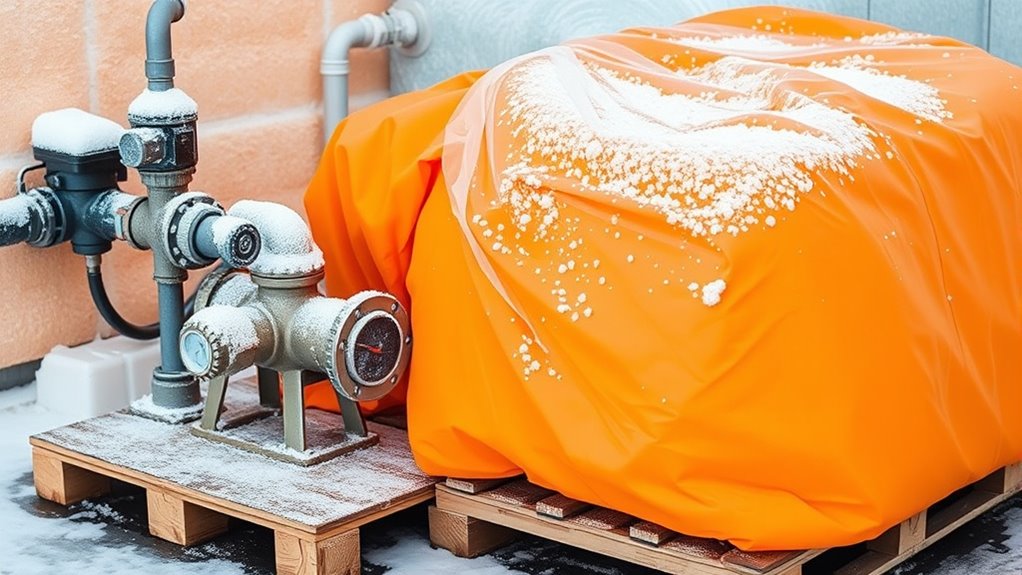
Drain all water from pumps and hoses to prevent freezing and damage.
Next, clean your equipment meticulously. Remove dirt, debris, and any residue that could cause corrosion or blockages during storage. For pumps, check for any signs of wear or damage, and repair or replace parts as needed. Lubricate moving parts with a suitable lubricant to prevent rust and guarantee smooth operation when you need to use the equipment again. Consider applying a protective coating or anti-corrosion spray to metal surfaces for extra defense against moisture and rust. After cleaning and lubricating, dry everything thoroughly with a clean cloth or compressed air to prevent moisture from lingering. Additionally, choosing the right storage conditions can significantly extend the lifespan of your equipment.
Proper storage is just as important as winterizing. Store your pumps and accessories in a cool, dry place that’s shielded from extreme temperature fluctuations and humidity. Avoid leaving equipment outdoors or in unheated garages, where exposure to moisture and freezing conditions can cause damage. Keep everything elevated off the floor, on shelving or pallets, to prevent contact with condensation or standing water. Cover your equipment with breathable covers to protect from dust and dirt while allowing airflow, preventing mold and corrosion.
Finally, create a checklist to make sure you don’t forget any steps. Label storage containers clearly so you can find your equipment easily when spring arrives. Consider adding silica gel packs or other moisture absorbers in storage areas to keep humidity levels low. If you have multiple pumps or tools, organize them systematically to make maintenance easier next season. By dedicating a little time now to properly winterize and store your equipment, you’ll guarantee it remains in prime condition, ready to perform when you need it again. You’ll thank yourself when spring rolls around and your gear is in perfect shape, avoiding the hassle and expense of dealing with frozen, damaged pumps.
As an affiliate, we earn on qualifying purchases.
Frequently Asked Questions
How Often Should I Winterize My Pump?
You should winterize your pump every fall before temperatures drop consistently below freezing. If you experience fluctuating weather, consider winterizing more often to prevent damage. Regularly check your pump during late fall to ensure it’s properly protected. If you use the pump frequently during winter, you might need to winterize it again if it’s exposed to cold weather. Staying proactive helps avoid costly repairs from frozen or damaged components.
Can I Winterize My Pump Myself?
Yes, you can winterize your pump yourself if you’re comfortable with basic DIY tasks. Start by turning off the power, draining all water, and removing any hoses or accessories. Follow the manufacturer’s instructions carefully, using the right tools and antifreeze if needed. With a little patience and attention to detail, you’ll protect your pump from freezing damage, saving money and ensuring it’s ready to go when spring arrives.
What Tools Are Needed for Winterizing?
You’ll need a few essential tools to winterize your pump effectively. Grab a wrench or pliers to disconnect hoses, a screwdriver for opening drain plugs, and a air compressor or hand pump to blow out remaining water. You might also need a garden hose to flush the system and RV antifreeze to prevent freezing. Having these tools ready makes winterizing easier, ensuring your pump stays protected all season.
How Do I Prevent Pipe Freezing During Storage?
You prevent pipe freezing during storage by draining all water from your pipes and hoses, then insulating them with foam or fiberglass sleeves. Keep your storage area heated above freezing temperatures, or use a portable heater if necessary. You should also seal any gaps or cracks that allow cold air in. Regularly check the area to make certain insulation stays intact and the temperature remains consistent.
When Is the Best Time to Start Winterizing?
You should start winterizing when temperatures consistently drop below freezing, usually in late fall. Coincidentally, it’s the time when you’ll notice the first frost, signaling that it’s time to act. By beginning early, you prevent damage from ice expansion. Don’t wait until the first snow; taking action now guarantees your pumps and pipes stay safe and functional all winter long.
Conclusion
Proper winterizing and storage can prevent your pump from freezing and suffering costly damage. Did you know that over 60% of pump failures in cold climates are caused by improper winter care? By following simple steps, you can keep your equipment safe and ready for use when spring arrives. Don’t wait until it’s too late—take action now to protect your investment and avoid the hassle and expense of repairs. Stay prepared, stay protected.
Halloween Picks
halloween
As an affiliate, we earn on qualifying purchases.