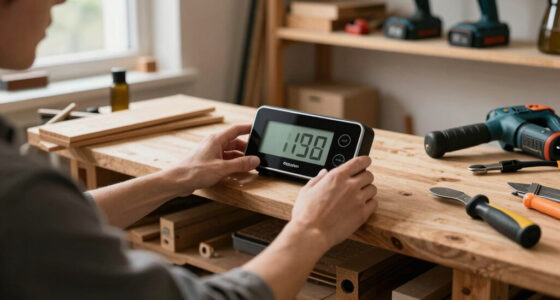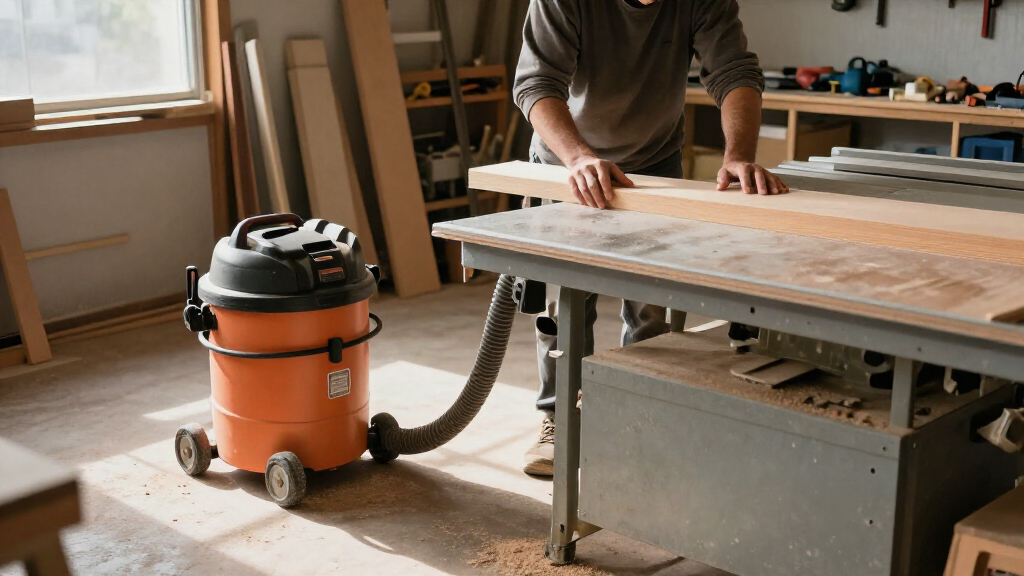

For a portable dust collector that can serve several woodworking machines, I’d start with the BUCKTOOL 1.5 HP Portable Dust Collector for its stated high airflow, while the POWERTEC DC5372 offers a simpler 1 HP option and the DYNAVEX 12-Gallon Extractor suits cleanup and tool connections. The lineup ranges from tabletop units for localized work to bag collectors and air filtration systems, so the right choice depends on what kind of dust you need to capture. Airflow figures alone do not tell the whole story: hose size, filter design, and your tool’s dust port all affect collection. Larger collectors can serve bigger machines but take up more room, while compact models trade capacity for easier placement. Read on for the full breakdown and a guide to matching a collector to your shop.

Get business pricing on tools and workshop supplies
- Business-only prices and quantity discounts
- Tax-exempt purchasing
- Multiple users, one account, clear invoices
Complete the kit


Key Takeaways
- The lineup serves different collection jobs: tabletop units target dust near a work surface, while bag collectors connect to woodworking machines and the OUKEETO filters airborne shop dust.
- BUCKTOOL leads on stated airflow: its 1.5 HP rating and 1,100–1,654 CFM range make it the high-capacity choice in this group, though setup and duct compatibility still matter.
- POWERTEC’s DC5372 and DC5371 share a 1 HP, 560 CFM specification: the portable model favors flexible placement, while the wall-mount version gives up mobility to save floor space.
- WEN’s models cover distinct shop sizes: the DC3401 and DC3474 are 12- and 15-gallon options, while the DC1300 is the higher-airflow, 14-amp choice for more demanding collection needs.
- Abestorm’s tabletop variants differ by convenience feature: dual-sided intake, an ionizer, or a timer may influence placement and operation, but none replaces source collection at a machine’s dust port.
| Abestorm Tabletop Dust Collector with Dual-Sided Intake for Woodworking |  | Best for Flexible Bench Placement | Airflow settings: 850 CFM and 1050 CFM | Filter: MERV-13 | Intake: Dual-sided | VIEW LATEST PRICE | See Our Full Breakdown |
| Abestorm Tabletop Dust Collector with Ionizer |  | Best for Added Air Treatment | Airflow settings: 850 CFM and 1050 CFM | Filter: MERV-13; stated service life up to 6 months | Additional air treatment: Ionizer | VIEW LATEST PRICE | See Our Full Breakdown |
| POWERTEC DC5372 Portable Dust Collector, 1 HP, 560 CFM, with 1-Micron Filter Bag |  | Best for Small Shops with 4-Inch Tool Ports | Motor: 1 HP induction motor | Airflow capacity: 560 CFM | Inlet size: 4 inches | VIEW LATEST PRICE | See Our Full Breakdown |
| DYNAVEX 10-Amp Portable Woodworking Dust Extractor, 12-Gallon |  | Best for Fine-Dust Capture with Tool Auto-Start | Motor: 1.5 HP | Airflow: 142 CFM | Tank capacity: 12 gallons | VIEW LATEST PRICE | See Our Full Breakdown |
| POWERTEC 1 HP Dust Collector with 1-Micron Filter Bags and Mobile Base (DC1081) |  | Best for Higher Airflow in a Portable Bag Collector | Motor power: 1 HP | Air suction capacity: 800 CFM | Filtration: 1 micron | VIEW LATEST PRICE | See Our Full Breakdown |
| POWERTEC DC5371 1 HP Wall-Mount Dust Collector, 560 CFM, with 1-Micron Filter Bag |  | Best Wall-Mount Pick | Model: DC5371 | Motor: 1 HP induction motor | Voltage and current: 120V/240V; 12A at 120V, 6A at 240V | VIEW LATEST PRICE | See Our Full Breakdown |
| OUKEETO Portable Woodworking Air Filtration System, 580–780 CFM |  | Best Compact Air Filtration | Model: FJ180 | Airflow settings: 580 or 780 CFM | Dimensions: 14.1 × 7.1 × 10.2 inches | VIEW LATEST PRICE | See Our Full Breakdown |
| Abestorm Tabletop Dust Collector with Timer for Woodworking Shops |  | Best for Timed Air Filtration | Model: DecDust 780S-FBA-US | Airflow settings: 580 or 780 CFM | Dimensions: 14.57 × 9.45 × 11.81 inches | VIEW LATEST PRICE | See Our Full Breakdown |
| WEN DC3474 Woodworking Dust Collector with 15-Gallon Bag |  | Best for Larger Dust Loads | Model: DC3474 | Motor: 7.4-amp induction motor | Impeller: 9 inches | VIEW LATEST PRICE | See Our Full Breakdown |
| WEN DC3401 12-Gallon Woodworking Dust Collector |  | Best Compact Mobile Collector | Model: DC3401 | Motor: 5.7-amp brushed motor | Airflow: Up to 660 CFM | VIEW LATEST PRICE | See Our Full Breakdown |
| BUCKTOOL 1.5 HP Portable Dust Collector, 1100–1654 CFM |  | Best for Two-Machine Hookups | Motor: 1.5 HP | Airflow: 1,100 CFM; up to 1,654 CFM with 6-inch duct connection | Ports: Dual 4-inch ports; 6-inch main inlet | VIEW LATEST PRICE | See Our Full Breakdown |
| WEN DC1300 1,300 CFM 14-Amp Woodworking Dust Collector |  | Best for High-Capacity Chip Collection | Airflow: 1,300 CFM | Motor: 14 amp | Filter: 5 micron | VIEW LATEST PRICE | See Our Full Breakdown |
| PSI Woodworking DC725 Portable Tabletop Dust Collector |  | Best for Bench-Top Detail Work | Airflow: Up to 725 CFM | Fans: Three computer-grade fans | Motor voltage: 110 V | VIEW LATEST PRICE | See Our Full Breakdown |
| portable dust collectors for woodworking | Weight | Filter | Dimensions | Motor |
|---|---|---|---|---|
| Abestorm Tabletop Dust Collect | 22.3 pounds | MERV-13 | 13.77 x 11.81 x 11.81 inches | — |
| Abestorm Tabletop Dust Collect | 21.2 pounds | MERV-13; stated service life up to 6 months | 11.81 x 11.81 x 13.78 inches | — |
| POWERTEC DC5372 Portable Dust | 43.6 pounds | Reusable 1-micron cloth bag | — | 1 HP induction motor |
| DYNAVEX 10-Amp Portable Woodwo | 29.9 pounds | 0.5-micron HEPA | 15.75 x 15.75 x 24.4 inches | 1.5 HP |
| POWERTEC 1 HP Dust Collector w | 55 pounds | — | — | — |
| POWERTEC DC5371 1 HP Wall-Moun | — | Reusable 1-micron cloth bag | — | 1 HP induction motor |
| OUKEETO Portable Woodworking A | 15.89 lb | — | 14.1 × 7.1 × 10.2 inches | — |
| Abestorm Tabletop Dust Collect | 19.96 pounds | MERV-13; listed life up to six months | 14.57 × 9.45 × 11.81 inches | — |
| WEN DC3474 Woodworking Dust Co | 41.1 pounds | — | 43.3 × 17.7 × 20.1 inches | 7.4-amp induction motor |
| WEN DC3401 12-Gallon Woodworki | 17 pounds | — | 34.25 × 13 × 14.2 inches | 5.7-amp brushed motor |
| BUCKTOOL 1.5 HP Portable Dust | 125.3 pounds | — | — | 1.5 HP |
| WEN DC1300 1,300 CFM 14-Amp Wo | — | 5 micron | — | 14 amp |
| PSI Woodworking DC725 Portable | 25.4 pounds | — | — | — |
More Details on Our Top Picks
Abestorm Tabletop Dust Collector with Dual-Sided Intake for Woodworking
The dual-sided intake gives this Abestorm more placement flexibility than its single-unit tabletop format might suggest: it can draw air from either side while sitting near a bench or work area. Its two settings, 850 and 1050 CFM, let a woodworker choose between lower and higher airflow, and the 120-minute timer can keep it running after a dusty task without constant attention. Compared with the POWERTEC DC5372, this is an air-filtration unit rather than a collector that connects directly to a tool’s 4-inch dust port, so it suits airborne dust around a work area better than chips at the source. The tradeoff is that a tabletop air cleaner cannot replace tool-connected collection, and it needs an AA battery for its switch and timer.
Pros:- Dual-sided intake allows flexible positioning near a work area
- Two airflow settings provide a choice between 850 and 1050 CFM
- Timer runs for up to 120 minutes
- Metal housing includes a handle and cord wrap for transport and storage
Cons:- Does not connect directly to a woodworking tool for source capture
- The switch and timer require an AA battery
- Cannot be shipped to California
Best for: Woodworkers who want movable, bench-side air filtration with intake access from either side
Not ideal for: Shops needing a direct hose connection to capture sawdust and chips at a machine
- Airflow settings:850 CFM and 1050 CFM
- Filter:MERV-13
- Intake:Dual-sided
- Timer:Up to 120 minutes
- Dimensions:13.77 x 11.81 x 11.81 inches
- Weight:22.3 pounds
- Electrical requirements:115 V, 0.59 A
- Power source:AC
Our verdict“Choose this Abestorm for flexible tabletop air filtration around a bench, but choose the POWERTEC DC5372 if you need hose-connected collection at a tool.”
Abestorm Tabletop Dust Collector with Ionizer
This Abestorm combines tabletop airflow filtration with an ionizer, giving it a different emphasis from the dual-sided Abestorm: the ionizer is the distinguishing extra, while the listed airflow settings and MERV-13 filter handle the main air-cleaning job. At 21.2 pounds, it remains movable between a garage bench and a renovation area, and its 120-minute timer helps it run through a cleanup period. Compared with the POWERTEC DC1081, it is aimed at circulating and filtering air near the work, while the POWERTEC’s 4-inch intake and bags are intended to collect dust and chips through a hose. That distinction matters: this unit is not a substitute for source collection. It also requires a corded outlet, and the filter may need replacing after up to six months.
Pros:- Ionizer adds an air-treatment feature alongside MERV-13 filtration
- Two airflow settings offer 850 CFM and 1050 CFM
- Timer runs up to 120 minutes
- Handle and cord wrap support moving and storing the unit
Cons:- Corded operation limits placement to areas near an outlet
- Filter may need replacement after up to six months
- Does not provide hose-connected dust collection at a tool
Best for: Garage and small-shop woodworkers who want portable air filtration with an ionizer for general work-area cleanup
Not ideal for: Users who need a dust collector that hooks directly to a saw, sander, or planer
- Airflow settings:850 CFM and 1050 CFM
- Filter:MERV-13; stated service life up to 6 months
- Additional air treatment:Ionizer
- Timer:Up to 120 minutes
- Dimensions:11.81 x 11.81 x 13.78 inches
- Weight:21.2 pounds
- Power cord length:11.5 feet
- Electrical requirements:115 V, 0.59 A
Our verdict“Pick this model if an ionizer is a priority for portable work-area filtration; choose the POWERTEC DC1081 for collecting chips through a tool hose.”
POWERTEC DC5372 Portable Dust Collector, 1 HP, 560 CFM, with 1-Micron Filter Bag
The POWERTEC DC5372 is a tool-connected collector for shops built around a 4-inch hose, rather than an ambient air cleaner like either Abestorm tabletop model. Its 1 HP induction motor moves 560 CFM, and the reusable 1-micron bag has a viewing window and bottom zipper to make fill level checks and emptying more manageable. Casters help move its 43.6-pound frame among compatible machines. Compared with the POWERTEC DC1081, the DC5372 has lower stated airflow but includes the viewing window and dual-voltage motor; the DC1081 lists 800 CFM and may suit buyers prioritizing more airflow. The DC5372’s 4-inch inlet also limits compatibility, and the inlet grate needs regular inspection because debris can clog it.
Pros:- Reusable 1-micron cloth filter bag reduces reliance on disposable bags
- Viewing window helps monitor the bag without opening it
- Casters make the 43.6-pound collector easier to reposition
- Dual-voltage motor supports 120 V or 240 V operation
Cons:- The 4-inch inlet requires a compatible hose and tool port
- Debris can collect at the inlet grate, which needs regular inspection
- Its stated 560 CFM is lower than the POWERTEC DC1081’s 800 CFM
Best for: Small-shop woodworkers with machines that use a compatible 4-inch dust port and who want a reusable filter bag
Not ideal for: Owners of tools without a 4-inch hose connection or anyone seeking room-wide ambient air filtration
- Motor:1 HP induction motor
- Airflow capacity:560 CFM
- Inlet size:4 inches
- Filter:Reusable 1-micron cloth bag
- Voltage:120 V / 240 V
- Current:12 A at 120 V; 6 A at 240 V
- Motor speed:3450 RPM
- Weight:43.6 pounds
Our verdict“Choose the DC5372 for a compact shop with 4-inch ports and a preference for a reusable, viewable filter bag; choose the DC1081 if higher listed airflow is the priority.”
DYNAVEX 10-Amp Portable Woodworking Dust Extractor, 12-Gallon
The DYNAVEX takes a different route from the bag-style POWERTEC DC5372: it pairs a 0.5-micron HEPA filter with a 12-gallon tank and an auto-start outlet for a connected tool. That makes it a practical match for sawing, sanding, or routing when a woodworker wants the extractor to start with the tool and contain finer particles than the DC5372’s 1-micron bag. Its 142 CFM airflow is far below the POWERTEC DC1081’s stated 800 CFM, so this is a hose-connected extractor for individual tools, not a high-volume collector for multiple machines. Buyers should also account for the 550 W linked-tool limit and one-hour continuous linked-use limit; these constrain which tools and work sessions fit.
Pros:- 0.5-micron HEPA filter is specified for fine-particle capture
- Auto-start linked switch synchronizes operation with a connected tool
- 12-gallon steel tank reduces emptying frequency
- Wheels and included hose adaptors support shop mobility and connection options
Cons:- Linked tools are limited to 550 W
- Continuous linked operation is limited to one hour
- At 142 CFM, it has much lower stated airflow than the POWERTEC DC1081
Best for: Woodworkers using compatible lower-wattage portable tools who want HEPA filtration and automatic start-stop operation
Not ideal for: Users connecting tools above 550 W, needing linked operation beyond one hour, or collecting from high-volume stationary machines
- Motor:1.5 HP
- Airflow:142 CFM
- Tank capacity:12 gallons
- Filter:0.5-micron HEPA
- Linked tool limit:550 W
- Continuous linked use:Up to 1 hour
- Dimensions:15.75 x 15.75 x 24.4 inches
- Weight:29.9 pounds
Our verdict“Choose the DYNAVEX for fine-dust extraction with compatible portable tools and automatic start, but look to the higher-airflow POWERTEC DC1081 for larger collection demands.”
POWERTEC 1 HP Dust Collector with 1-Micron Filter Bags and Mobile Base (DC1081)
Among the two POWERTEC bag collectors here, the DC1081 has the higher stated airflow: 800 CFM compared with the DC5372’s 560 CFM. Its 4-inch intake, 1 HP motor, and wheeled base make it a fit for woodworkers moving one collector among compatible machines and handling sawdust or chips through a hose. The 1-micron filter and collection bags use quick-release clamps, which make bag changes more straightforward than a setup that requires more involved fastening. The tradeoff is a 55-pound unit that requires assembly and is specified for indoor use. It also lacks the DC5372’s stated viewing window and dual-voltage detail, so buyers who value those features may prefer the smaller-capacity sibling.
Pros:- 800 CFM is higher than the DC5372’s stated 560 CFM
- Wheeled mobile base supports movement between compatible tools
- 1-micron filter and collection bags are included
- Quick-release clamps simplify bag changes
Cons:- At 55 pounds, it is heavier than the DC5372
- Assembly is required
- Designed for indoor use
Best for: Indoor workshop owners who move a 4-inch hose collector between machines and prioritize higher listed airflow
Not ideal for: Woodworkers who need a lightweight tabletop air cleaner, outdoor use, or a collector with a viewing window on the filter bag
- Motor power:1 HP
- Air suction capacity:800 CFM
- Filtration:1 micron
- Intake port:4 inches
- Voltage:120 V / 240 V
- Motor speed:3450 RPM
- Weight:55 pounds
- Wheels:4
Our verdict“Choose the DC1081 for higher listed airflow in a wheeled, indoor 4-inch hose setup; choose the DC5372 if lower weight and a bag viewing window matter more.”
POWERTEC DC5371 1 HP Wall-Mount Dust Collector, 560 CFM, with 1-Micron Filter Bag
The POWERTEC DC5371 suits a small shop where floor space matters more than moving a collector from tool to tool. Its wall, workbench, or floor mounting gives it more placement flexibility than the wheeled WEN DC3474, while its 560 CFM airflow and 4-inch inlet are aimed at connecting to one woodworking machine. The reusable 1-micron filter bag has a viewing window and bottom zipper, so checking fill level and emptying it are straightforward. That compact setup comes with limits: the inlet grate can catch debris and needs clog checks, and the listed 80 dB noise level may be intrusive indoors. Choose it for a fixed machine and a clear mounting spot; the WEN DC3474 is a better fit if you need a larger bag and casters.
Pros:- Can be mounted on a wall, workbench, or floor
- Reusable 1-micron filter bag has a viewing window and bottom zipper
- 560 CFM airflow through a 4-inch inlet suits a single-machine connection
- Includes mounting bracket and hardware
Cons:- The inlet grate can collect debris and needs regular clog checks
- Listed noise level of 80 dB may be loud in an indoor workshop
- One speed offers no airflow adjustment
Best for: Woodworkers with a small shop who want to mount a collector near one machine and keep floor space open.
Not ideal for: Shops that frequently move dust collection between machines or need a quieter collector for shared indoor spaces.
- Model:DC5371
- Motor:1 HP induction motor
- Voltage and current:120V/240V; 12A at 120V, 6A at 240V
- Airflow:560 CFM
- Inlet:4 inches
- Filter:Reusable 1-micron cloth bag
- Noise level:80 dB
- Mounting options:Wall, workbench, or floor
Our verdict“Choose the DC5371 when compact mounting and a reusable 1-micron bag matter more than mobility or quieter operation.”
OUKEETO Portable Woodworking Air Filtration System, 580–780 CFM
The OUKEETO FJ180 is for capturing airborne dust around a bench, rather than collecting chips through a machine hose. Its benchtop format and handle make it easier to reposition than the nearly 20-pound Abestorm DecDust 780S, and its two airflow settings let you choose between 580 and 780 CFM. The HEPA and carbon filter is rated to capture 99.5% of 0.3-micron particles, a different job from the WEN DC3401’s 12-gallon bag, which collects dust at a tool connection. That distinction matters: this unit can help filter workshop air but does not replace source collection at a saw or sander. The manufacturer recommends replacing its filter about every four months, adding ongoing upkeep. Pick it for localized air filtration and portability; skip it if you need a collection bag for machine debris.
Pros:- Portable benchtop design includes a handle
- Two airflow settings: 580 and 780 CFM
- HEPA and carbon filter is rated for 99.5% capture of 0.3-micron particles
- Glass baffle is included
Cons:- Filter replacement is recommended about every four months
- Does not provide a dust port or collection bag for direct tool hookup
- Short 5.9-foot power cord can limit placement
Best for: Woodworkers who need a portable benchtop air filter for airborne fine dust near carving or sanding work.
Not ideal for: Buyers looking for a 4-inch machine hookup and collection bag to capture chips at the source.
- Model:FJ180
- Airflow settings:580 or 780 CFM
- Dimensions:14.1 × 7.1 × 10.2 inches
- Weight:15.89 lb
- Electrical requirements:115 V, 60 Hz, 1.5 A
- Filter efficiency:Rated to capture 99.5% of 0.3 μm particles
- Filter replacement guidance:Approximately every four months
- Power cord:5.9 ft
Our verdict“Choose the OUKEETO for movable fine-particle filtration near a workbench, not as a substitute for a tool-connected dust collector.”
Abestorm Tabletop Dust Collector with Timer for Woodworking Shops
The Abestorm DecDust 780S adds hands-free run time control to a portable tabletop air filtration setup. Its timer can run for up to 120 minutes, useful when you want filtration to continue after a carving or sanding session without leaving the unit on indefinitely. Compared with the lighter OUKEETO FJ180, this model offers a longer 11.5-foot cord and an auxiliary outlet for linking another unit, but its 19.96-pound weight makes frequent repositioning less appealing. Two settings, 580 and 780 CFM, pair with a MERV-13 filter listed to last up to six months. Like the OUKEETO, it filters workshop air rather than collecting dust through a 4-inch machine port. This is a practical choice for a benchtop station with scheduled cleanup; it is less suited to a shop that needs source capture or a very light unit.
Pros:- Timer can be set for up to 120 minutes
- Two airflow settings provide 580 or 780 CFM
- 11.5-foot cord includes a side wrap for storage
- Auxiliary outlet can link additional units
Cons:- At 19.96 pounds, it is heavier to move than the OUKEETO FJ180
- MERV-13 filter is listed to last up to six months, so it needs periodic replacement
- No machine dust port or collection bag is specified
Best for: Home-shop woodworkers who want a tabletop air filter with a timer and longer cord for a fixed work area.
Not ideal for: People who need a lightweight unit to carry between stations or a collector that hooks directly to woodworking tools.
- Model:DecDust 780S-FBA-US
- Airflow settings:580 or 780 CFM
- Dimensions:14.57 × 9.45 × 11.81 inches
- Weight:19.96 pounds
- Electrical requirements:115V, 0.9A
- Power:100 watts
- Filter:MERV-13; listed life up to six months
- Timer:Up to 120 minutes
- Power cord:11.5 ft
Our verdict“Choose this Abestorm for scheduled tabletop air filtration and a longer cord, provided its weight and filter upkeep fit your shop.”
WEN DC3474 Woodworking Dust Collector with 15-Gallon Bag
For a shop making more chips between bag changes, the WEN DC3474 pairs up to 600 CFM with a 15-gallon, 5-micron collection bag. Its swivel casters and carrying handle make it easier to roll between machines than the wall-oriented POWERTEC DC5371, and the optional wall mount gives a fixed setup another configuration. The tradeoff is its size: at 43.3 inches tall and 41.1 pounds, it takes more room and effort to reposition than the compact WEN DC3401. Both WEN models use a 4-inch connection, so this collector suits tools set up for that port rather than small hoses without adapters. The 5-micron bag is less fine than the POWERTEC’s 1-micron filter bag. I’d choose the DC3474 when bag capacity and shop mobility lead the decision.
Pros:- Moves up to 600 CFM
- 15-gallon zippered collection bag reduces how often it needs emptying
- Swivel casters and carrying handle support movement around the shop
- Optional wall mounting provides another setup
Cons:- The 5-micron bag is less fine than the POWERTEC DC5371’s 1-micron bag
- Its 43.3-inch height and 41.1-pound weight take up space and make repositioning harder
- Wall mounting requires removing the wheels
Best for: Woodworkers with a 4-inch machine connection who want a mobile collector and a larger bag for longer sessions.
Not ideal for: Small-shop owners who need a compact footprint or buyers who prioritize a finer-rated bag filter.
- Model:DC3474
- Motor:7.4-amp induction motor
- Impeller:9 inches
- Airflow:Up to 600 CFM
- Dust port:4 inches
- Collection bag:15 gallons, 5-micron zippered bag
- Dimensions:43.3 × 17.7 × 20.1 inches
- Weight:41.1 pounds
- Warranty:2 years
Our verdict“Choose the DC3474 when a larger collection bag and rolling mobility matter more than a compact footprint or finer bag rating.”
WEN DC3401 12-Gallon Woodworking Dust Collector
The WEN DC3401 stands out for packing a wheeled, bag-based collector into a 17-pound frame. Its listed airflow reaches 660 CFM, more than the larger-bag DC3474’s 600 CFM, while the 12-gallon, 5-micron bag holds less and may need more frequent emptying. Lockable swivel casters and a carrying handle make it easier to move around a small shop than the 41.1-pound DC3474. An optional wall mount gives owners a way to free up floor space when the collector can stay near one machine. The limits are straightforward: it has a single speed and a standard 4-inch port, so there is no airflow adjustment and tool compatibility depends on that connection. This is the better WEN choice for compact mobility; choose the DC3474 for greater bag capacity.
Pros:- Listed airflow reaches up to 660 CFM
- 17-pound weight and carrying handle support repositioning
- Four lockable swivel casters help keep it in place during use
- Optional wall mount and two-year warranty
Cons:- 12-gallon bag holds less than the WEN DC3474’s 15-gallon bag
- Single speed offers no airflow adjustment
- Uses a standard 4-inch dust port
Best for: Small-shop woodworkers who want a light collector they can roll between machines with 4-inch dust ports.
Not ideal for: Users who need a larger collection bag, multiple speed settings, or a connection smaller than 4 inches without an adapter.
- Model:DC3401
- Motor:5.7-amp brushed motor
- Airflow:Up to 660 CFM
- Dust port:4 inches
- Collection bag:12 gallons, 5 microns
- Dimensions:34.25 × 13 × 14.2 inches
- Weight:17 pounds
- Wheels:Four lockable swivel casters
- Warranty:Two years
Our verdict“Choose the DC3401 for a compact, mobile 4-inch collector, and move up to the DC3474 if longer runs between bag emptying matter more.”
BUCKTOOL 1.5 HP Portable Dust Collector, 1100–1654 CFM
The BUCKTOOL DC1100 is the strongest fit here for a shop that wants to serve two machines from one collector: it has dual 4-inch ports and a 6-inch main inlet, with airflow listed at 1,100 CFM and up to 1,654 CFM through that larger connection. Its internal baffle separates heavier chips before they reach the filter, while filtration captures up to 98% of 5-micron particles. Compared with the WEN DC1300, BUCKTOOL lists a higher peak airflow, but WEN specifies a 50-gallon bag and four swivel casters. The tradeoff is substantial: at 125.3 pounds, the mobile stand helps with repositioning but does not make this a lightweight collector. Its 220 V requirement also narrows compatibility, so check your shop power before choosing it.
Pros:- Dual 4-inch ports can serve two woodworking machines.
- Airflow is listed at 1,100 CFM, with up to 1,654 CFM through the 6-inch inlet.
- Internal baffle separates heavier chips before they reach the filter.
- Mobile stand supports moving it between shop stations.
Cons:- At 125.3 pounds, it is heavy to reposition.
- The listed 220 V requirement limits use in shops without compatible power.
Best for: Woodworkers with compatible 220 V power who want to connect two machines and move a high-airflow collector between stations.
Not ideal for: Small-shop owners who need a lightweight collector or only have standard 110–120 V outlets.
- Motor:1.5 HP
- Airflow:1,100 CFM; up to 1,654 CFM with 6-inch duct connection
- Ports:Dual 4-inch ports; 6-inch main inlet
- Filtration:Captures up to 98% of 5-micron particles
- Weight:125.3 pounds
- Voltage:220 V AC
- Warranty:1-year limited
Our verdict“Choose the BUCKTOOL if your shop has 220 V power and needs a mobile, dual-port collector with high listed airflow.”
WEN DC1300 1,300 CFM 14-Amp Woodworking Dust Collector
The WEN DC1300 suits a workshop that produces plenty of chips and wants fewer interruptions to empty the collector. Its 50-gallon bag offers more collection capacity than the BUCKTOOL’s listed product data specifies, and the 1,300 CFM rating, 10-inch steel impeller, and dual 4-inch inlets make it a substantial option for connecting woodworking tools. Four swivel casters help it move around the shop, though its indoor-use design makes it a workshop fixture rather than an outdoor solution. Compared with the BUCKTOOL DC1100, WEN has a lower stated peak airflow but gives buyers a defined large bag and a two-year warranty. Its single-speed operation means less control over airflow, so it is a better match for straightforward collection than for users who want adjustable settings.
Pros:- 50-gallon bag holds substantial chip volume between emptying.
- Dual 4-inch inlets allow connection to two tools.
- Four swivel casters make it easier to reposition around an indoor shop.
- Two-year warranty.
Cons:- Single-speed operation offers no airflow adjustment.
- Designed for indoor use.
Best for: Indoor workshop owners who generate substantial chips and want a large collection bag with connections for two tools.
Not ideal for: Woodworkers who need variable speed, outdoor use, or a collector suited to frequent transport between separate work sites.
- Airflow:1,300 CFM
- Motor:14 amp
- Filter:5 micron
- Collection bag:50 gallons
- Inlets:Two 4-inch
- Impeller:10-inch steel; up to 3,450 RPM
- Mobility:Mobile base with four swivel casters
- Warranty:2 years
Our verdict“Pick the WEN DC1300 if a large bag and indoor mobility matter more to your shop than adjustable speed.”
PSI Woodworking DC725 Portable Tabletop Dust Collector
For carving, sanding, grinding, and woodburning at a workbench, the PSI DC725 fills a different role from the larger BUCKTOOL and WEN collectors. Its three quiet fans provide up to 725 CFM, while clear polycarbonate panels help direct airborne debris toward the filter. The self-contained, 25.4-pound unit is sized for tabletop work, and variable speed gives the operator more control than the single-speed WEN DC1300. Two grounded outlets add convenient connections at the bench. The tradeoff is reach: this is designed for small projects, not for ducting multiple full-size machines or handling a high chip volume. Its listed cabinet dimensions also vary across product information, so check the fit before setting aside a permanent bench spot.
Pros:- Self-contained format is suited to workbench and tabletop projects.
- Three quiet fans provide up to 725 CFM of airflow.
- Variable speed allows airflow adjustment for different bench tasks.
- Includes a filter and two grounded outlets.
Cons:- Designed for small projects rather than large-machine collection.
- Listed weight and cabinet dimensions vary across product information.
Best for: Carvers, woodburners, and detail sanders who need a movable collector focused on a single bench or tabletop work area.
Not ideal for: Woodworkers seeking central collection for large machines, multiple stations, or heavy chip production.
- Airflow:Up to 725 CFM
- Fans:Three computer-grade fans
- Motor voltage:110 V
- Running current:1.29 A
- Weight:25.4 pounds
- Listed dimensions:23 × 8 × 10.5 inches; cabinet dimensions vary by source
- Filter size:10 × 20 inches
- Outlets:Two grounded 115 V outlets
- Warranty:2 years under normal use
Our verdict“Choose the PSI DC725 for quiet, adjustable collection at a detail-work bench, and look to the WEN or BUCKTOOL for larger machines.”

How We Picked
I compared the 13 listed products by the job each is designed to do: collecting chips at a machine, extracting dust through a tool hose, or filtering airborne particles in the room. I weighed stated airflow and motor details alongside collection capacity, portability, mounting style, filter or bag design, and features that affect day-to-day use. Where the supplied product information did not include a specification, I avoided treating it as established.
The ranking reflects fit across common woodworking setups, not a single airflow contest. A machine collector ranks well when it combines useful capacity with manageable placement; a tabletop or room-filtration unit earns a place for a more focused role. I also account for tradeoffs: higher airflow can call for larger hoses and more space, while compact designs may serve only one work area. Buyers should confirm current specifications and port compatibility before choosing.
Factors to Consider When Choosing Portable Dust Collectors For Woodworking
Before choosing a model, I’d identify where dust escapes and which machines create the most of it. A collector connected to a tool and a unit that cleans airborne dust solve different problems, so matching the system to the task matters more than choosing the biggest number on a label.
Match the collector to the dust source
Start by listing the machines you plan to connect and checking whether each has a dust port. A collector with a hose connection can capture dust and chips at the source, while a tabletop collector is aimed at a smaller, nearby work zone. Room air filtration can help with particles that remain suspended after work, but it does not replace a well-fitted machine connection. A common mistake is buying one compact air cleaner and expecting it to handle a planer or saw’s chip output. If several machines produce different kinds of waste, decide which one needs dedicated collection first. That choice will guide capacity, hose size, and placement.
Read airflow alongside the connection size
Airflow ratings are useful for comparing models, but they do not show how well a collector will perform through your actual hose and fittings. Narrow hoses, long runs, sharp bends, and adapters can reduce the flow reaching a tool. Check the diameter of the machine port and the collector inlet before purchase, then consider how many bends the route requires. A higher CFM model may be a better fit for larger machines, yet it can be awkward if your setup relies on small ports and long tubing. Avoid choosing by the biggest stated number alone. A short, compatible connection often makes more practical sense than an elaborate run that restricts airflow.
Choose capacity around your work rhythm
Bag or bin capacity affects how often you stop to empty the collector and how much space it occupies when full. A smaller container can suit occasional projects and a tight shop, while frequent milling or multiple connected tools can fill it quickly. Think about the material you process and how often you want to pause for disposal. Also check how the bag attaches and whether the filter needs regular cleaning; awkward maintenance can make a capable unit less convenient. Bigger capacity is not automatically better if the collector blocks a walkway or is difficult to move. Plan for both the empty and full footprint.
Plan portability as a shop-layout decision
Portable can mean a unit on wheels, a compact collector you carry, or a system that can be mounted out of the way. Consider whether you will move the collector between machines during a session or leave it beside one tool. A mobile base helps with floor placement but still needs clearance for hoses and access to the collection bag. Wall-mounted units save floor space, though they are less convenient to reposition and require a suitable mounting location. Small tabletop models are easy to place near detailed work but have a narrower role. Measure doorways, storage areas, and the route between machines before settling on a format.
Separate source capture from room filtration
Woodworking dust includes both larger chips and finer airborne particles, and one device may not handle both jobs well. Source collection removes much of the material as it leaves a machine; room filtration circulates shop air to catch some of what escapes. If fine dust control is a priority, look closely at the filter specification and how the unit seals around the filter or bag. An ionizer or timer can add convenience to a tabletop or filtration unit, but those features do not establish its capture performance. Buyers sometimes focus on air-cleaning claims while leaving a machine port unconnected. Treat filtration as one part of a dust-control setup.
Pay for capacity and convenience you can use
A more powerful collector makes sense when your tools and duct layout can use its airflow, or when you regularly process material that quickly fills a smaller bag. For light bench work, occasional cleanup, or a cramped workspace, a compact model may be easier to live with than a large machine. Budget for the full setup: compatible hose, fittings, bags, filters, and any mounting hardware can affect the practical cost and effort. Check whether consumables are easy to source and whether the collection system is simple to empty. Beginners often benefit most from straightforward connections and accessible maintenance. Spend extra when it solves a real limit in your current setup, such as insufficient capacity or poor portability.
Frequently Asked Questions
Can a tabletop dust collector replace a machine dust collector?
Usually, it serves a different role. The Abestorm and PSI tabletop models are designed for localized collection near a work surface, while bag collectors connect to tools that produce chips and dust at a port. A tabletop unit may suit sanding or small bench tasks, depending on the work area and the model’s capture design. It is unlikely to manage the volume from a planer or table saw as effectively as a properly connected machine collector. Match the device to the source before expecting one unit to cover the whole shop.
Is the highest CFM model automatically the best choice for a small shop?
No. The BUCKTOOL lists the highest airflow range in this roundup, but the shop still needs compatible ports, practical hose routing, and space for the unit. A smaller collector can be more convenient when it will serve one machine through a short connection. Large stated airflow does not guarantee the same flow at the tool after restrictions from hose diameter and fittings. Compare the machine’s needs and your layout before treating CFM as the deciding factor. Also account for the noise, storage, and handling of a larger system.
Should I choose a wall-mount collector or a mobile model?
Choose based on how often you move between tools and how limited your floor space is. The POWERTEC DC5371 is wall-mounted, while the DC5372 is the portable counterpart with the same stated 1 HP and 560 CFM figures. A fixed mount can free floor area near a regular workstation, but it may require a longer hose run to reach other machines. A mobile model offers flexible placement but needs room to park and move it. Measure the route and connection distance for your most-used tools before deciding.
Do I need both a dust collector and an air filtration unit?
They address different parts of dust control, so some shops may benefit from both. A collector attached to a machine captures chips and dust close to where they are made, while an air filtration system circulates room air to capture some particles that escape. The OUKEETO is listed as an air filtration system, so it should not be treated as a substitute for a tool connection. Start with source capture for the machines that create the most waste, then consider room filtration for lingering airborne dust. Filter performance and shop layout should guide that second purchase.
How should I choose between the WEN DC3401, DC3474, and DC1300?
Compare their intended scale and collection details rather than treating the three as interchangeable. The DC3401 is listed with a 12-gallon capacity, the DC3474 with a 15-gallon bag, and the DC1300 with 1,300 CFM and a 14-amp motor. The larger listed capacities may reduce emptying frequency, while the DC1300’s airflow specification may appeal to buyers with more demanding collection needs. The available information here does not establish every connection or filter detail, so check the manufacturer’s current specifications against your tools. Your port sizes, available space, and expected dust volume should settle the choice.
Conclusion
For a general-purpose machine setup, I’d choose the BUCKTOOL 1.5 HP collector as the best overall pick in this lineup, based on its stated airflow range. For value-minded buyers who want a more modest machine collector, the POWERTEC DC5372 is a straightforward 1 HP option; choose the DC5371 instead if wall mounting better suits the shop. The WEN DC1300 is the premium-style choice here for buyers prioritizing its higher stated airflow, while the WEN DC3401 offers beginners a 12-gallon format to evaluate for a smaller setup. For specialized needs, pick an Abestorm or PSI tabletop model for focused bench work and the OUKEETO for room air filtration. Confirm port fit, filter details, and available space before making the final call.
Fall yard work Picks
leaf blowers
As an affiliate, we earn on qualifying purchases.