
To choose the right hose length and diameter, focus on your specific tasks and space. Use a longer hose for bigger areas but keep in mind that it may cause pressure drops, so consider a larger diameter for high-volume needs. Light-duty tasks suit smaller, lightweight hoses, while heavy-duty jobs require thicker, reinforced options. Compatibility and connector types also matter for secure fitting. Keep these principles in mind to guarantee safe and efficient operation as you learn more.
Key Takeaways
- Determine the task’s flow rate and pressure needs to choose appropriate hose diameter.
- Match hose length to your workspace to minimize pressure loss and handling difficulty.
- Select durable materials suited for your environment and usage frequency.
- Use compatible connectors that secure hoses and prevent leaks for your specific application.
- Balance hose diameter and length to ensure manageable weight and optimal flow performance.
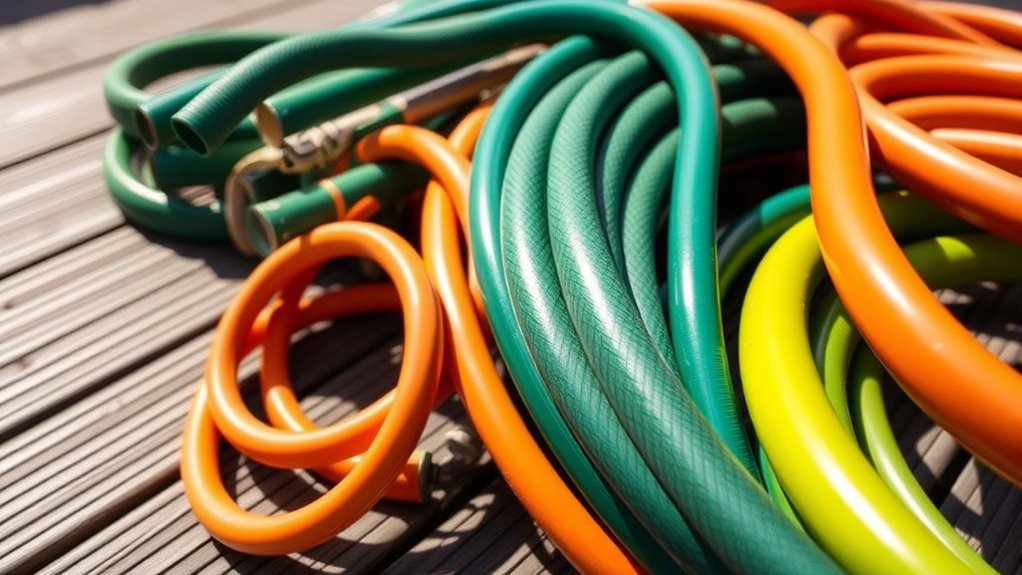
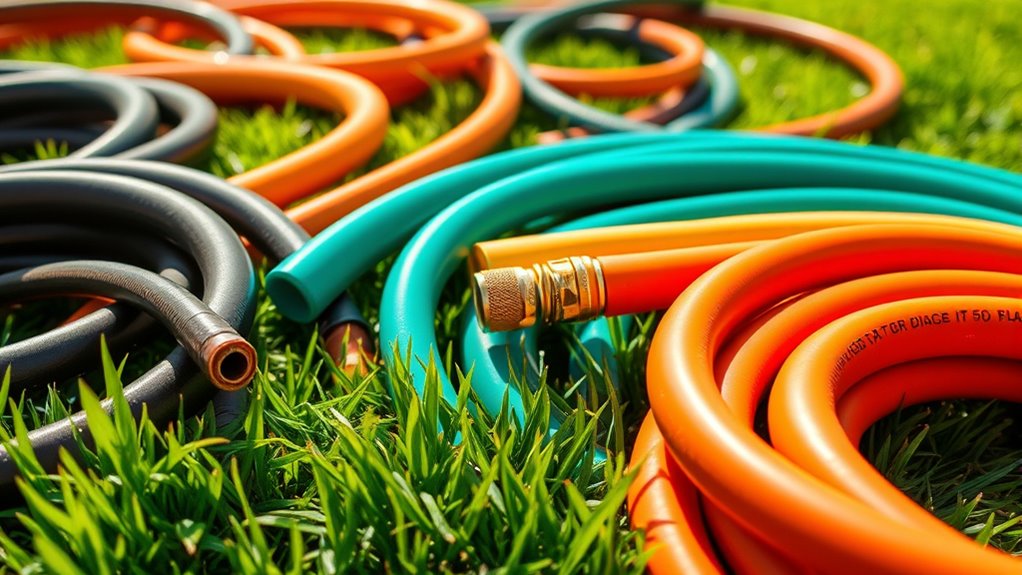
Choosing the right hose length and diameter is essential for ensuring efficient and safe operation, whether you’re watering your garden, fueling equipment, or handling industrial tasks. When selecting a hose, one of the first considerations is understanding how the hose material influences performance. Different materials, such as rubber, vinyl, or reinforced plastics, offer varying levels of durability, flexibility, and resistance to chemicals or weather conditions. For example, rubber hoses tend to be more durable and suited for heavy-duty use, while vinyl hoses are lightweight and easier to maneuver for light watering tasks. Your choice of hose material impacts how well the hose withstands wear and tear, which directly relates to safety and long-term cost savings. Compatibility with various brands ensures flexibility in choices and reliable connections across different equipment types. Equally important is choosing the correct connector types, as these ensure a secure and leak-free connection between your hose and other equipment. Connectors come in various forms, including threaded, quick-connect, or camlock fittings. Threaded connectors are common for garden hoses, providing a tight seal that prevents leaks and detachment during use. Quick-connect fittings allow for fast attachment and detachment, making them ideal if you frequently switch between different hoses or tools. Camlock fittings are often used in industrial settings, providing reliable connections for high-volume or high-pressure tasks. Selecting the right connector type depends on your specific application, but always prioritize quality to avoid leaks, which can cause equipment damage or safety hazards. When considering hose diameter, you need to balance flow rate with pressure loss. A wider diameter allows more water or fluid to flow through with less resistance, making it suitable for tasks that require high volume, such as irrigation or industrial fluid transfer. However, larger diameters also mean heavier hoses, which can be cumbersome to handle, especially over long distances. Conversely, narrower hoses are lighter and more manageable but may restrict flow and increase pressure loss, which can reduce efficiency. The length of your hose also influences this choice; longer hoses tend to experience more pressure drop, so opting for a slightly larger diameter can compensate for this and maintain consistent flow. Understanding how pressure loss varies with hose diameter and length can help optimize your setup’s efficiency. Ultimately, selecting the right hose length and diameter involves understanding your specific needs and the environment in which you’ll use the hose. Consider the material for durability and compatibility with your tasks, look at the connector types for secure fittings, and choose a diameter that balances flow capacity with handling ease. Making these informed decisions ensures your hose setup is safe, efficient, and built to last.

Flexi Hose with 8 Function Nozzle, 100FT – Lightweight Expandable Garden Hose, No-Kink Flexibility, 3/4 Inch Solid Brass Fittings and Double Latex Core
- Automatic Expansion: Expands to 100FT with water flow
- Reliable Brass Fittings: 3/4 inch solid brass connectors
- Durable Lightweight Design: 3750D outer fabric with latex layers
As an affiliate, we earn on qualifying purchases.
As an affiliate, we earn on qualifying purchases.
Frequently Asked Questions
How Do Temperature Fluctuations Affect Hose Performance?
Temperature fluctuations can impact your hose by causing thermal expansion, which may lead to increased pressure resistance demands. As temperatures rise, the hose material expands, potentially weakening its structure if not designed for such changes. Conversely, cold temperatures can make hoses more rigid and prone to cracking. To guarantee ideal performance, choose hoses with materials that accommodate thermal expansion and maintain pressure resistance across temperature ranges.
What Are the Best Materials for Specific Liquids?
Imagine your hose as a loyal conduit, delivering liquids smoothly. For specific liquids, you need materials that match their nature. Use materials like rubber or reinforced plastics for chemical resistance and material compatibility, ensuring the hose withstands corrosive or abrasive substances. This prevents leaks and damage, keeping your operation safe and efficient. Choose wisely, and your hose becomes a reliable, resilient pathway for your liquids, no matter what you’re transferring.
How Often Should Hoses Be Inspected or Replaced?
You should inspect your hoses regularly, ideally every 3 to 6 months, to guarantee safe hose maintenance. Check for signs of wear, cracks, leaks, or bulges, and replace hoses immediately if you notice any damage. Proper inspection frequency helps prevent failures and prolongs hose life. Consistent maintenance keeps your system running smoothly, reduces downtime, and minimizes safety risks associated with worn or damaged hoses.
Can Hoses Be Customized for Unique Applications?
Your needs are as unique as a snowflake, and yes, hoses can be customized for your specific applications. With custom hose manufacturing and bespoke hose solutions, you get exactly what you need, whether it’s special fittings, materials, or lengths. This tailored approach ensures peak performance and durability, making your setup efficient and reliable. Don’t settle for one-size-fits-all when personalized hoses can better serve your exact requirements.
What Safety Precautions Are Necessary When Installing Hoses?
When installing hoses, you should prioritize hose safety and follow installation precautions to prevent accidents. Always wear protective gear and inspect hoses for damage before use. Make certain connections are secure and compatible with the system to avoid leaks or bursts. Keep hoses away from heat, sharp objects, or moving parts, and avoid kinking or twisting them. Properly anchoring hoses reduces strain, ensuring safe, reliable operation and reducing risk during installation.
Conclusion
Choosing the right hose length and diameter is like finding the perfect fit for a puzzle piece—you’ll enjoy a seamless connection and smooth operation. Remember, a hose that’s too long or too narrow can turn your task into a tangled mess, while the right size feels like it was made just for you. Take your time, measure carefully, and select wisely—your garden or workspace will thank you with effortless performance and fewer headaches down the line.