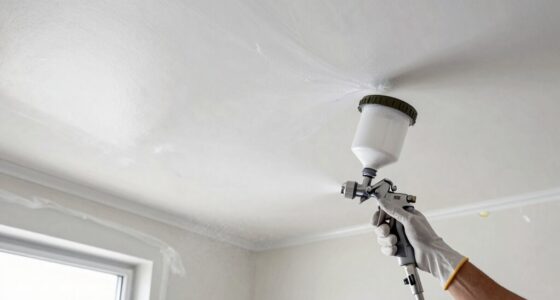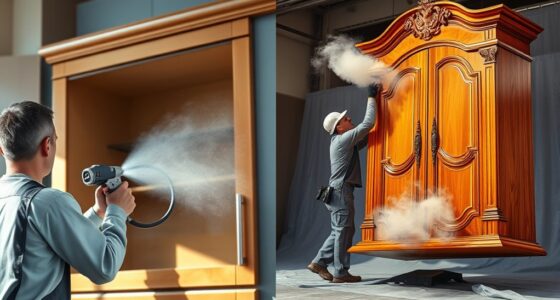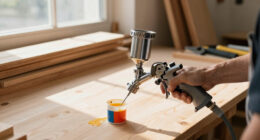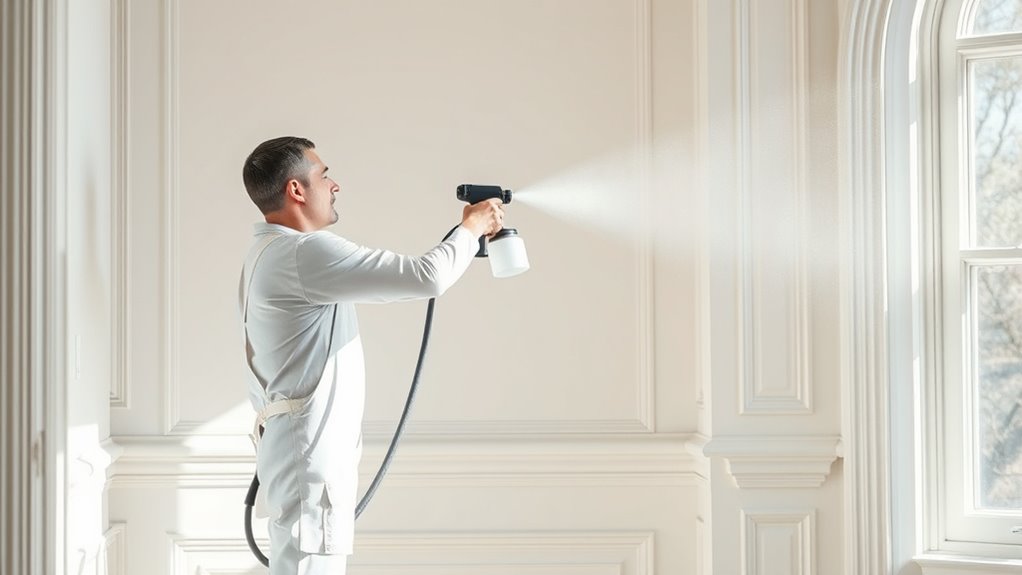

Spraying wainscoting and paneling offers a fast, efficient way to achieve a smooth, professional finish. By controlling your spray distance, angle, and movement, you can prevent drips and overspray while ensuring even coverage on all surfaces. Proper surface prep and adjusting your spray gun settings are key to a flawless result. Master these techniques, and you’ll save time while getting a high-quality coat. Keep going to discover more tips for perfect spraying.
Key Takeaways
- Prepare the surface thoroughly to ensure optimal paint adhesion and a smooth finish.
- Practice spray techniques on scrap wood to master control over distance, angle, and movement.
- Adjust spray gun pressure and nozzle settings for even coverage and minimal overspray.
- Keep a consistent distance of 6-12 inches from the surface during application.
- Test paint color on hidden areas or scrap to verify color match and prevent surprises.
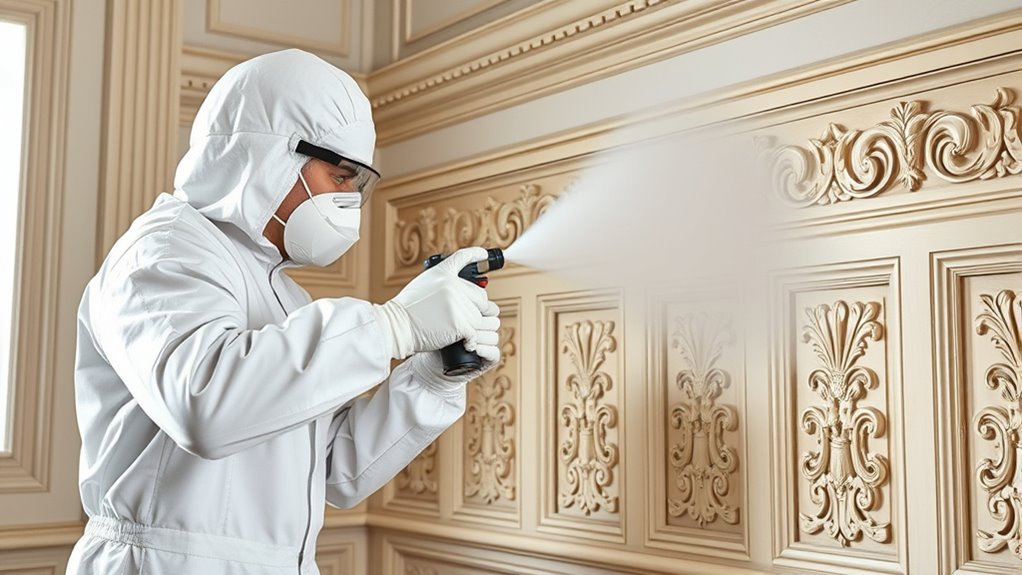
Spraying wainscoting and paneling is one of the fastest and most efficient ways to achieve a smooth, professional finish. When you decide to spray, you’re taking a modern approach that offers consistency and speed, especially compared to brush or roller application. To get the best results, focus on mastering spray techniques, which involve controlling your distance, angle, and movement to prevent drips, uneven coverage, or overspray. Proper technique ensures you cover every nook and cranny evenly, giving your panels a sleek, uniform appearance. Before you begin, practice on a scrap piece of wood to get comfortable with the spray pattern and pressure settings. This step helps you avoid costly mistakes on your actual project. Additionally, understanding paint adhesion and surface preparation can significantly impact the durability and quality of your finish.
Color matching plays an essential role when spraying wainscoting and paneling, especially if you’re blending new paint with existing finishes or aiming for a specific hue. To achieve an accurate color match, start by selecting high-quality, compatible paints and test them under the same lighting conditions as your project. Keep in mind that spray application can intensify or slightly alter colors, so it’s wise to do a small test spray on a hidden area or scrap before committing to the entire surface. Adjust your spray gun’s pressure and nozzle to fine-tune the finish; too much pressure can cause overspray, while too little may result in uneven coverage. Consistency is key—maintain a steady hand and keep a uniform distance from the surface, typically around 6-12 inches, depending on your spray gun’s specifications.
HVLP spray gun for furniture and paneling
As an affiliate, we earn on qualifying purchases.
As an affiliate, we earn on qualifying purchases.
Frequently Asked Questions
How Long Does Spray-Painted Wainscoting Typically Last?
Spray-painted wainscoting usually lasts around 5 to 10 years, depending on the durability of the paint you choose and how well you maintain it. To keep it looking fresh, you’ll want to clean it regularly and touch up any chips or scratches. Using high-quality paint and proper preparation can extend its lifespan, reducing maintenance requirements and ensuring your wainscoting stays vibrant and protected over time.
Can I Spray Paint Over Existing Stained Paneling?
Yes, you can spray paint over existing stained paneling. First, you need to prep the paneling by cleaning, sanding, and applying a primer suitable for stained surfaces. Use proper spray paint techniques, such as maintaining consistent distance and even strokes, to achieve a smooth finish. This approach helps the paint adhere well and guarantees a professional look, giving your paneling a fresh new appearance.
What Type of Primer Is Best for Spraying Wainscoting?
You should use a high-quality, bonding primer that’s compatible with your surface to guarantee good adhesion. For spraying, opt for a primer with a smooth, even consistency that works well with your spray technique. This helps prevent drips and uneven coverage. Make sure to follow the manufacturer’s instructions for best results, and always test a small area first to confirm compatibility and finish before tackling the entire surface.
How Do I Prevent Overspray on Adjacent Surfaces?
Think of overspray as a sneaky painter’s ghost. To keep it at bay, you’ll want to master masking techniques—cover adjacent surfaces with painter’s tape and plastic sheeting. Use protective coverings to shield floors and furniture. Spray with controlled, steady strokes, keeping the nozzle at a consistent distance. This way, you’ll prevent overspray from haunting your beautiful wainscoting, and your project will look flawless.
Is Special Equipment Needed for High-Quality Spray Application?
You don’t necessarily need special equipment for high-quality spray application, but choosing the right spray gun types matters. Use a sprayer with adjustable settings to control paint flow and atomization. Also, verify the paint viscosity is correct; too thick or thin paint can affect finish quality. Investing in a good-quality spray gun and properly thinning your paint helps you achieve a smooth, even coat with minimal overspray.
Conclusion
Spraying wainscoting and paneling is a quick, efficient way to achieve a flawless finish. Did you know that spray painting can save you up to 50% of the time compared to traditional brush methods? With the right technique, you’ll enjoy a smooth, professional look that enhances your space effortlessly. So go ahead—grab your sprayer and transform your panels into stunning, showroom-quality features in no time!