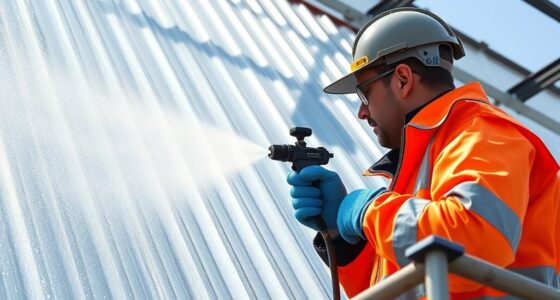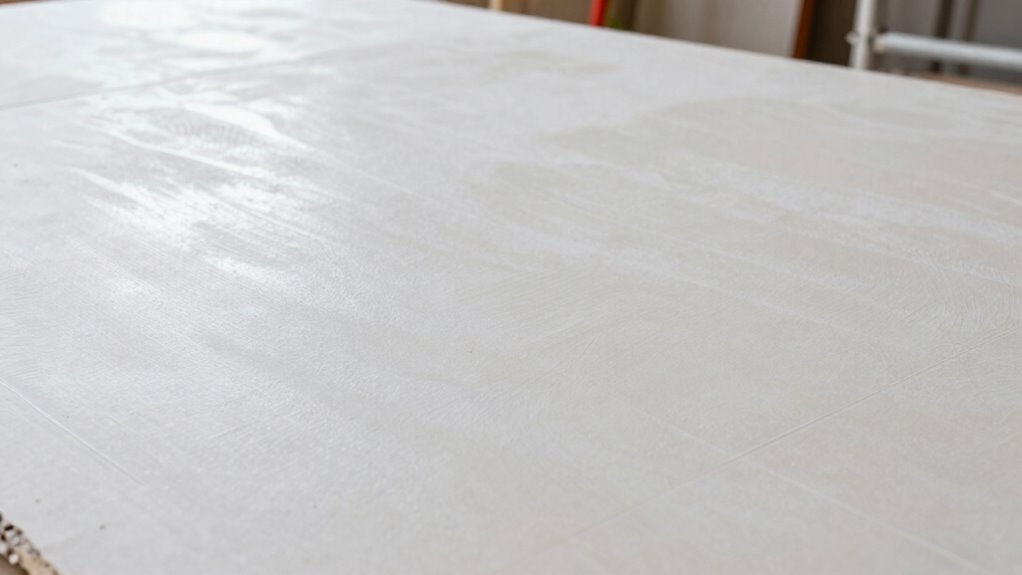

To prevent flashing on new drywall, start with a high-quality, stain-blocking or bonding primer designed for drywall surfaces. Clean and sand the drywall to make certain a dust-free, smooth base. Apply a thin, even coat of primer using a brush or roller, following the manufacturer’s recommended drying time. Ensure full coverage without drips or thick patches. Proper priming creates a uniform surface that minimizes color inconsistencies, and maintaining these steps can make a noticeable difference as you proceed. Keep going to learn more.

Get business pricing on tools and workshop supplies
- Business-only prices and quantity discounts
- Tax-exempt purchasing
- Multiple users, one account, clear invoices
Key Takeaways
- Ensure drywall is clean, dust-free, and fully dry before priming to promote proper adhesion.
- Choose a high-quality, stain-blocking or bonding primer suitable for new drywall surfaces.
- Apply the primer evenly with a brush or roller, avoiding drips and thick patches.
- Follow manufacturer’s recommended drying times before painting to prevent flashing.
- Inspect the primed surface for uniform coverage and touch up any uneven areas before painting.

Applying drywall primer is a essential step in preparing your surface for paint, ensuring better adhesion and a smooth finish. When you’re working with new drywall, proper paint preparation begins with selecting the right primer type. There are several primer options available, each designed to address specific surface conditions. For new drywall, a high-quality, stain-blocking primer can help seal the surface and create an even base for your paint. Knowing the differences in primer types—such as bonding primers, stain-blocking primers, and multi-purpose primers—enables you to pick the best fit for your project, preventing issues like flashing or uneven coverage down the line.
Choosing the correct primer type is important because it influences how well your paint adheres and how smooth the final finish will look. For new drywall, a standard latex primer often suffices, but if you’re dealing with specific concerns like uneven texture or residual construction dust, a bonding or primer-sealer may be more effective. These primers penetrate deep into the drywall surface, filling in tiny imperfections and providing a uniform base. Using the right primer type not only improves paint adhesion but also helps prevent flashing—those unsightly patches or variations that appear when the paint dries unevenly. Applying the proper primer creates a consistent foundation, reducing the need for multiple coats of paint and minimizing the risk of color inconsistencies. Additionally, understanding paint adhesion principles can help you achieve a more durable and professional-looking finish.
Before applying primer, make sure your drywall surface is clean, dust-free, and free of any loose debris. Use a brush or roller suited for smooth application, and follow the manufacturer’s instructions regarding drying times. Proper paint preparation involves applying an even coat of primer, avoiding drips or thick patches that could lead to flashing. If you’re working with a large area, a roller provides faster coverage, but smaller brushes are handy for edges and corners. Once the primer is dry, lightly inspect the surface for any missed spots or uneven areas, and touch up as needed before moving on to the paint. This extra step guarantees a flawless finish and prevents issues like flashing from occurring later.
As an affiliate, we earn on qualifying purchases.
Frequently Asked Questions
How Long Should the Primer Cure Before Applying Paint?
You should wait at least 24 hours for the primer to dry completely before applying paint. Proper drywall preparation involves allowing the primer to fully cure to ensure a smooth, even finish. Keep in mind, drying times can vary based on humidity and temperature, so check the primer’s instructions. Rushing this step can lead to adhesion issues or flashing, so patience during primer drying is crucial for a professional look.
Can the Primer Workflow Be Adjusted for Different Drywall Brands?
Think of drywall brands like different musical instruments; each needs a unique approach. You can adjust the primer workflow to suit various drywall brand compatibility, but pay attention to primer formulation differences. I once matched a high-quality primer with a budget drywall, and the result was uneven coverage. To avoid this, test primers on small areas first, adjusting application techniques to guarantee consistent adhesion and finish across brands.
What Tools Are Essential for the Primer Application Process?
You’ll need essential tools like a high-quality roller, brushes, and a sprayer for primer application. Choose the right primer types based on your drywall and surface needs, then apply using proper techniques to guarantee even coverage and prevent flashing. A roller helps cover large areas quickly, while brushes target corners and edges. Using these tools and techniques ensures a smooth, consistent primer coat that promotes better paint adhesion.
How Does Humidity Affect the Primer Workflow Effectiveness?
Humidity issues can turn your primer workflow into a disaster zone! High humidity makes your drywall soak up primer like a sponge, causing uneven absorption and risking flashing. Low humidity, on the other hand, can make the primer dry too fast, leading to poor adhesion. You need to control humidity levels carefully to guarantee smooth application, prevent uneven primer absorption, and achieve a flawless finish every time.
Are There Environmentally Friendly Primer Options Available?
Yes, eco-friendly primers are available that suit your environmentally conscious choices. You can find environmentally friendly options made with low or zero VOCs, water-based formulas, and biodegradable ingredients. These primers work effectively to prepare drywall while minimizing environmental impact. When selecting a primer, look for labels indicating eco friendliness, and choose brands committed to sustainability. This way, you protect the environment without compromising on quality or performance.
Conclusion
Think of this primer workflow like a trusty shield, much like Achilles’ armor, guarding your drywall from the sneaky foe of flashing. By following these steps, you’re ensuring a smooth, flawless finish that lasts. Don’t forget, even heroes need preparation, and with this process, you’re setting yourself up for victory—no surprises, just a professional look that stands the test of time. Now, go conquer your drywall project with confidence!
Fall yard work Picks
leaf blowers
As an affiliate, we earn on qualifying purchases.