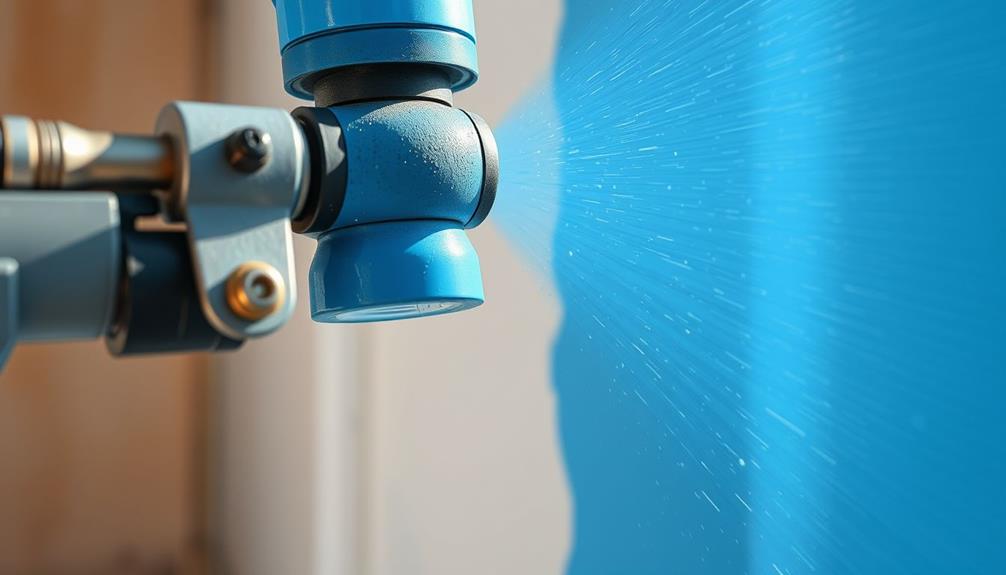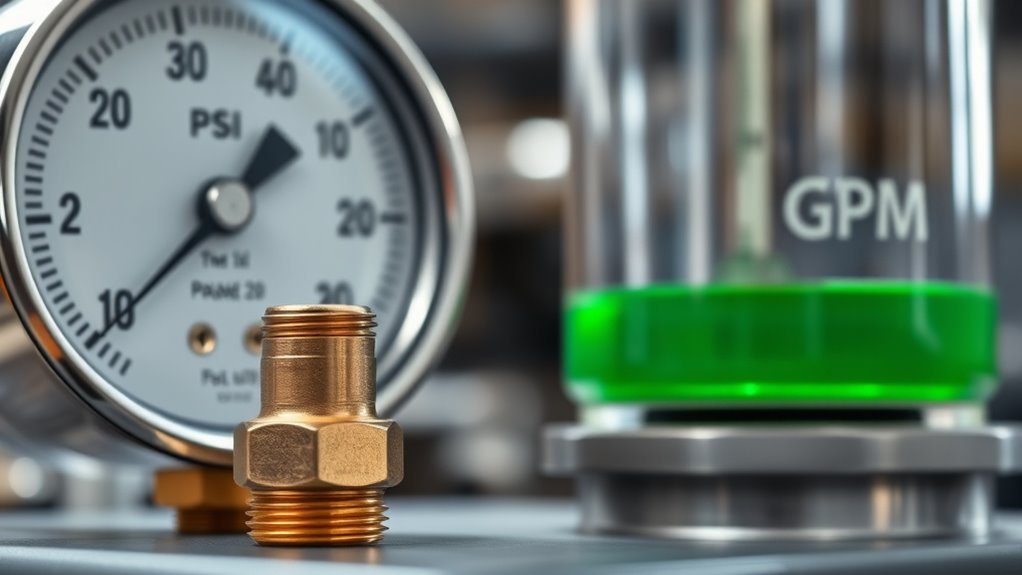

Understanding PSI, GPM, and tip orifice size is key to optimizing your spray performance. PSI controls the force of the liquid, affecting spray fineness and reach, while GPM determines how much fluid flows through the nozzle for coverage speed. The orifice size influences both flow and spray pattern. Balancing these specs guarantees efficient, accurate application without waste or overspray. Keep exploring to discover how adjusting these factors can improve your results even further.

Get business pricing on tools and workshop supplies
- Business-only prices and quantity discounts
- Tax-exempt purchasing
- Multiple users, one account, clear invoices
Key Takeaways
- Proper calibration of PSI, GPM, and orifice size ensures optimal spray pattern, coverage, and material efficiency.
- Higher PSI increases atomization and spray reach but can cause overspray or damage if not controlled.
- GPM determines flow volume; matching it to application needs prevents waste and ensures even coverage.
- Orifice size influences flow rate and droplet size, affecting spray quality and the required PSI for optimal performance.
- Balancing these specs is essential for precise, efficient, and effective spraying, reducing waste and surface issues.

Have you ever wondered how PSI, GPM, and tip orifice size work together to influence spray performance? These three factors are core to understanding how your equipment functions and how effectively it applies coatings, pesticides, or other liquids. Grasping their relationship helps you choose the right nozzle for the job, ensuring ideal results while avoiding waste or damage.
Start with PSI, or pounds per square inch. Think of it as the pressure that forces the liquid out of the nozzle. Higher PSI means more force, which generally results in a finer spray, increased reach, and better atomization. But cranking up the pressure isn’t always better; it can cause overspray, drift, or even damage to surfaces if not calibrated properly. Lower PSI reduces force, leading to larger droplets and less coverage, but it can be useful for delicate applications or when precision is more important than distance.
Higher PSI delivers finer spray and greater reach but risks overspray and damage if not calibrated properly.
Next, consider GPM, gallons per minute. This measures how much liquid flows through the nozzle per minute at a given pressure. A higher GPM indicates more volume, meaning you can cover larger areas faster. However, if your GPM is too high for the task, it might cause runoff, waste, or uneven coating. Conversely, a low GPM conserves material and is suitable for spot treatments or detailed work, but it might slow down larger projects.
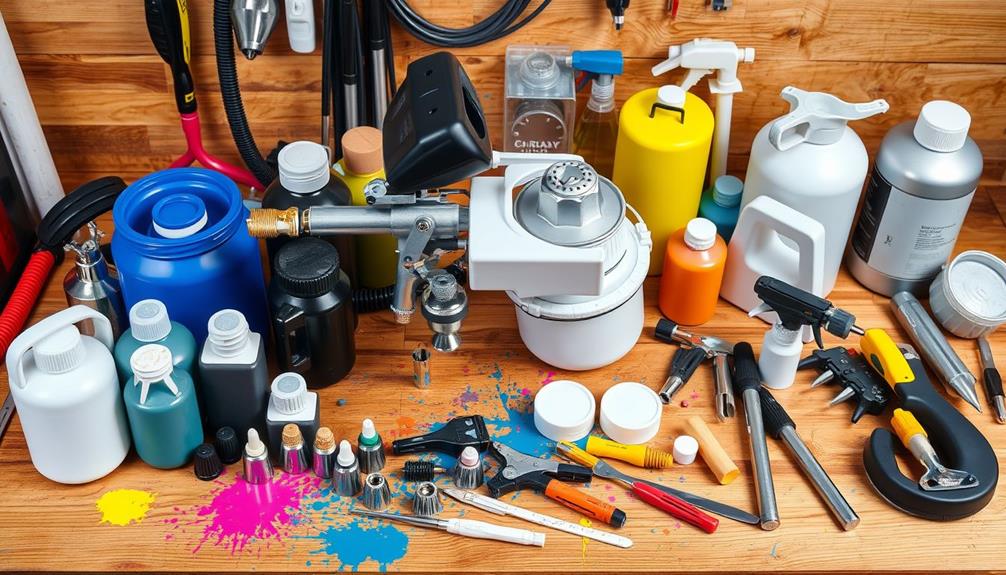
Tip orifice size directly impacts both PSI and GPM. The orifice is the tiny opening through which the liquid passes, and its size determines how much liquid flows at a certain pressure. A larger orifice allows more liquid to pass, increasing GPM at the same PSI, but it may produce a coarser spray. A smaller orifice produces finer droplets and a more controlled spray, but requires higher pressure to achieve the desired flow rate. Essentially, the orifice size acts as a regulator; selecting the right size depends on your desired spray pattern, coverage, and the nature of the material you’re applying.
When you combine these factors, the key is balance. A nozzle with the right orifice size, operating at the appropriate PSI, will produce the GPM needed for your specific application. Too high or too low, and your spray won’t perform as expected. Understanding how these specs interact allows you to fine-tune your equipment, improve efficiency, and get better results without waste or overspray. Proper nozzle selection and adjusting these parameters accordingly can significantly enhance your spraying tasks. So, next time you’re selecting a nozzle or adjusting your equipment, keep PSI, GPM, and tip orifice size in mind—they’re the critical specs that truly matter for spray performance.
adjustable spray nozzle for paint
As an affiliate, we earn on qualifying purchases.
As an affiliate, we earn on qualifying purchases.
Frequently Asked Questions
How Do Temperature Changes Affect PSI and GPM Readings?
Temperature changes can considerably impact your PSI and GPM readings. When the temperature rises, the fluid expands, causing pressure to increase and flow rates to potentially decrease. Conversely, cooler temperatures contract the fluid, reducing pressure and possibly increasing flow. You should regularly monitor temperature fluctuations and adjust your equipment accordingly, ensuring accurate readings and ideal performance. Always consider temperature effects to maintain precise control and safety during operation.
Can Tip Orifice Size Be Adjusted During Operation?
Yes, you can adjust the tip orifice size during operation if your equipment allows it. Many sprayers or nozzles feature adjustable or interchangeable tips, enabling you to change the orifice size on the fly. Just make certain you follow the manufacturer’s instructions carefully to avoid damaging the equipment or affecting the spray pattern. Always double-check your settings after making adjustments to maintain ideal performance and safety.
What Safety Precautions Are Necessary When Working With High PSI?
Think of working with high PSI like taming a wild beast—you must respect its power. Always wear proper protective gear, including goggles and gloves, to shield yourself from sudden bursts. Confirm all equipment is in good condition and securely connected. Never bypass safety valves or attempt repairs while pressurized. Keep a safe distance during operation, and have emergency shut-off procedures ready. Your safety depends on honoring the force you’re handling.
How Do Different Fluid Types Impact PSI and GPM Calculations?
Different fluid types markedly impact your PSI and GPM calculations because each fluid has unique properties like viscosity, density, and compressibility. Heavier or more viscous fluids require higher pressure to flow at the same rate, while lighter or less viscous fluids flow more easily. You need to adjust your calculations accordingly, considering these factors to guarantee accurate pressure and flow measurements, and to maintain safe and efficient operation.
Are There Industry Standards for Acceptable Tip Orifice Wear?
Yes, industry standards exist for acceptable tip orifice wear, and you should regularly inspect your equipment. Typically, manufacturers recommend replacing or refurbishing tips when wear reaches a certain percentage, often around 10-15%, to maintain performance and safety. Adhering to these standards helps ensure consistent spray quality, prevents equipment damage, and complies with safety regulations. Always consult your equipment’s specific guidelines and industry best practices for precise maintenance intervals.
Conclusion
Understanding PSI, GPM, and tip orifice specs helps you choose the right equipment and avoid costly mistakes. When you pay attention to these details, you’ll guarantee ideal performance and safety. Don’t you want your project to run smoothly without surprises? Focusing on these specs empowers you to make smarter decisions and get better results. So, next time you’re selecting tools, ask yourself: are you considering the specs that truly matter?
Fall Picks
fall essentials
As an affiliate, we earn on qualifying purchases.